This page was translated automatically from German. View the original
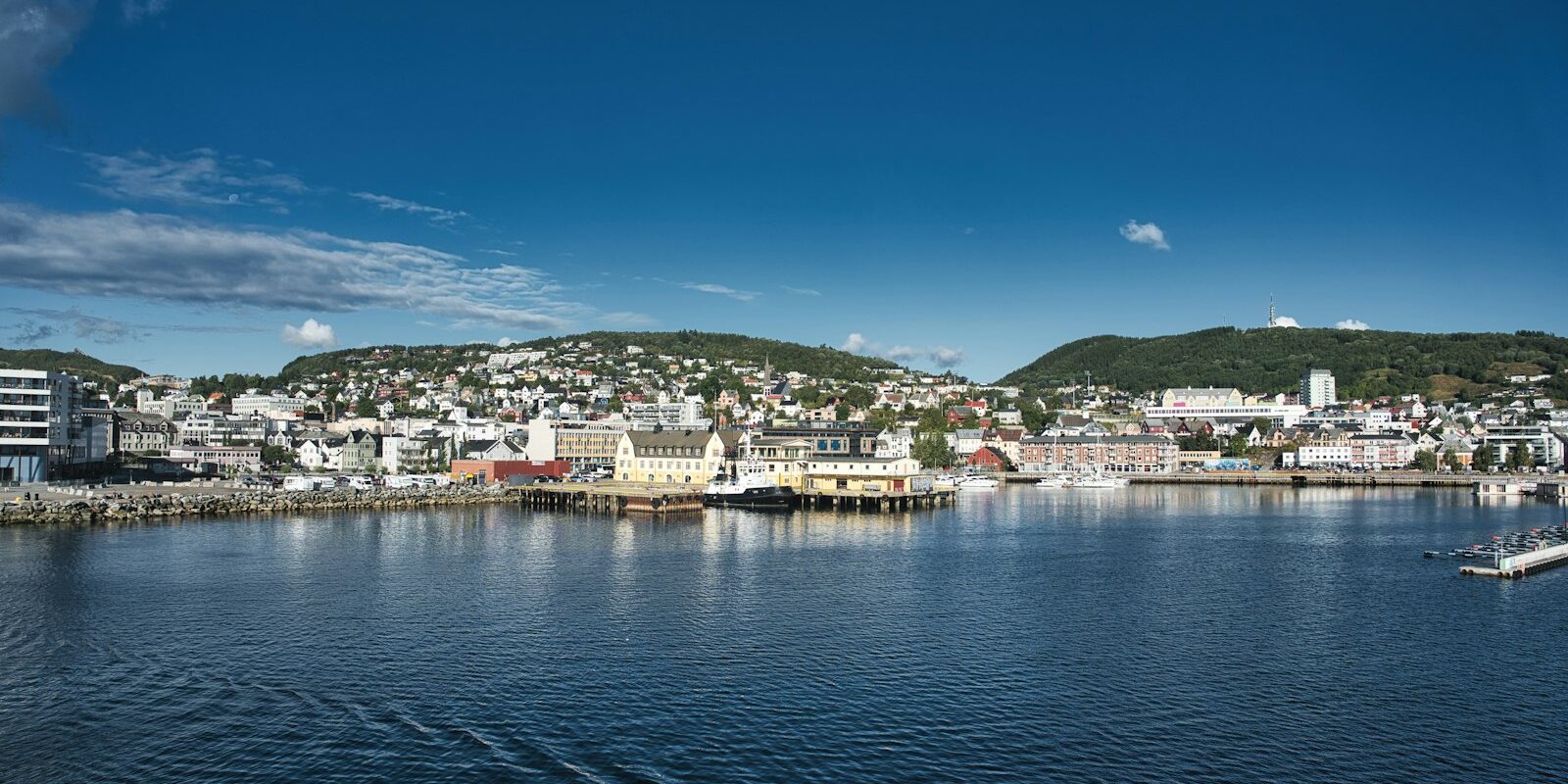
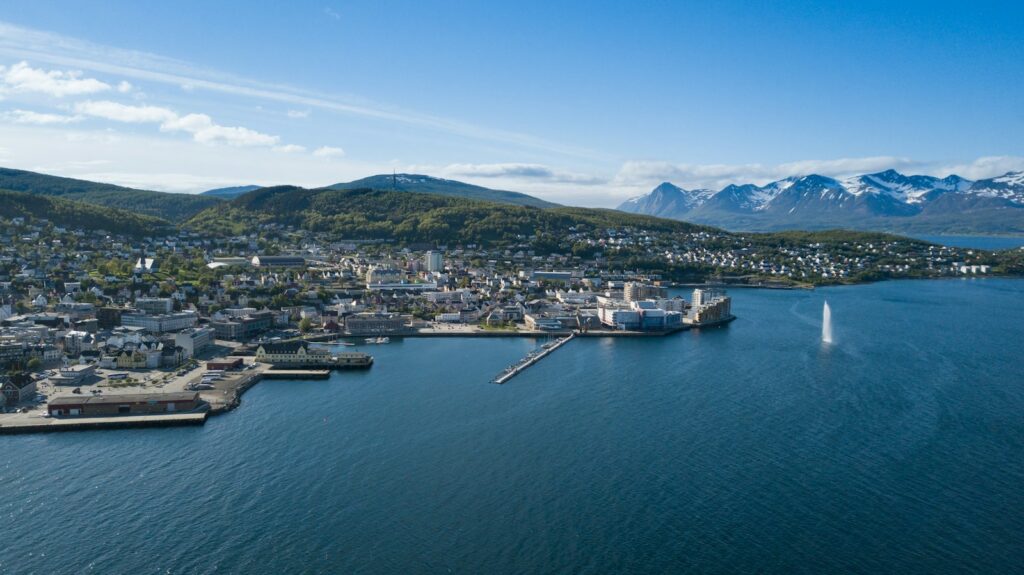
The Harstad guest harbour lies in the heart of Harstad town centre on the east side of the island of Hinnøya, with views across the Vågsfjord. Here you can read how to get there for the start of your trip, exactly where the guest pontoons are, where to park and shop, what sailing weather to expect, which destinations are nearby and what skippers should bear in mind when berthing.
The essentials at a glance
- Harstad/Narvik Evenes Airport is around 45 kilometres south of the town, and the airport bus takes about 50 minutes to reach Harstad (as of November 2026).
- The guest pontoons are on the Havnepromenaden right by the town centre, and the express boat quay and bus terminal are only a few minutes' walk away.
- You can reach supermarkets, pharmacies and car parks on foot from the guest harbour. Most shops in Norway are closed on Sundays.
- From 21 May to 21 July the sun does not set in Harstad.
Where is the guest harbour in Harstad?
The Harstad guest harbour consists of two guest pontoons on the Havnepromenaden in the middle of the town centre. Just to the south are the town quays with the express boat quay, and about 350 metres south of the guest pontoons the mail ships of the coastal route berth at Larsneset. To the north-east of the guest pontoons, a 250-metre-long floating breakwater protects Harstadsjøen Marina with its 64 permanent berths.
Map from OpenStreetMap. When the map is displayed, data is transmitted to the provider.
More InformationHarstad lies on the Vågsfjord, which stretches from the Tjeldsundet in the south to Senja in the north. Apart from its southernmost part, the fjord is wide and open. On its east side lie the mainland and the islands of Andørja and Rolla, and north of the town Grytøya and the islands around Bjarkøy.
Arriving for the start of your trip at the Harstad guest harbour
You can reach Harstad by plane via Evenes, by bus, by express boat from Tromsø or by the mail ships of the coastal route.
From Harstad/Narvik Evenes Airport to the guest harbour
Harstad/Narvik Airport is in Evenes on the mainland, around 45 kilometres south of Harstad. There are regular flights from there to Oslo. As things stand (November 2026), the airport bus to Harstad takes about 50 minutes. If flights are delayed, the airport buses to Harstad and Narvik wait until after the last arrival. From the Harstad Byterminal bus terminal it is around 250 metres to the guest pontoons.
There are taxis at the airport and in Harstad. Taxi company prices can vary, and the driver must tell you the price before the journey. There are also several car rental companies at the airport.
By car, bus, express boat or mail ship
By car you reach Harstad via Road 83, which branches off the E10 at the Tjeldsundbrua. The E10 connects Narvik and Evenes Airport with the Lofoten Islands. There is no railway in Harstad. The nearest station is Narvik, which is only connected to the Swedish network, and from there it is a few hours by bus. From the south you can take the train to Fauske and continue by bus. Several buses run daily to the Lofoten, with a change at the Tjeldsundbrua or via Sortland in the Vesterålen.
As things stand (November 2026), the fast ferry between Tromsø and Harstad runs several times a day via Finnsnes and takes just under three hours. In Harstad it docks at Quay 1 in the centre, about 100 metres south of the visitor pontoons. The postal ships on the Bergen–Kirkenes coastal route call at Harstad daily, northbound and southbound, and dock at Larsneset.
Parking
The nearest public car park is on Havnegata, about 100 metres north of the visitor pontoons. You will find more parking on Sjøgata and Erlings gate, both about 200 metres away in the centre.
Arrange parking on the harbour's land with the harbour watch. Without prior agreement, the harbour charges 646 NOK per day plus VAT (as of November 2026). To reach the floating breakwater of Harstadsjøen Marina, use Smedgata only. At the gangway you may stop briefly to get on or off or to load equipment.
Early arrival: luggage and waiting time
At the fast-ferry quay, there is a waiting room with left-luggage facilities on the ground floor of the harbour building. For a place to wait, try the cafés in the centre, which begins directly behind Havnepromenaden.
Showers and sanitary facilities
There is a new service building for guests with showers, toilets, a washing machine and a tumble dryer. Access is included in the berthing fee, while the shower, washing machine and dryer cost extra.
Shopping for the trip
You won't have to walk far for provisions: Joker Bysenteret is about 300 metres south-west of the visitor pontoons in the centre, Bunnpris Havnegata about 350 metres to the north and Extra Fjordgata about 400 metres to the south. A little further away are Extra Sama, about 600 metres north-west, and Eurospar Seljestad, about one kilometre south. You can reach both on foot or with a short car journey.
If possible, plan your big shop before Sunday. In Norway most shops stay closed on Sundays and public holidays; as a rule, only small grocery shops with up to 100 square metres of sales area may open. Supermarkets sell beer of up to 4.7 per cent from Monday to Friday until 8 pm and on Saturdays until 6 pm, or for shorter hours depending on the municipality. Wine and spirits are only available from Vinmonopolet, which usually opens from 10 am to 6 pm Monday to Friday and from 10 am to 4 pm on Saturdays (as of November 2026).
Doctor, pharmacy and emergency services
The nearest pharmacy is Vitusapotek Harstad, about 200 metres from the guest harbour, and Apotek 1 Bysenteret is about 250 metres away. The hospital UNN Harstad at St. Olavs gate 70, about one kilometre south-west on the edge of the centre, has an emergency department. The Legevakt, the out-of-hours medical service, is on the lower floor.
- 113: medical emergency
- 112: Police
- 110: Fire brigade
- 116 117: out-of-hours medical service (Legevakt)
- At sea: VHF channel 16. The coast radio station Kystradio Nord in Bodø monitors it around the clock; it operates in the same building as the main rescue coordination centre for northern Norway.
What does the guest harbour in Harstad offer?
The guest harbour in Harstad belongs to Harstad Havn KF, the town's municipal harbour authority. Both visitor pontoons have electricity and water, and the berthing fee includes electricity, water, waste disposal and the service building.
| Feature | Details |
|---|---|
| Location | Havnepromenaden in the centre of Harstad |
| Operator | Harstad Havn KF (municipal harbour authority) |
| Visitor pontoons | Gjestebrygge 1 (45 m) and Gjestebrygge 2 (40 m), concrete |
| Electricity and water | at both visitor pontoons, 230 V, 16 A |
| Berthing fee per day (2026 tariff) | up to 25 ft 374 NOK, 26 to 40 ft 426 NOK, 41 to 50 ft 489 NOK, over 50 ft 603 NOK; up to 4 hours 190 NOK; each plus VAT (as of November 2026) |
| Payment | GoMarina app or payment machine |
| VHF | Channel 12 (daytime) and 16 |
| Phone | Harbour watch +47 77 00 12 12, 24 hours a day |
| nautical charts | Norwegian nautical charts Nos. 77 and 487 |
Equipment
In the service building, a shower costs 36 NOK for eight minutes, and the washing machine and dryer cost 47 NOK per cycle each, in each case plus VAT (as of November 2026). Wi-Fi is available in the guest harbour. You can put your rubbish in the containers at the pontoons and quays without registering. Fresh water is available at all visitor pontoons, with restrictions depending on the time of year.
Harstadsjøen Marina behind the floating breakwater is a facility for permanent berth holders, with year-round berths, electricity, water and CCTV monitoring. Storage units can also be rented there.
What is the weather like for sailing in Harstad?
In summer, the wind along the Troms coast mostly blows from the north to north-east. In winter, a cold offshore wind from the south-east to south-west is common. In Vågsfjord the wind can be very changeable: in the fjords on the mainland there can be an easterly gale, while a westerly blows in the approaches from the sea. In the outer areas there is occasionally fog in summer.
The mean spring tidal range in Harstad is just under two metres, and high and low water occur about 30 minutes earlier than in Tromsø. In Vågsfjord the current mostly sets south on the rising tide and north on the falling tide, reaching up to one knot in places at springs. The Norwegian Meteorological Institute issues a coastal warning from a mean wind speed of 15 metres per second, which is Beaufort force 7.
Which sailing destinations are near Harstad?
From Harstad you can sail north into the islands around Bjarkøy and on to Senja and Tromsø, or south through Tjeldsundet towards Lofoten or across to Vesterålen.
- Trondenes: The peninsula lies just north of the centre. The medieval church stands above Vågsfjord.
- Bjarkøy: North of Harstad lie hundreds of islands and skerries, and Bjarkøy alone has around 100 sandy beaches. In the Viking Age, one of Norway's most powerful chieftains had his seat on Bjarkøy. The island area is also home to the bird cliff Krykkjeberget, with a large colony of kittiwakes.
- Senja: The second-largest island of mainland Norway lies at the northern end of the Vågsfjord. Around its southwestern tip the fjord opens into the Andfjord between Senja and Andøya, while the open sea lies off the island's north and northwest coasts.
- Tromsø: The town lies further north. The berths there are described in the profile Tromsø harbours.
- Vesterålen and Lofoten: The Vesterålen lie north of the Lofoten and include the western part of Hinnøya. The route towards the Lofoten runs through the Tjeldsundet on the east side of Hinnøya. We present the visitor harbour of Svolvær in the Lofoten in our profile Svolvær visitor harbour .
What can you do on a harbour day in Harstad?
You can reach most sights on foot from the visitor harbour, as the town centre begins right behind the Havnepromenaden.
- Trondenes Church: The Gothic stone church was completed around 1440 and is regarded as the northernmost medieval church in the world. Inside there are three late Gothic winged altarpieces, and around the church you can see remains of walls from the 12th century. A marked path leads from the centre along the water to the peninsula.
- Trondenes Historical Centre: The museum tells the story of the area from the Stone Age through the Viking era to the Second World War. The café is open all year round. A marked, wheelchair-accessible circular path leads from there to the remains of a prisoner-of-war camp and on to Altevågen, where you can see the outlines of two Viking-age boathouses, the largest of them 30 metres long.
- Adolf Gun: On the hill north of the church stands one of the largest guns of the Second World War, with a calibre of 40.6 centimetres and a range of 56 kilometres. It is located within an active military area and can only be visited on guided group tours.
- Town centre and Anna Rogde: At Rikard Kaarbøs plass in the middle of the town centre, Swiss-style wooden houses stand beside Art Nouveau buildings. The schooner Anna Rogde, which has been sailing since 1868 and once carried dried salted cod to the markets, is often moored in the harbour.
Every year around midsummer, Harstad hosts the Festival of North Norway, a music and cultural festival with concerts in Trondenes Church, in the cultural centre and in the town's venues.
For skippers: berthing and marine weather in Harstad
You can reach the Harstad visitor harbour via the harbour watch of Harstad Havn on VHF channel 12 (daytime) or 16, or by phone around the clock on +47 77 00 12 12.
Registration and Berthing
- You berth at one of the two visitor pontoons at the Havnepromenaden. The pontoons are made of concrete and have no fender rail.
- You pay the berthing fee in the GoMarina app or at the machine. Anyone berthed without a valid receipt pays 832 NOK in addition to the berthing fee (as of November 2026).
- You activate shore power via GoMarina: pay the berthing fee including electricity, enter the four-digit code from the receipt followed by # at the pillar, then select the socket, for example 01# for connection 1.
- The prices are listed in the Harstad Havn price list.
Harbour rules
On all areas and quays of Harstad Havn, unnecessary running of engines is prohibited, which applies to cars and boats alike.
Approach
Keep an eye on scheduled traffic in the harbour: the fast boats depart from Quay 1 south of the visitor pontoons, and the coastal route mail ships from Larsneset. Larger ships anchor in the bay of Gangsåsbotn, where an uncomfortable sea builds up in north-easterly winds. With the exception of the innermost bays, Harstad harbour stays ice-free in winter.
If you are coming from the south through the Tjeldsundet, expect a strong tidal current. It runs north most strongly around high water and south around low water, and turns roughly halfway in between. The wind there usually follows the sound, but is often uneven and unreliable, and a southerly is the most unpleasant.
Which marine weather forecast applies in Harstad?
For the Norwegian coast, the national weather service Meteorologisk institutt (MET Norway) issues the official forecasts and warnings, which you can find on the weather portal yr. Gale and storm warnings are also broadcast by coast radio on VHF (for northern Norway, Kystradio Nord in Bodø) and by NRK on digital radio. The warning thresholds for the coast are explained by MET Norway on its website.
Sailing trips from Harstad on Törnfinder
Trips along the entire Norwegian coast can be found under cabin charter in Norway, sailing trips around the Lofoten under Cabin charter in the Lofoten and all sailing areas in the trip overview.
Frequently asked questions
How do I get from Evenes airport to the Harstad visitor harbour?
By airport bus, which takes about 50 minutes to reach Harstad (as of November 2026). From the bus terminal it is around 250 metres on foot to the visitor pontoons. Alternatively, you can take a taxi for about 45 kilometres.
How do I get to Harstad without flying?
By fast boat from Tromsø, which runs several times a day via Finnsnes, by the coastal route mail ships, which call daily, or by bus, for example from Narvik or from the Lofoten (as of November 2026).
Where do I park at the start of my sailing trip in Harstad?
The nearest car park is on Havnegata, around 100 metres north of the visitor pontoons. You may only park on harbour land by arrangement, otherwise 646 NOK per day plus VAT is charged (as of November 2026).
Are there showers at the Harstad visitor harbour?
Yes. The service building has showers, toilets, a washing machine and a dryer. Access is included in the berthing fee, and a shower costs 36 NOK for eight minutes (as of November 2026).
How much does a berth in Harstad guest harbour cost?
For a boat of 26 to 40 feet you pay 426 NOK per day plus VAT, and 374 NOK for boats up to 25 feet (as of November 2026). Electricity, water, waste disposal and the service building are included.
Which VHF channel does Harstad guest harbour use?
Channel 12 during the day, as well as channel 16. You can reach the harbour watch by phone around the clock on +47 77 00 12 12.