
Sailing area · IJsselmeer
Sailing on the IJsselmeer
Cabin charter on the IJsselmeer means: you book a berth (your sleeping place on board) on a traditional vessel or a yacht, and a skipper sails the vessel across the large inland lake of the Netherlands, from Enkhuizen to Hoorn, Stavoren or Makkum. There are no tides here, and the harbours lie close together. You don't need a sailing licence for this.
Updated: 27 October 2026 · Redaktion toernfinder.de
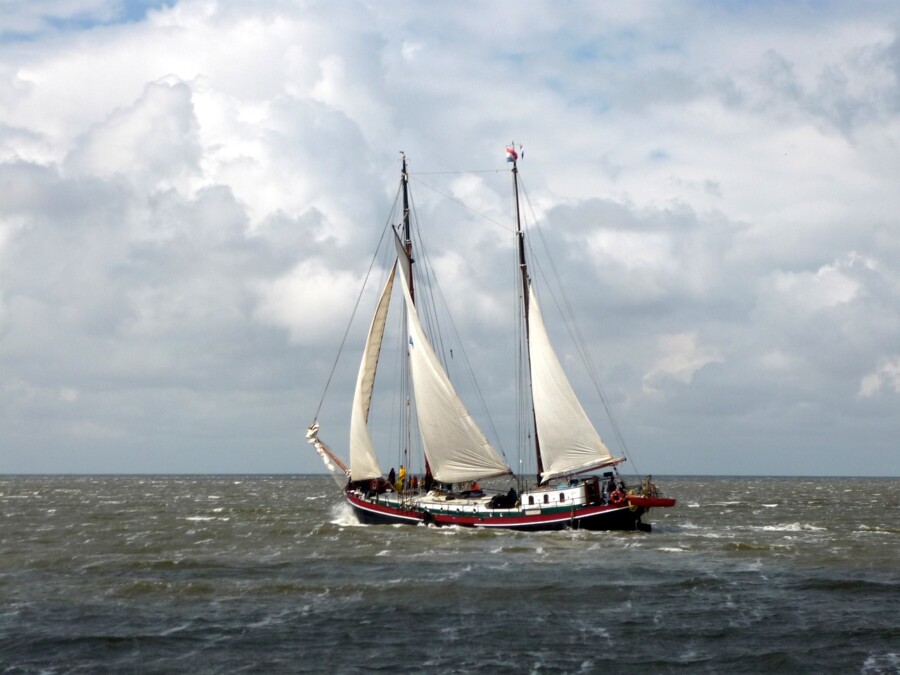
from 9 providers compared
The essentials at a glance
Season
March to December, usually May to September
Duration
Usually one week, almost always round trips
Most common departure ports
Workum, Enkhuizen, Warns, Harlingen and Gaastmeer
Requirements
No sailing licence required
Week-long trip per person
mostly 680–700 €
Current sailing trips on the IJsselmeer
Here you can see a changing selection of current IJsselmeer trips, from family sailing on a flat-bottomed ship to cabin charter on a yacht. Use the buttons to filter the list by trip type. Most trips depart from Workum, Enkhuizen, Warns, Harlingen and Gaastmeer. Your enquiry goes directly to the provider; booking is also made directly with them.



Upcoming IJsselmeer trips
- 28.12.New Year's Eve on the Waterfrom Enkhuizen · 7 daysfrom 700 €
- 25.03.Easter trip in the Wadden Sea aboard ELEGANTfrom Harlingen · 5 daysfrom 449 €
- 26.03.Skipper training Ijsselmeer – Easter 2027from Workum · 4 daysfrom 598 €
- 02.04.Skipper Training IJsselmeerfrom Workum · 3 daysfrom 468 €
- 09.04.Skipper Training IJsselmeerfrom Workum · 3 daysfrom 468 €
- 12.04.Skipper Training IJsselmeerfrom Workum · 4 daysfrom 568 €
How cabin charter on the IJsselmeer works
With cabin charter on the IJsselmeer you book a place on board, not the whole vessel. The skipper plans the route between harbours, helms the vessel and takes responsibility; you are part of the crew.
Each berth is allocated individually, so you can also book on your own. Most trips last one week and finish back at the departure harbour. In the morning the vessel casts off; sailing is usually a few hours across open water, and in the afternoon you head for the next harbour. In the evening the vessel is almost always moored in the heart of an old harbour town, with canals, gabled houses and fish stalls on the quay.
An inland lake without tides
The IJsselmeer is a large freshwater lake, created in 1932 when the Afsluitdijk separated the former Zuiderzee from the North Sea. There are no tides here, which makes planning easier than in the Wadden Sea. But because the lake is only a few metres deep, a short, steep wave builds quickly in strong winds. The skipper therefore chooses route and harbour according to the weather.
Cabin charter on the IJsselmeer: commercial or private
On the IJsselmeer, cabin charter places are offered mainly by operators of traditional vessels, sailing schools and skippers running their own business. Alongside them, private owners look for crew for their own yacht and share the costs of the trip among the crew. A special form is hand for a bunk: you work on board and in return pay little or nothing for the berth; more on this on the page Working passage.
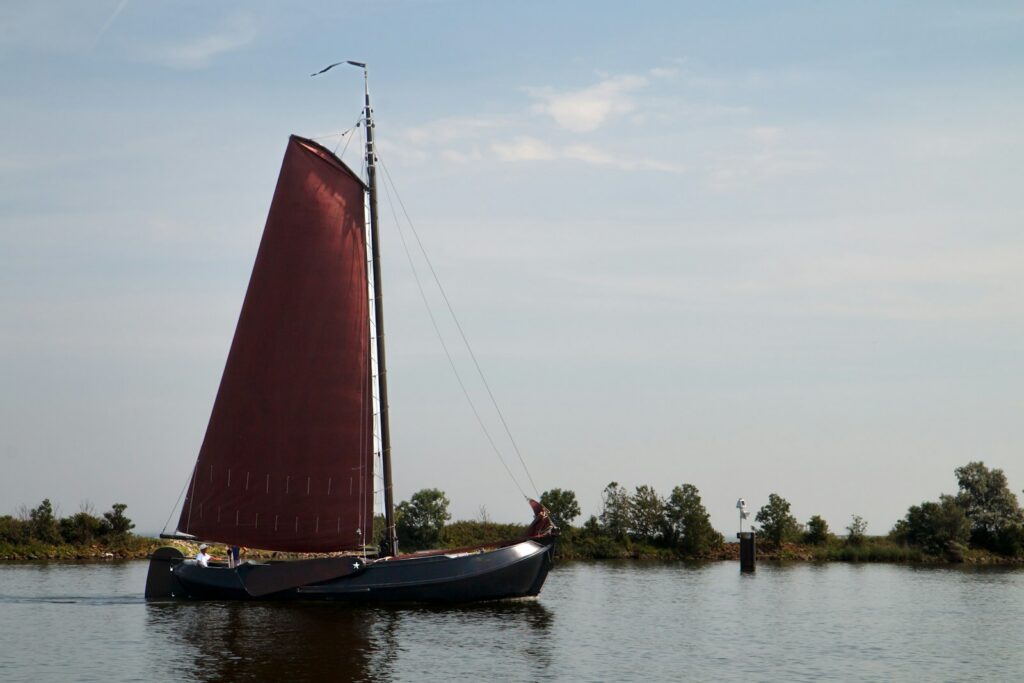
About half IJsselmeer trips
Cabin charter on traditional vessels on the IJsselmeer
About half of the IJsselmeer trips published here take place on a traditional ship or tall ship, where guests lend a hand.
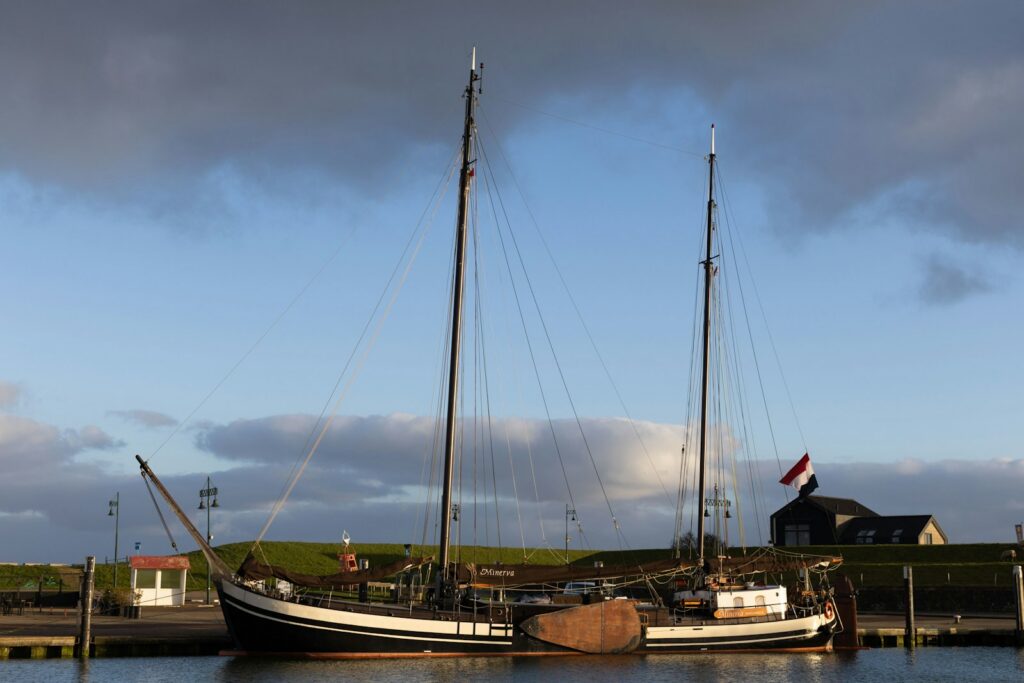
Most of these vessels are flat-bottomed ships of the Brown Fleet: shallow-built sailing vessels such as tjalk, clipper or botter that have lateral leeboards instead of a deep keel. They were built for the shallow Zuiderzee and remain ideal for the IJsselmeer today. Setting sails, lowering leeboards, handling lines when mooring: the permanent crew show you what to do; you need no prior experience.
Many flat-bottomed ships have 12 to 30 guest berths; cooking is often done together in the galley. Some vessels can also be chartered as a whole ship for groups, families or school classes.
View traditional sailing ships trips
Törnfinder data
The IJsselmeer in figures
Analysis: all IJsselmeer trips published on Törnfinder. As at: 07.11.2026.
Most common departure ports
- 1Workum25 trips
- 2Enkhuizen22 trips
- 3Warns6 trips
- 4Harlingen2 trips
- 5Gaastmeer1 trip
50 %of trips last 7–8 days
98 %are round trips, start and finish in the same port
45 %take place on a traditional ship or tall ship
7different departure ports
2countries on offer, led by the Netherlands and the United Kingdom
120 nmcovered by a typical week-long trip
As of 07.11.2026: Törnfinder lists around 60 IJsselmeer trips from 9 providers. 50 % last 7–8 days, 98 % are round trips with the same start and end port and 45 % take place on a traditional ship or tall ship. Most trips start in Workum, Enkhuizen and Warns, and most departures are in June and July. A week-long trip usually costs 680–700 € per person.
How these figures are calculated
The analysis covers all trips in the IJsselmeer sailing area published on Törnfinder with departure dates from today onwards; the figures are recalculated twice a day. Prices are those stated by providers per person. "Usually" refers to the middle half of offers, excluding the cheapest and most expensive quarters. Departure harbour counts the starting harbour stated in the listing; a round trip is one with the same departure and destination harbour. The texts on this page are written and checked by the editorial team at toernfinder.de.
Sailing on the IJsselmeer: harbours and sailing areas
Around the IJsselmeer lie old harbour towns of the former Zuiderzee: in the west Enkhuizen, Medemblik and Hoorn; in the east the Frisian harbours Stavoren, Hindeloopen, Workum, Makkum and Lemmer. Hardly any passage between two harbours takes longer than half a day.
Almost all the IJsselmeer trips published here remain in the Netherlands. Through the locks at Kornwerderzand and Den Oever on the Afsluitdijk you reach the Wadden Sea; through the lock at Enkhuizen you reach the Markermeer.
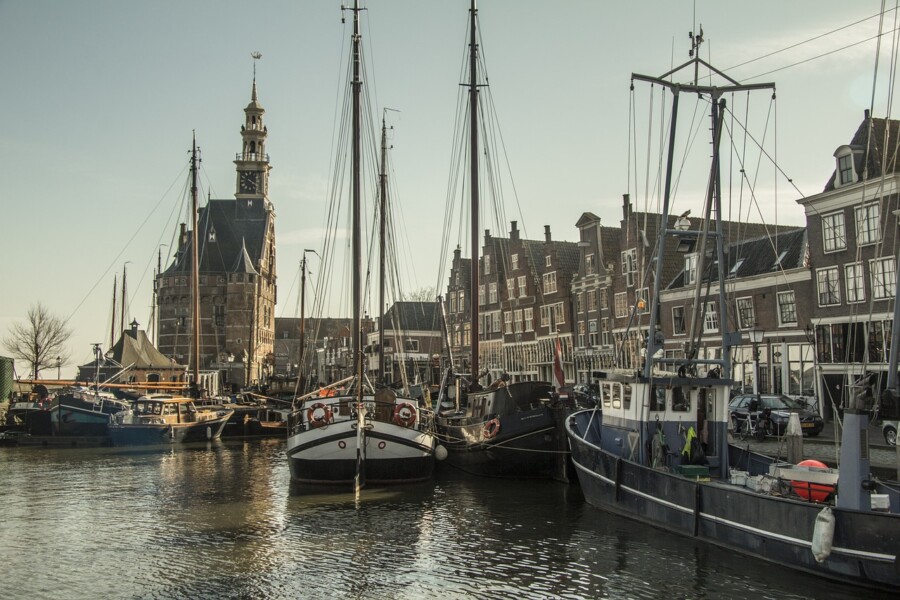
West Friesland: Enkhuizen, Medemblik and Hoorn
Enkhuizen is the main departure harbour on the IJsselmeer and home port of many traditional vessels; the Zuiderzeemuseum lies directly on the harbour. Medemblik has a castle on the water; Hoorn an old town with a harbour tower and merchants' houses from the Golden Age. More about the harbours is in the profile Enkhuizen for sailors.
Frisian coast and lakes
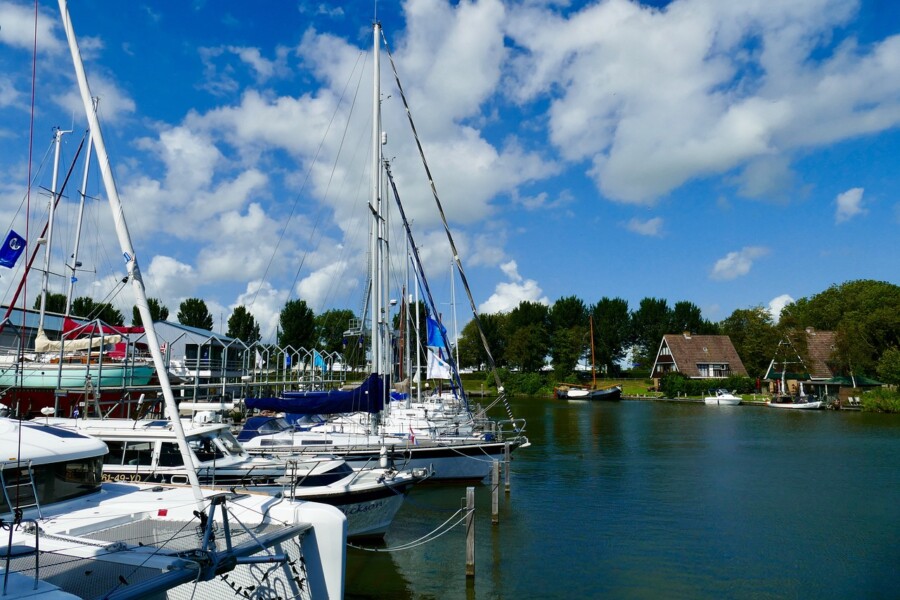
On the eastern side lie Stavoren, Hindeloopen, Workum, Makkum and Lemmer. Just behind them begin the Frisian Lakes with places such as Heeg, Sneek and Warns, which are connected to the IJsselmeer by canals. Many trips combine a day on the big lake with a voyage through the lakes and canals.
Markermeer: Marken, Volendam and Edam
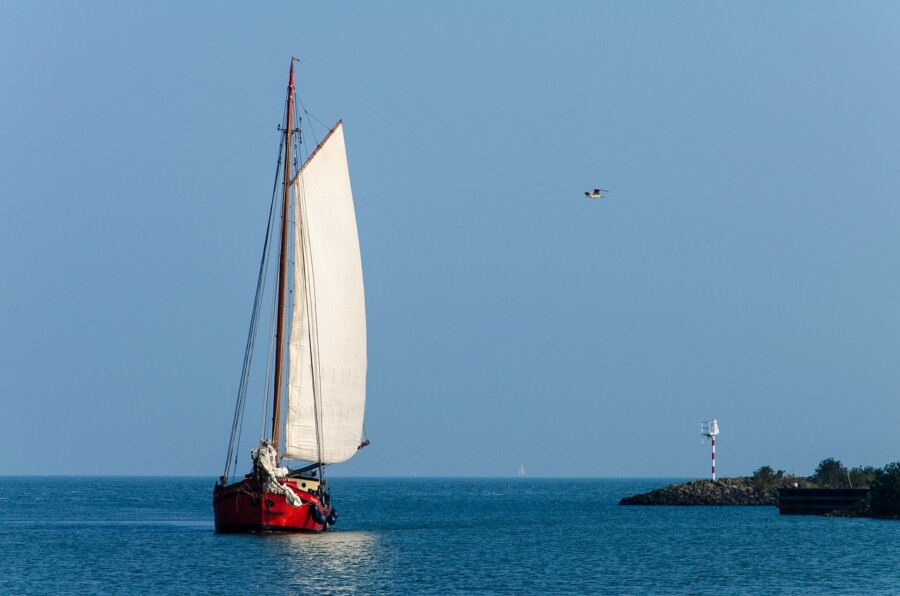
South of Enkhuizen lies the Markermeer, which has been separated from the IJsselmeer by the Houtribdijk since 1976. Here lie the former fishing village of Marken, Volendam and Edam, not far from Amsterdam. The water is even shallower than in the IJsselmeer.
Into the Wadden Sea
Some trips pass through the locks at the Afsluitdijk and sail out into the Wadden Sea to Harlingen, Texel, Vlieland or Terschelling. Tides apply there, and flat-bottomed ships can dry out at low water. More on this on the page Sailing in the North Sea.
Nature and culture ashore
The towns around the IJsselmeer were once trading and fishing ports on the Zuiderzee. Canals, warehouses, church towers and museums such as the Zuiderzeemuseum in Enkhuizen tell that story. Windmills, dykes and locks line the shores, whilst flat-bottomed ships with dark sails cross the water. Bicycles can be hired in almost every harbour.
Planning your own trip on the IJsselmeer
Those chartering their own yacht will find charter bases in many harbours around the lake. Pilot guides, the Dutch watersports charts and the harbour profiles in the sailing magazineare helpful for route planning. Weather and wind forecasts for the IJsselmeer, Wadden Sea and coast are issued by the Dutch meteorological service KNMI .
Departure ports for sailing trips on the IJsselmeer
Most of the IJsselmeer trips published here start in Workum, Enkhuizen, Warns, Harlingen and Gaastmeer.
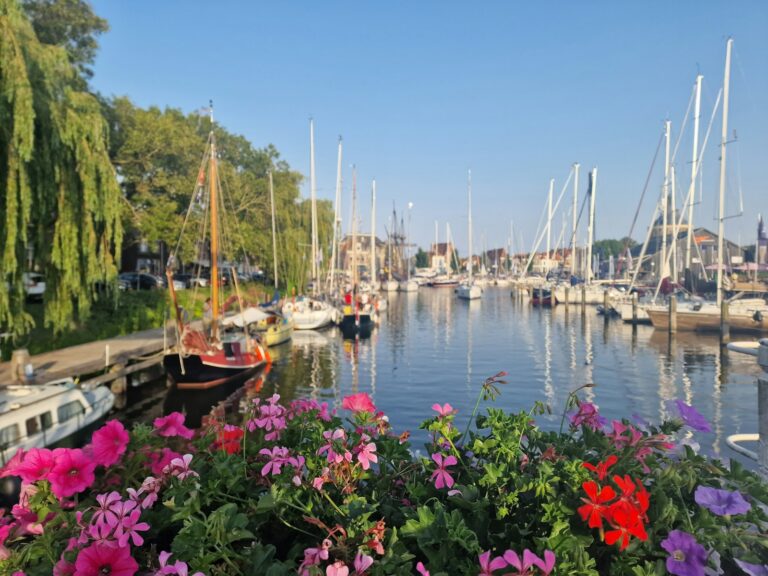
EnkhuizenMost frequent departure port, home to many traditional vesselsHarbour profile →
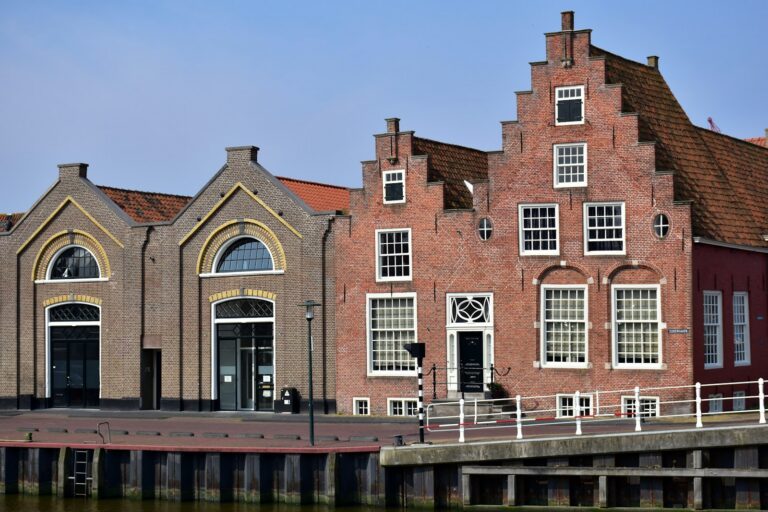
HarlingenOn the Wadden Sea, through the lock into the IJsselmeerHarbour profile →
Warns is located on the Frisian coast near Stavoren, just a few minutes from the IJsselmeer and the Frisian Lakes. Other departure harbours are Workum, Stavoren, Lemmer and Medemblik.
Best travel dates for sailing holidays on the IJsselmeer
The best travel dates for sailing holidays on the IJsselmeer are from June to August. This is the warmest period, the shallow water warms up quickly to around 18 to 20 °C, and the days are long. May and September are cooler, but the harbours are less busy.
The wind usually blows from the south-west to west and is often moderate in summer, more frequently strong in spring and autumn. Because the lake is so shallow, strong winds quickly create a short, choppy sea; the boat may then stay in harbour for a day.
| Month | Air temperature by day | Sun per day | Water | What to expect |
|---|---|---|---|---|
| April | 13 °C | 6 h | 10 °C | Season start, still cool on deck, tulips blooming ashore |
| May | 18 °C | 6 h | 15 °C | Long days, quiet harbours |
| Jun. | 20 °C | 7 h | 18 °C | Longest days, good conditions for beginners |
| July | 22 °C | 7 h | 20 °C | High season and summer holidays, busy harbours |
| August | 22 °C | 6 h | 20 °C | Warmest water, many family trips |
| September | 19 °C | 4 h | 17 °C | More wind, quieter harbours |
| October | 14 °C | 3 h | 13 °C | Autumn weather, only a few trips left |
Guide values for Enkhuizen. Air temperature (mean daily maximum) and sunshine hours according to klima.org, water temperature according to meerestemperatur.de. Individual years vary.
When the trips start
Most IJsselmeer trips start in June and July. Trips are available from March to December.
2
Mar5
Apr10
May14
Jun13
Jul8
Aug2
Sep3
Oct0
Nov1
DecAll IJsselmeer trips published on Törnfinder for the next twelve months. As at: 07.11.2026.
Sailing trip IJsselmeer: weekend, week or family trip?
Most trips on the IJsselmeer last one week, i.e. seven to eight days, and return to the departure port. There are also family trips on flat-bottomed ships and some shorter trips, for instance over the weekend.
MOST COMMON
Week-long trip
7–8 days · usually round trip
In a week you can sail a round trip on the IJsselmeer with five or six harbours, often with a detour to the Markermeer, the Frisian lakes or the Wadden Sea.
mostly 680–700 €
View week-long trips →
Family sailing
usually one week
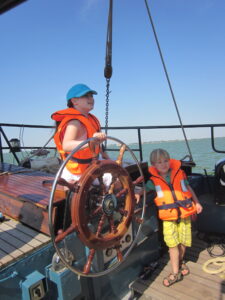
Short legs, a harbour every evening and plenty of space on deck: children sail well on flat-bottomed ships and are often allowed to lend a hand themselves.
usually 680–700 €
View family sailing →
Sailing weekend and short trip
2–6 days
A weekend is enough for two or three harbours on the IJsselmeer. Shorter trips are rarer here than week-long trips, good for a first impression.
usually 500–610 €
View short trips →
Prices per person from current listings, as at: 07.11.2026. On traditional sailing ships a week-long trip usually costs 690–700 €.
What does a sailing trip on the IJsselmeer cost?
A week-long trip on the IJsselmeer usually costs 680–700 € per person, with a day on board costing around 100 € on average. The exact amount depends primarily on the boat, trip type and time of travel.
| Trip duration | Price per person (usually) | per day | Dates |
|---|---|---|---|
| 2–3 days | 470–500 € | around 170 € | 9 |
| 4–6 days | 600–630 € | around 150 € | 19 |
| 7–9 days, week-long trip | 680–700 € | around 100 € | 29 |
| Week-long trip on a traditional vessel | 690–700 € | around 85 € | 24 |
"Usually" means: the middle half of all offers falls within this range; the cheapest and most expensive quarters are not included. Click on the duration to see the corresponding trips.
On top of the trip price, there is usually the kitty and travel. From Germany, the IJsselmeer is easy to reach by car or train, and Enkhuizen has a railway station right by the harbour. On traditional sailing ships, meals are often already included in the price or paid for from a shared kitty; it is best to check with the provider in advance exactly what is included.
What's included in the price and what goes into the crew kitty
Included in the trip price
- Your bunk on board
- The vessel
- The skipper
Usually via the crew kitty
- Food
- Hafengeld
- Diesel
Usually around 150–300 € per person per week, depending on what the group agrees, for example whether restaurant visits are included. On some boats, meals are already included in the price.
It is best to clarify in advance with the provider exactly what is included.
Do I need a sailing licence for a sailing trip on the IJsselmeer?
No. As crew you don't need a sailing licence, because it's not you but the skipper who commands the vessel.
Only those who skipper the boat themselves need a boat licence. Anyone wanting to practise is Skipper training in the right place: harbour manoeuvres, locks and sailing in waves can be well trained on the IJsselmeer. You can gain the practical experience for the Sportküstenschifferschein (SKS) on a Sail training.
What should I pack for a trip on the IJsselmeer?
For the IJsselmeer pack in a soft bag and take waterproofs and warm layers, even in summer.
- Waterproof jacket and trousers or oilskins; in windy conditions spray can come over on the shallow lake.
- Warm layers: fleece or woollen jumper and a hat for the evening on deck.
- Shoes with light, non-slip soles; on traditional sailing ships sturdy shoes are better than sandals.
- Work gloves or sailing gloves if you want to help with setting sail.
- Sunglasses, sun cream and cap; over the water the sun is stronger than it feels.
- Sleeping bag or bed linen if not provided on board, and a towel for harbour showers. A soft bag fits in any bunk, a hard-shell suitcase does not.
Also nearby
Many of these trips also call at these countries. Each card shows all trips there.
the United Kingdom
84 trips
next departure 16.11.2026
week usually 1,050–2,600 € per person
Show trips →Popular trip types
Besides classic crew trips, these trip types are offered most often here.
Skipper training
25 trips
Be the skipper yourself, with an experienced trainer on board.
next departure 26.03.2027
from 470 € per person
Show trips →Family sailing
21 trips
Short legs and swim stops, children are welcome.
next departure 22.05.2027
week usually 680–700 € per person
Show trips →Event sailing
2 trips
By ship to Hanse Sail, Kiel Week and other harbour festivals.
next departure 28.12.2026
week from 700 € per person
Show trips →Frequently asked questions about cabin charter on the IJsselmeer
Here you will find brief answers to the questions that most often come up before a sailing trip on the IJsselmeer.
Where can I book a sailing trip on the IJsselmeer?
Most easily through portals where many providers advertise their trips, so you can compare dates, boats and prices. On Törnfinder you send your enquiry directly to the provider, who confirms your place and enters into the contract with you. Törnfinder itself is not an organiser.
What is the IJsselmeer?
The IJsselmeer is a large freshwater lake in the north of the Netherlands. It was created when the Afsluitdijk (enclosing dam) separated the former Zuiderzee from the North Sea in 1932. To the south lies the Markermeer, which has been separated by the dyke between Enkhuizen and Lelystad since 1976.
Is there a tide on the IJsselmeer?
No. The IJsselmeer is an inland lake without tides. Only those who pass through the locks at the Afsluitdijk into the Wadden Sea sail with ebb and flood. More about the Wadden Sea can be found on the Sailing in the North Sea.
How deep is the IJsselmeer?
The IJsselmeer is usually only four to five metres deep, often considerably less near the shore. That's why a short, steep chop builds up quickly in fresh winds. Flat-bottomed vessels cope well with the shallow water; yachts follow the marked fairways.
What is the Brown Fleet?
That's the name for the historic sailing vessels in the Netherlands that now take guests, especially flat-bottomed craft such as tjalks, clippers and botters. The name comes from the formerly tan-sailed canvas. Many of these vessels have their home port on the IJsselmeer, for example in Enkhuizen, Harlingen or Stavoren.
Can I join a trip on my own?
Yes. With cabin charter you book an individual berth; the provider allocates the remaining places to other crew members. On traditional vessels the crew is often larger, so you quickly get to know people.
Do I have to help out on board?
On traditional vessels, yes: sails are set by hand, and that needs many hands. The permanent crew explains every step; you don't need previous experience. On yachts it depends on the trip — you can do more or less as you choose.
Is a sailing trip on the IJsselmeer suitable for families?
Yes. The distances between harbours are short, there are no tides, and in the evening the vessel nearly always lies in a harbour in the middle of town. On Törnfinder many IJsselmeer trips are advertised as family sailing, mostly on flat-bottomed vessels.
When is the best time of year for sailing on the IJsselmeer?
From June to August. That's when it's warmest; the shallow water reaches about 18 to 20 °C, and the days are long. In May and September it's cooler, but there's less going on in the harbours.
What does a sailing trip on the IJsselmeer cost?
A week-long trip on the IJsselmeer usually costs 680–700 € per person. On top of that come the onboard kitty and travel costs; from Germany, you can usually get there by car or train. The onboard kitty is usually around 150–300 € per person per week.
Find current sailing trips on the IJsselmeer
Use the filter to narrow down by vessel type, trip type and dates, and send your enquiry directly to the provider.