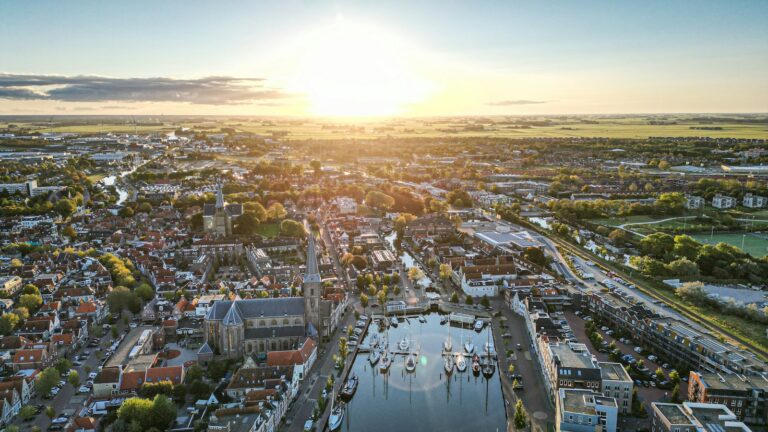
Sailing area · North Sea

Sailing in the North Sea

Cabin charter on the North Sea means: you book a berth (your sleeping place aboard) on a sailing yacht or traditional sailing ship, and a skipper guides the vessel through one of Europe's most exciting tidal sailing areas. Depending on the trip you sail hands-on and learn, or simply enjoy the Wadden Sea, islands and open sea. You don't need a sailing licence for it.

Updated: 28 October 2026 · Redaktion toernfinder.de
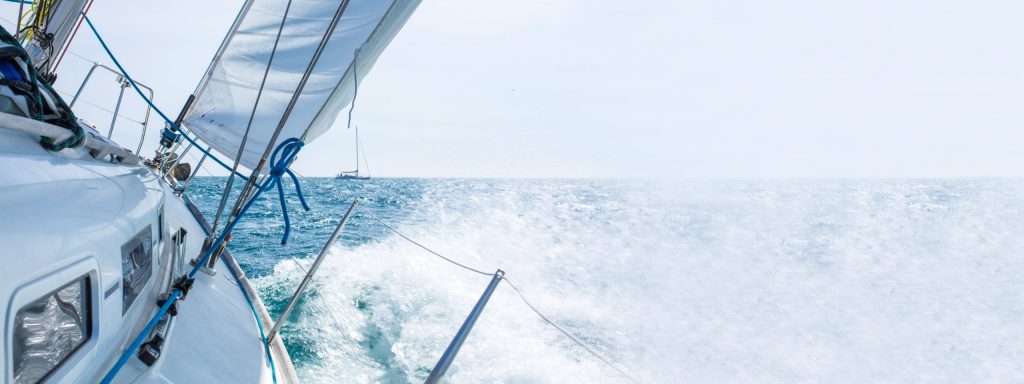
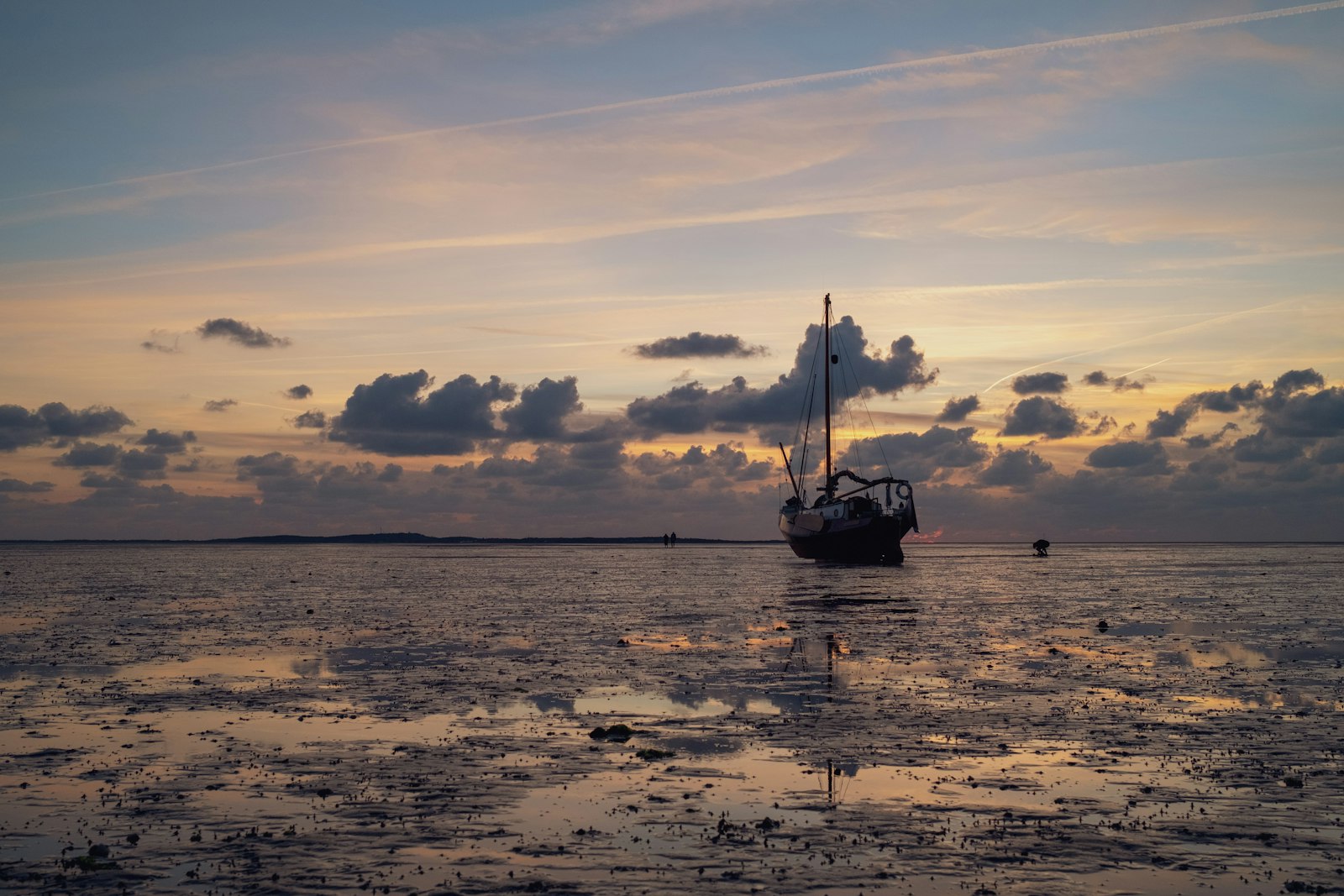
Sailing boat in the Wadden Sea of the North Sea at evening light
154 current trips
from 30 providers compared

The essentials at a glance

Season
March to December, main season May to August
Duration
Usually one week, also sailing week­ends and longer pass­ages
Most common departure ports
Hooksiel, Harlingen, Bergen, Oban and Enkhuizen
Requirements
No sailing licence required
Week-long trip per person
mostly 720–1,750 €

Current sailing trips on the North Sea

Here you can see a changing selection of current North Sea trips, from sailing weekends in the Wadden Sea to crossings to England or Norway. Use the buttons to narrow down the list by trip type, for example to cabin charter or mile building. Most trips depart from Hooksiel, Harlingen, Bergen, Oban and Enkhuizen. Your enquiry goes directly to the provider; booking is also made directly with them.

Mile building

English Channel crossing Den Helder–Fowey | 8 days' tall ship sailing to Cornwall

Den Helder (NL)11.04.20278 days
Rederij van Linschoten
from 1,050 €
View trip
Cabin charter

From Brittany back to Amsterdam

Vannes10.05.202714 days
Seehase
from 1,890 €
View trip
Event sailing

Port Entrance Parade HAMBURG PORT ANNIVERSARY 2027

Hamburg06.05.20271 day
INMARIS Windjammer Worldwide
from 169 €
View trip
Mile building

Mile building Kiel – Brest on ARTEMIS

Kiel28.06.202711 days
Sailing and More
from 1,550 €
View trip
Cabin charter

Scotland's Northern Isles: Shetland & Orkney

Lerwick19.06.20278 days
Seehase
from 2,590 €
View trip
Family sailing
NEW

Family Sailing in the Wadden Sea 2027 | Easter Holiday Sailing Trip from Norddeich with Children

Norddeich01.04.20274 days
Rederij van Linschoten
from 395 €
View trip

How cabin charter on the North Sea works

With cabin charter on the North Sea you book a place aboard, not the whole vessel. The skipper plans the route according to wind and tides, guides the vessel and carries the responsibility; you are part of the crew. How much you pitch in yourself depends on the trip and the provider.

Each berth is allocated individually, and the crew is made up of people who often only meet for the first time at the dock. You can therefore also book alone. How such a trip generally works is described on the page Cabin charter.

Sailing by the tide tables

What distinguishes the North Sea from the Baltic Sea is the tide. Roughly every six hours the current reverses; on the German coast the water rises and falls by a good two to nearly four metres, depending on location. The skipper therefore sets departure times according to the tide tables: sometimes you leave early in the morning, sometimes not until the afternoon, so that the boat sails with the stream and reaches shallow harbour approaches with sufficient water. Many harbours in the Wadden Sea fall dry at low water, meaning they are completely or partially without water.

What the crew does on board

On many sailing trips you can sail hands-on: handling sheets and halyards (the lines used to trim and hoist the sails), taking the helm (steering), helping when mooring and learning a great deal in the process. But you can also take it easy and simply enjoy the days on board. On sail training trips, mile building and traditional sailing ships, however, active participation is firmly part of the programme. The skipper explains what to do before you set off. In the Wadden Sea most sailing is by day, with a harbour or anchorage reached in the evening. On passages to Heligoland, England or Norway, however, the boat is often under way at night as well; the skipper then divides the crew into watches with fixed shifts.

Cabin charter on the North Sea: commercial or private

On the North Sea both commercial providers and private owners offer cabin charter berths. Commercial providers are sailing schools, skippers with their own businesses and operators of traditional sailing ships; they have fixed dates, terms and often several boats. Private owners who are looking for crew for their own yacht usually sail in a smaller group and share the costs of the trip among the crew. A special variant is hand for a bunk: you work on board and pay little or nothing for your berth. This variant is described on the page Working passage in detail.

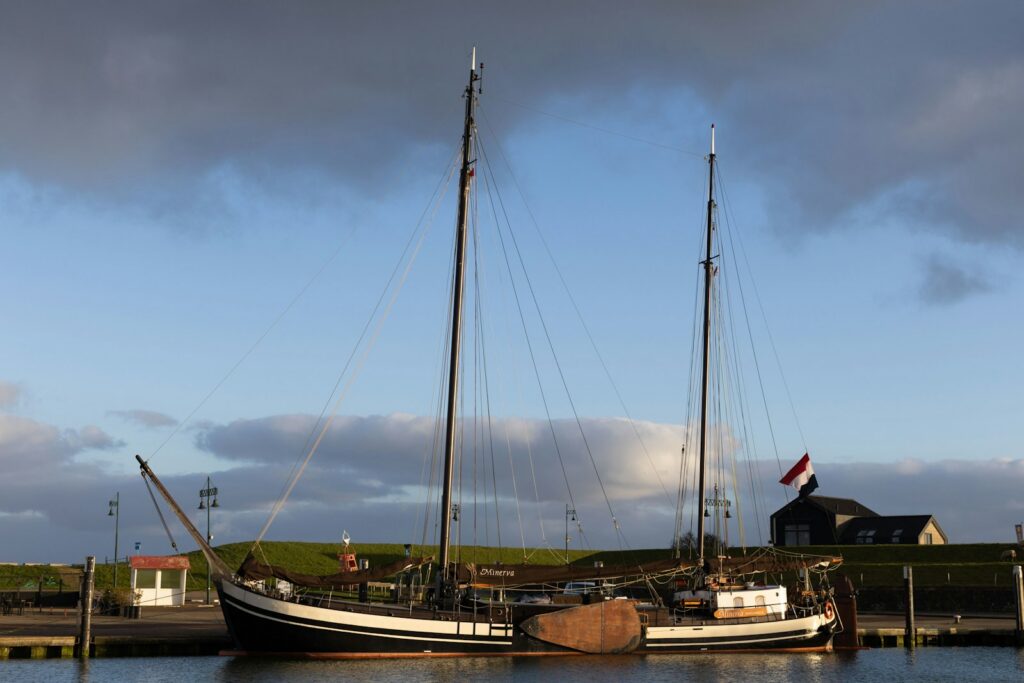
Traditional sailing vessel in the harbour of Harlingen
42 % of North Sea trips

Cabin charter on traditional sailing ships on the North Sea

Around 42 % of the North Sea trips published here take place on a traditional ship or tall ship, where guests lend a hand.

Many of these vessels are flat-bottomed ships: shallow-built sailing ships that have lateral leeboards instead of a deep keel. They can manage with little water and can fall dry in the Wadden Sea. The ship settles on the seabed at low water, and where it is permitted you can walk across the mudflats at low tide until the flood tide lifts the ship again.

In the Netherlands the historic sailing ships that take guests are called the Brown Fleet. They sail mainly from Harlingen and from the IJsselmeer into the Wadden Sea. Sails are set by hand; the permanent crew show you how.

View traditional sailing ships trips
Törnfinder data

The North Sea in figures

Evaluated: all North Sea sailing trips published on Törnfinder. As at: 18.11.2026.

Most common departure ports

  1. 1Hooksiel16 trips
  2. 2Harlingen11 trips
  3. 3Bergen9 trips
  4. 4Oban8 trips
  5. 5Enkhuizen7 trips
40 %of trips last 7–8 days
44 %are round trips, start and finish in the same port
42 %take place on a traditional ship or tall ship
57different departure ports
14countries on offer, led by the Netherlands and Germany
210 nmcovered by a typical week-long trip

As of 18.11.2026: Törnfinder lists around 150 North Sea trips from 30 providers. 40 % last 7–8 days, 44 % are round trips with the same start and end port and 42 % take place on a traditional ship or tall ship. Most trips start in Hooksiel, Harlingen and Bergen, and most departures are in May and June. A week-long trip usually costs 720–1,750 € per person.

How these figures are calculated

All sailing trips published on Törnfinder in the North Sea sailing area with a departure date from today onwards are evaluated; the figures are recalculated twice a day. Prices are the providers' stated rates per person. "Mostly" refers to the middle half of the offers, with the cheapest and most expensive quarters excluded. Departure is the starting harbour named in the listing; a round trip is a trip with the same departure and destination harbour. The texts on this page are written and checked by the Törnfinder editorial team.

Sailing on the North Sea: the sailing areas at a glance

The North Sea is a tidal sailing area: off the German and Dutch coasts lies the Wadden Sea with its islands, beyond that the open sea with Heligoland and the routes to England, Scotland and Norway.

Of the North Sea trips published here, around 40 % call at ports in the Netherlands and around 35 % at ports in Germany; others go to the United Kingdom, Norway and France. The Wadden Sea, which stretches from Den Helder in the Netherlands to Denmark, is a UNESCO World Natural Heritage site.

The wind on the North Sea blows on average more strongly than on the Baltic Sea. When it stands against the tidal stream, a short, steep sea builds up quickly. The skipper therefore chooses not only the weather window but also the right moment in the tidal cycle.

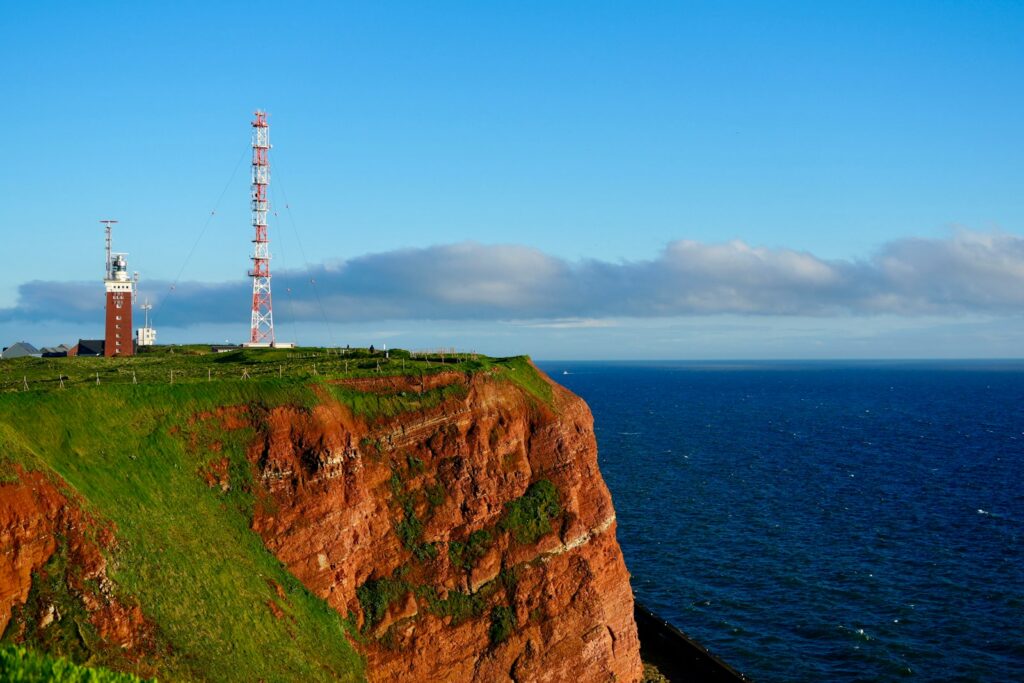
Red cliffs and lighthouse on Helgoland

German Bight and Heligoland

Between the estuaries of the Ems, Jade, Weser and Elbe lies the German Bight. From harbours such as Hooksiel on the Jade, Wilhelmshaven or Cuxhaven you sail across open water to Heligoland, Germany's only offshore island. For many crew this passage is the highlight of the trip. In the Südhafen yachts often lie rafted, meaning alongside one another. What you can see on the island is described in the article Sights on Heligoland.

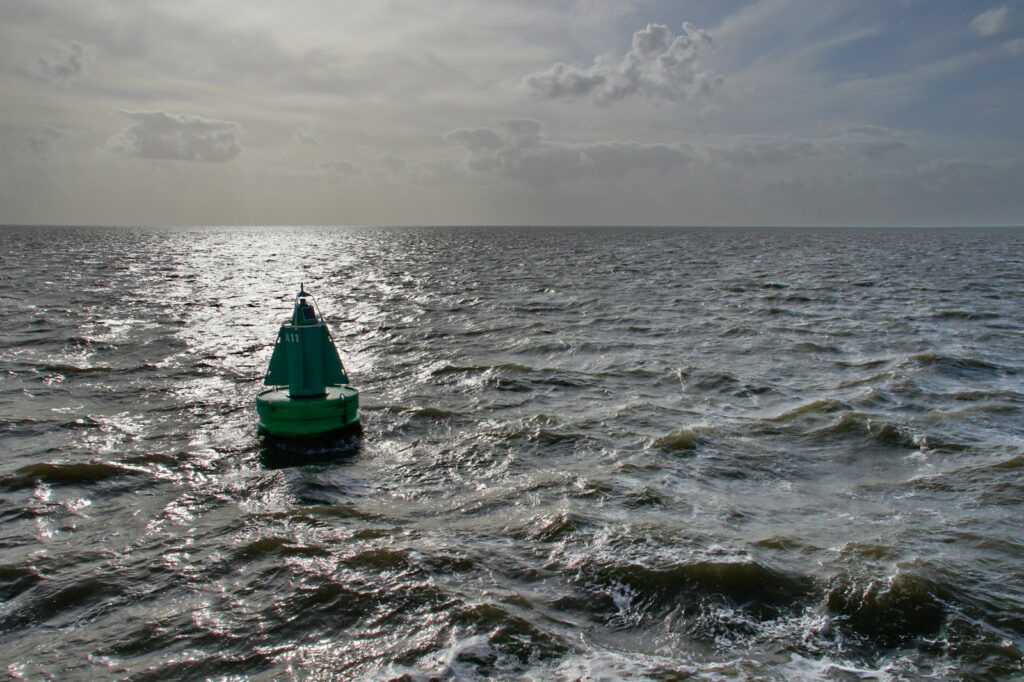
Channel marker buoy in the Wadden Sea

Wadden Sea and East Frisian Islands

Off the coast of East Frisia lie Borkum, Juist, Norderney, Baltrum, Langeoog, Spiekeroog and Wangerooge. Between the islands and the mainland lies the Watt, through which buoyed channels and Priele (natural gullies in the mudflats) lead. Many sailing trips combine several island harbours with a harbour day on the beach. The Lower Saxony Wadden Sea is a national park; where and when boats may sail is governed by a special regulation that the skipper knows.

North Sea sailing trips with destination Germany →

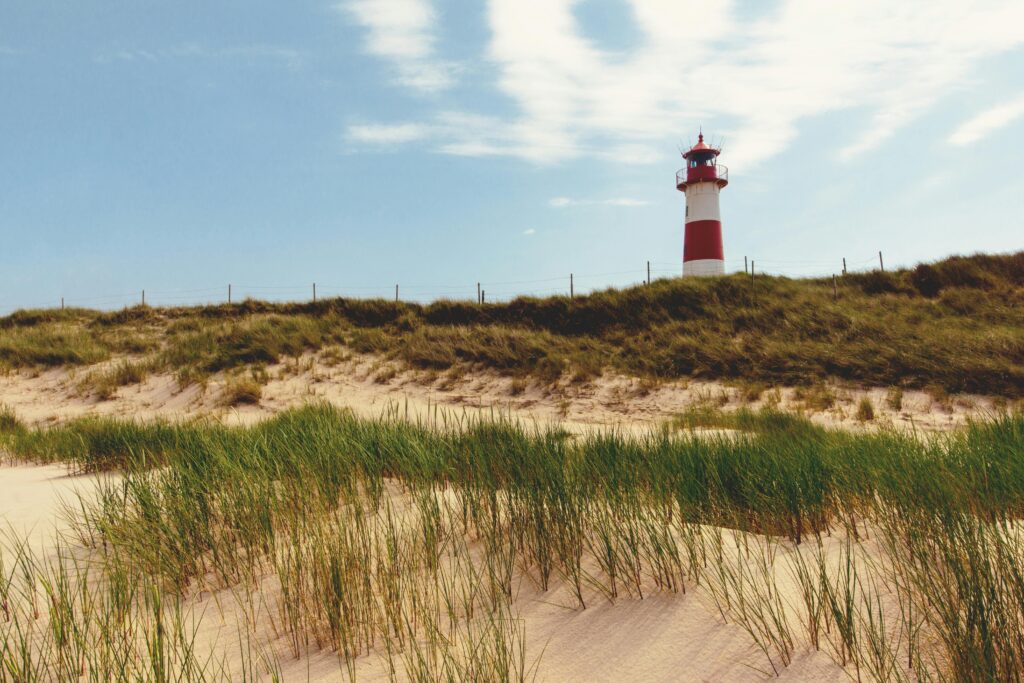
Red and white lighthouse in the dunes on Sylt

North Frisia: Sylt, Amrum and Föhr

In the north of the German North Sea coast lie Sylt, Amrum, Föhr and the Halligen, small islands without dykes that are flooded during storm surges. Harbours such as Hörnum on Sylt or Wittdün on Amrum are destinations for sailing trips along the coast of Schleswig-Holstein.

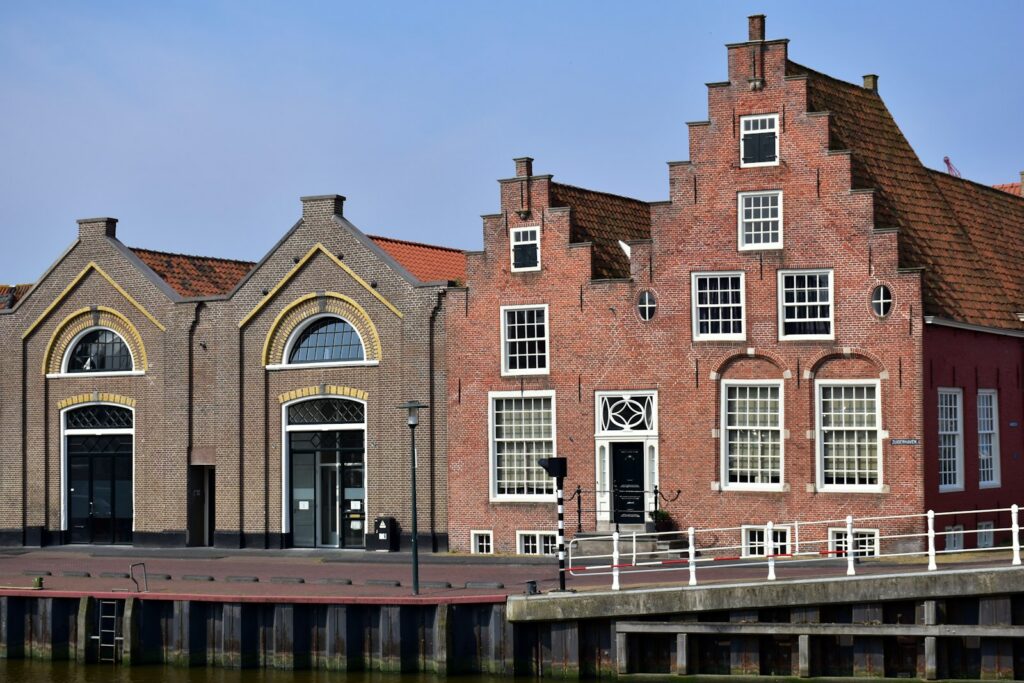
Historic gabled houses along a harbour canal in Harlingen

Netherlands: West Frisian Islands and IJsselmeer

On the Dutch side lie Texel, Vlieland, Terschelling, Ameland and Schiermonnikoog. Harlingen is one of the most frequent departure harbours here. Through the locks on the Afsluitdijk you sail from the Wadden Sea into the IJsselmeer, some sailing trips also start in Enkhuizen or Warns.

North Sea sailing trips with destination Netherlands →

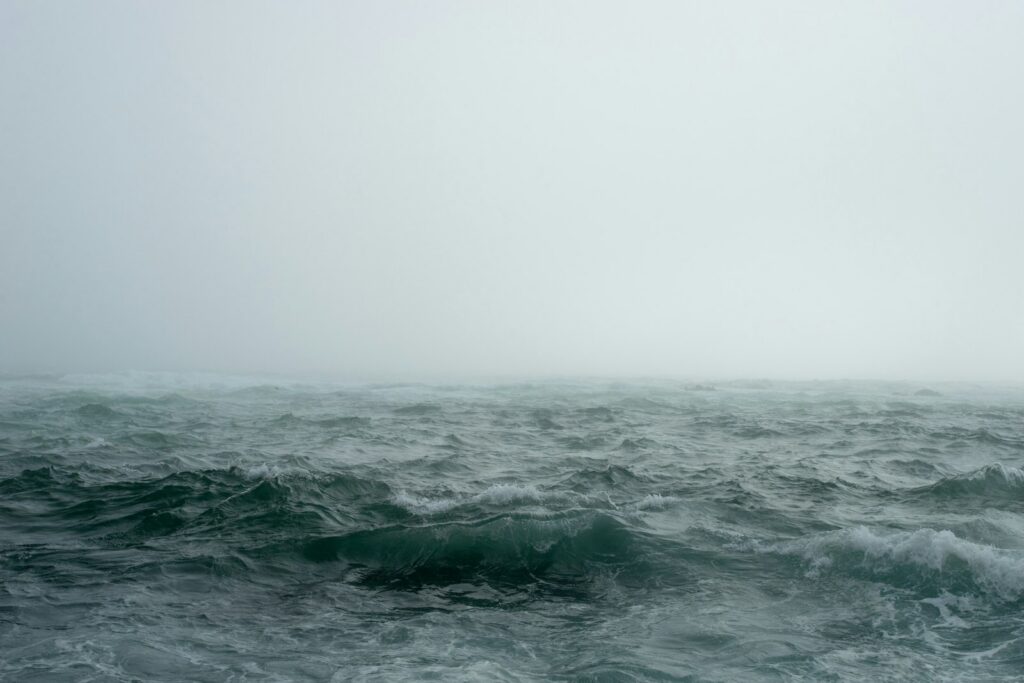
Rough grey sea with waves in strong winds (stock image)

Across the North Sea: England, Scotland and Norway

Longer sailing trips lead across the open North Sea to England, to Scotland or to the Norwegian coast; some also start in Scotland, for instance in Oban on the west coast. Such passages often last more than a day at a stretch and are also sailed at night. This is more suited to week-long trips and mile building.

North Sea sailing trips with destination Norway →

Nature ashore and on the mudflats

At low tide the Wadden Sea reveals itself as a vast landscape of sand and mudflats. For migratory birds, the Wadden Sea is one of Europe's most important stopover sites; common seals and grey seals lie on sandbanks and on the beaches of Heligoland's Düne island. From on board you often get closer to them than from land, but the vessel keeps its distance from the animals' resting places.

Planning a North Sea trip yourself

Anyone planning a North Sea sailing trip themselves — for instance with a chartered yacht — needs not only cruising guides and pilot books, and official nautical charts, but above all the tide tables. High and low water times for the German coast are published by the Bundesamt für Seeschifffahrt und Hydrographie. An initial overview of individual harbours is given by the harbour profiles in the sailing magazine.

Departure harbours for sailing trips on the North Sea

Most of the North Sea sailing trips published here start in Hooksiel, Harlingen, Bergen, Oban and Enkhuizen.

Enkhuizen and Warns lie on the IJsselmeer; from there you pass through the locks out onto the Wadden Sea. Oban on Scotland's west coast is the starting point for trips in Scottish waters. Further departure harbours lie on the German and Dutch coasts; which ones are currently listed is shown in the trip list above.

Best time of year for sailing holidays on the North Sea

The best time of year for sailing holidays on the North Sea is from June to August. Then it is warmest on board, the water is around 14 to 18 °C, and the days are long. May and September are cooler and often windier, but outside the summer holidays there is less going on in the island harbours.

In summer the wind usually blows moderately; from September onwards the number of days with strong winds increases, and in autumn gales are part and parcel of it. Anyone sailing along for the first time is well looked after between June and August; anyone wanting more sporting sailing often finds more wind in May and September.

MonthAir temperature by daySun per dayWaterWhat to expect
April10 °C7 h7 °CStart of season; still cold on deck, the water very fresh
May14 °C8 h10 °CLong days, quiet island harbours; around Whitsun the Nordseewoche with regattas to Heligoland
Jun.17 °C8 h14 °CLongest days of the year; good conditions for beginners
July19 °C8 h17 °CPeak season and summer holidays; the island harbours are full
August20 °C7 h18 °CWarmest water of the year
September17 °C5 h17 °CWater still warm, more wind, quieter harbours
October14 °C3 h14 °CAutumn gales become more frequent; only a few trips left

Reference values for the open German Bight. Air (mean daily maximum) and sunshine hours: mean 1991–2020 at Heligoland station, climate table. Water: monthly mean at Heligoland, wetter.de. On the coast and in the Wadden Sea it is often a little warmer during the day in summer. Individual years deviate.

The weather can change quickly even in summer. Before each day's sailing the skipper therefore consults the shipping forecast and the tide tables. How to read the shipping forecast yourself is explained in the article Reading and understanding the sea weather report.

When the trips start

Most North Sea trips start in May and June. Trips are available from March to December.

All North Sea sailing trips published on Törnfinder for the next twelve months. As at: 18.11.2026.

North Sea sailing trip: weekend, one week or longer?

Most North Sea sailing trips last one week — that is, seven to eight days. There are also sailing weekends and short trips of two to six days, and longer trips of ten days and more, for instance to England or Norway.

Prices per person from current listings, as at: 18.11.2026. On traditional sailing ships a week-long trip usually costs 700–2,200 €.

What does a sailing trip on the North Sea cost?

A week-long trip on the North Sea usually costs 720–1,750 € per person, with a day on board costing around 140 € on average. The exact amount depends mainly on duration, vessel type and route.

Trip durationPrice per person (usually)per dayDates
2–3 days550 €around 180 €12
4–6 days530–750 €around 130 €27
7–9 days, week-long trip720–1,750 €around 120 €66
10–15 days1,450–2,200 €around 160 €43
16 days or more3,350–4,300 €around 140 €5
Week-long trip on a traditional vessel700–2,200 €around 150 €37

"Usually" means: the middle half of all offers falls within this range; the cheapest and most expensive quarters are not included. Click on the duration to see the corresponding trips.

On top of the trip price there is usually the onboard kitty and travel to the departure harbour. The onboard kitty depends on how much cooking is done on board or eating in restaurants and how many harbours are visited. For crossings to England or Norway the return journey is added if the trip does not end at the departure harbour.

What's included in the price and what goes into the crew kitty

Included in the trip price
  • Your bunk on board
  • The vessel
  • The skipper
Usually via the crew kitty
  • Food
  • Hafengeld
  • Diesel

Usually around 150–300 € per person per week, depending on what the group agrees, for example whether restaurant visits are included. On some boats, meals are already included in the price.

It is best to clarify in advance with the provider exactly what is included.

Sailing on the North Sea with skipper

Sailing on the North Sea with a skipper works in two ways: you book an individual cabin on a trip with skipper, or you charter a whole yacht with skipper for your own group.

Every cabin charter is a trip with skipper, because the skipper commands the vessel. Especially on the North Sea a local skipper who can judge tides, fairways and weather is worthwhile. If you want to be out with family, friends or as a team and have the boat to yourselves, a yacht with professional skipper is the right option.

Cabin charter (book a cabin)Private yacht charter with skipper
For whomIndividuals, couples, beginnersFamily, group of friends or company team
Crewmixed crew, get to know each other on boardonly your group
Routeplanned by the skipperyou have more say
More about thisCabin charterCharter yacht with skipper

Do I need a sailing licence for a sailing trip on the North Sea?

No. As crew you don't need a sailing licence, because it's not you but the skipper who commands the vessel.

A powerboat licence is only needed by whoever commands the vessel. For week-long trips in the Wadden Sea no experience is usually required; for crossings and mile-building trips some providers prefer some sailing experience – that will be stated in the trip description. Anyone wanting to do a licence themselves builds up experience on a Sail training the practical training for the Sportküstenschifferschein (SKS). There are currently 4 sail training trips on the North Sea listed here. Courses and theory seminars can be found under Courses & Seminars.

View sail training on the North Sea →

What belongs in the luggage for a North Sea trip?

For the North Sea pack in a soft bag and take good oilskins and warm layers, even in high summer.

  • Oilskins: waterproof jacket and trousers, plus a layer underneath that keeps you warm even when damp. Spray comes over more often on the North Sea.
  • Warm layers: fleece or wool jumper, hat and neck scarf. On the water it is noticeably cooler than on land, at night on passages even more so.
  • Shoes with light-coloured, non-slip soles, plus rubber boots or sailing boots, also for walking across the mudflats.
  • Sailing gloves, sunglasses with strap, sun cream. Over water and mudflats the sun is often stronger than it feels.
  • If you are prone to seasickness, a remedy that you have tried beforehand. The waves are often higher on the North Sea than on the Baltic.
  • Sleeping bag or bed linen if not provided on board, and a towel for harbour showers. A soft bag fits in any bunk, a hard-shell suitcase does not.

Frequently asked questions about cabin charter on the North Sea

Here you'll find brief answers to the most common questions that come up before a sailing trip on the North Sea.

Where can I book a sailing trip on the North Sea?

Most easily through portals where many providers advertise their trips, so you can compare dates, boats and prices. On Törnfinder you send your enquiry directly to the provider, who confirms your place and enters into the contract with you. Törnfinder itself is not an organiser.

What is the difference between sailing holidays, sailing voyage and sailing trip on the North Sea?

Sailing trip, sailing tour, sailing holidays and sailing voyage on the North Sea almost always mean the same thing, namely several days aboard a sailing vessel with skipper. Sailing voyages is often used for traditional sailing ships and longer passages, sailing holidays emphasises the holiday aspect, sailing trip is the term from sailing parlance.

Can I join a trip on my own?

Yes. With cabin charter you book an individual berth; the provider allocates the remaining places to other crew members. Many crews on North Sea trips are put together this way, so even solo travellers quickly find company.

Do I have to help out on board?

Not necessarily. How much you take part depends on the trip and the provider: on many yacht trips you can sail hands-on and learn, or simply relax. On sail training trips, mile building and traditional sailing ships, helping out is part and parcel, because the vessel needs many hands.

How strong are the tides on the North Sea?

Along the German North Sea coast the water rises and falls by a good two to almost four metres, depending on location; high and low tide alternate roughly every six hours. The skipper plans departure times and route according to the tide tables.

What does drying out mean?

Drying out means that a vessel settles on the seabed at low water and remains there until the tide returns. Flat-bottomed vessels and some yachts are built for this. In the Wadden Sea it is only permitted in certain areas; the skipper knows the rules.

When is the best time of year to sail on the North Sea?

From June to August. That's when it's warmest, the water is around 14 to 18 °C, and the days are longest. In May and September it's cooler and often windier, but the island harbours are less busy.

Is a North Sea sailing trip suitable for beginners?

Yes, if the trip is right for it. A week-long trip in the Wadden Sea or a sailing weekend with short legs is well suited for getting started; the skipper knows the tides and fairways. Passages to England or Norway are more demanding and more suited to crew with some experience.

North Sea or Baltic Sea: where is sailing easier?

The Baltic Sea is easier for beginners: there are almost no tides, many harbours lie close together, and the waves are usually shorter. The North Sea is rougher and more challenging because of the tides, but in return it offers experiences like drying out in the Wadden Sea or the crossing to Heligoland. More about the Baltic Sea is on the page Sailing in the Baltic Sea.

Find current sailing trips on the North Sea

Use the filter to narrow down by vessel type, trip type and dates, and send your enquiry directly to the provider.