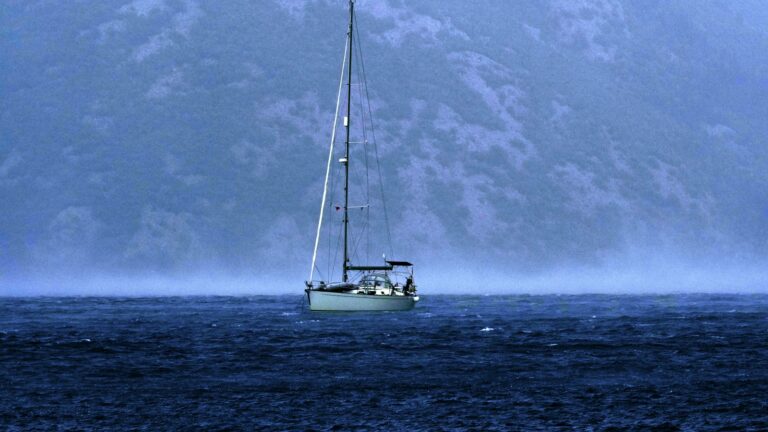
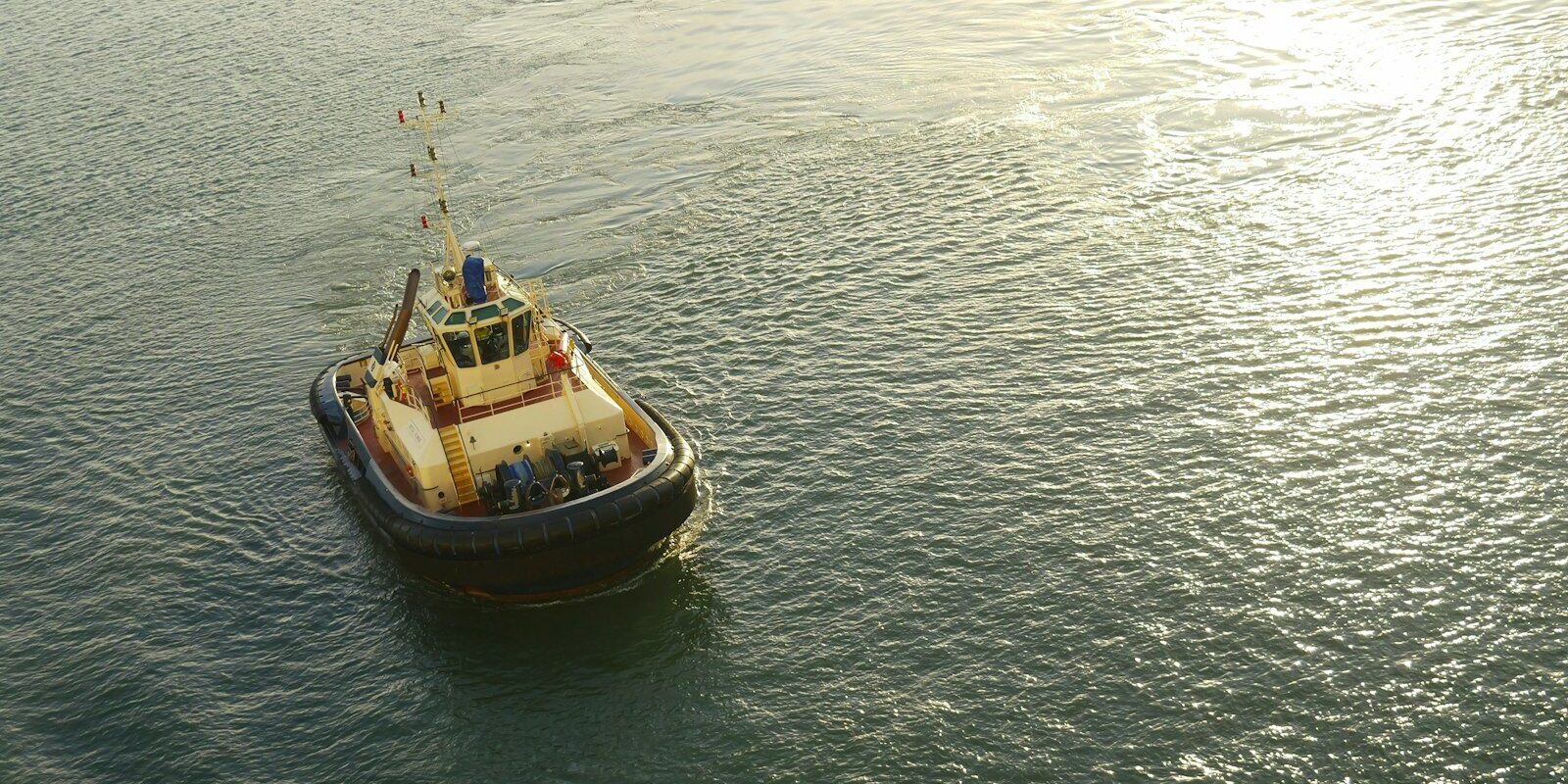
Symbolic image
This page was translated automatically from German. View the original
The Federal Bureau of Maritime Casualty Investigation (BSU) has published its investigation report on a collision off Rügen: in August 2023, a sailing yacht and a tug monitoring a safety zone around two LNG tankers touched on the Nordperd tanker roadstead. In September 2026 the BSU followed up with a summary in its "Lessons Learned" series, addressed explicitly to recreational boat users as well.
The essentials at a glance
- The report is 472/23 dated 29.04.2026, the summary "Lessons Learned 26" is dated 15.09.2026.
- The yacht sailed into a closed roadstead, the tug headed towards her to alert her to this. There was no radio contact before the collision.
- No one was injured, the damage to both vessels was minor.
- The BSU identifies several causes, including an unrecognisable security vessel and trip planning without the current local regulations.
- For sailors this means: check notices to mariners before setting out and, if a VHF radio is on board, monitor the vessel traffic service.
What happened off Rügen?
On 28 August 2023 at about 10:00 two LNG tankers were anchored on the Nordperd roadstead off the east coast of Rügen, near Sassnitz and Mukran. A minimum distance of one nautical mile applied around the tankers, the roadstead was closed to traffic by general order of the Waterways and Shipping Office (WSA) Ostsee. This was published in Notice to Mariners (BfS) 161/23 dated 30.05.2023.
A tug was deployed there as assistance tug and at the same time as traffic security vessel. A sailing yacht with two people on board, travelling from Sassnitz to Świnoujście, entered the safety zone at about 5 to 6 knots. The tug shaped a course towards the yacht to draw her attention to the closure. On board the yacht this looked like a collision course, the crew tacked to starboard. The manoeuvres by both vessels led to contact. Beforehand there had been no radio contact nor light or sound signals; radio communication only took place afterwards.
The yacht suffered scratches in the gelcoat and rubber marks over about two metres of that, there was no leak. On the tug some paint was scuffed. There were no injuries or environmental damage, but the two sailors described the experience as traumatic. The yacht put in to Kröslin. The exact sequence of manoeuvres could not be fully reconstructed for lack of AIS and radar data, but according to the report this is immaterial to the BSU's conclusions.
Why did the collision occur?
According to the BSU report it was not a single error that led to the accident, but the interaction of several factors. The BSU makes clear that its investigation serves solely to prevent future accidents and not to determine fault or liability (Section 9(2) of the Maritime Safety Investigation Act, SUG). Its safety recommendations are also not an assumption about guilt or liability.
- The guard vessel was not recognisable as such from the outside. There is no mandatory marking; in practice it is left to the operator.
- The intercepting course itself created a collision risk. High approach speed and short distance left both crews little time to react.
- The yacht's crew knew that LNG tankers must be given a wide berth, but were not aware of the specific closure of the roadstead. According to their statement, the harbour master had only mentioned the safety distance.
- A VHF radio was on board, but the traffic centre's hourly traffic announcements were not heard.
- Reliably determining a distance of one nautical mile is difficult on many pleasure craft due to lack of suitable equipment. Moreover: there is no radio equipment requirement for pleasure craft, and small crews often cannot manoeuvre and use the radio at the same time.
The BSU considers this case to have disproved the assumption that the mere presence of a guard vessel ensures sufficient attention. It recommends that the Federal Ministry of Transport introduce uniform mandatory marking for such vessels, and that the Directorate-General for Waterways and Shipping introduce, amongst other things, early standardised contact by radio, with safety messages and signals, as well as training standards for skippers. As early as May 2023, the water police of Mecklenburg-Western Pomerania had drawn attention to the navigational prohibition because it was increasingly being disregarded.
What do you take away from the report as a sailor?
The most important lesson is unspectacular: trip planning also includes temporary and local regulations. According to the BSU, these are precisely the ones easily overlooked in pleasure craft navigation.
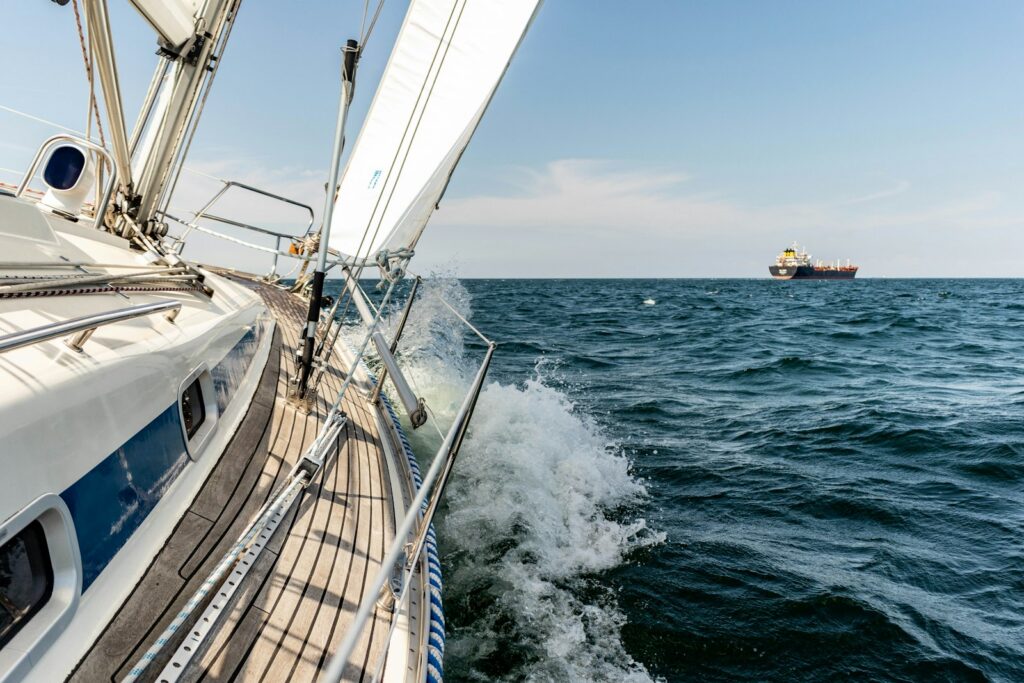
Symbolic image
Before departure: read the notices
Restricted areas, navigational prohibitions and general orders from the waterway and shipping offices appear as notices to mariners on ELWIS, the information service of the Federal Waterways and Shipping Administration. Via ELWIS-Abo you can also subscribe to notices. In addition, the Federal Maritime and Hydrographic Agency (BSH) issues the weekly Notices to Mariners (NfS), since issue 27/2023 only digitally and free of charge (as at October 2026). Verbal information in the harbour does not replace this check. Whether and in what form regulations around tankers apply off Rügen today is best checked by yourself immediately before your trip.
Under way: monitor the traffic centre
Anyone who has a VHF radiotelephone installation on board is obliged under Section 3(1) sentence 2 of the Maritime Navigation Ordinance to monitor and take into account the traffic information from the traffic centre. For the sea area between the Buk lighthouse and the Bay of Pomerania, the Warnemünde traffic centre is responsible. According to ELWIS it operates with several sectors and their own channels, in addition to channel 16 for example "Warnemünde Traffic" on channel 73, "Stralsund Traffic" on channel 67, "Sassnitz Traffic" on channel 13 and "Wolgast Traffic" on channel 9 (as at October 2026). Which sector applies to your route should be clarified before departure and the channel noted. Anyone who would like to refresh their radio certificate will find offers for Radio course – SRC.
On approach: speak early, rules continue to apply
The BSU advises that vessels approaching each other should speak on VHF as early as possible, but also stresses that radio alone is not enough. And: the special task of a guard vessel does not override the navigation and give-way rules. Small crews should ideally agree beforehand who will steer and who will use the radio. In the Logbuch you record which notices you have checked.
Anyone who would like to get to know the Baltic Sea in a relaxed way with experienced skippers will find trips under Sailing in the Baltic Sea. Radio communication, giving way and trip planning can be practised specifically in a Skipper training.
Frequently asked questions
What is a guard vessel?
A guard vessel, also known internationally as a guard vessel, monitors a safety area, for example around anchored tankers or construction sites, and alerts other vessels to it. According to the BSU, there is currently no mandatory uniform marking, so you do not necessarily recognise it at first glance.
Do I have to monitor the traffic centre as a pleasure craft operator?
There is no radio equipment requirement for pleasure craft. However, if you have a VHF radiotelephone installation on board, you must monitor and take into account the traffic information from the relevant traffic centre under Section 3(1) SeeSchStrO (as at October 2026).
Where can I find navigational prohibitions and notices to mariners?
On ELWIS under "Notices to Mariners", and in the weekly Notices to Mariners from the BSH. Under way, the traffic centres provide current information via VHF.
Is the BSU report a judgement on those involved?
No. The BSU investigates under Section 9(2) SUG exclusively to prevent future accidents. It does not determine fault or liability.