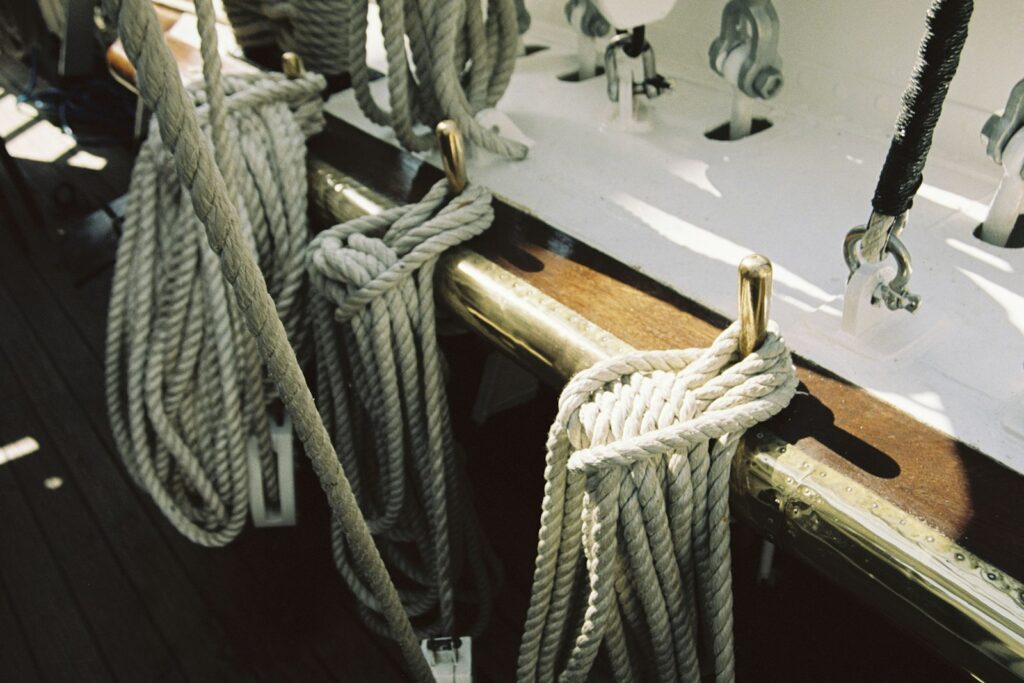
Symbolic image
This page was translated automatically from German. View the original
On board a traditional sailing ship you are not a passenger but part of the crew. Here you can read how a day on board runs, how you sleep and what to pack (as of October 2026). You'll find current sailing trips, prices and sailing areas on the page Cabin Charter on Traditional Sailing Ships and Tall Ships.
The essentials at a glance
- In Germany a traditional ship is a historic vessel whose voyage is in the public interest. It may not be operated for profit.
- You don't usually need sailing experience. The permanent crew will teach you the ropes on board.
- On multi-day sailing trips there is usually a watch system, and everyone helps with sailing, in the galley and with cleaning the ship.
- You sleep in bunks, often in cabins for four to six people.
- Pack a soft bag, oilskins and shoes with non-slip soles.
What is a traditional sailing vessel?
A traditional ship is a historic sailing vessel built predominantly with the materials of its construction period, essentially corresponding to its original state, and intended for preservation due to its design, former use and rarity. In individual cases, the reconstruction of a documented historic model or a sail training ship of at least 24 metres in length may also be approved as a traditional ship. For a vessel to operate as a traditional ship, there must be a public interest in showing the ship under sail.
In Germany, the authority responsible for safety is the Dienststelle Schiffssicherheit of BG Verkehr, the body responsible for the safety of vessels under the German flag. It issues the safety certificate, a kind of approval valid for a maximum of five years with an intermediate inspection. The rules for traditional ships were revised in March 2018, replacing the earlier safety directive.
Important for you as a guest: operations must serve non-commercial purposes, primarily the passing on of traditional seamanship and historic ship technology. Money paid by guests for joining a trip may only be used for the preservation and operation of the ship. No profit may be distributed.
Why the permanent crew often work as volunteers
Many traditional ships are operated by associations. Captain, mates, engineer and cook often sail without payment, and the winter refit is also largely carried out by volunteers. This combination of preservation and training shapes the atmosphere on board. You are not a customer of a tour operator, but pitch in for a common goal.
Traditional shipping in Germany also has its own umbrella organisation representing its interests.
Traditional sailing ship or tall ship: what changes on board?
“Tall ship” and “windjammer” describe above all the size and rig of a vessel, not its legal status. You can read more on the page Cabin Charter on Traditional Sailing Ships and Tall Ships. For you as a guest, the difference shows mainly in everyday life on board:
- Accommodation ranges from cabins for four or six people to double cabins with en-suite shower.
- How much participation is expected varies. On some vessels it's an integral part; on others, you pitch in if you wish.
- On day trips during major harbour festivals, joining in is often voluntary – you can simply watch.
What does a day on board look like?
On a multi-day trip, your day is governed by the watch: you're assigned to a group on duty at fixed times. In between, you're free until the command "all hands" is called.
The watch system
Often there are three watches alternating in four-hour shifts. Each watch is led by an experienced member of the permanent crew. On your watch, you helm, keep lookout or help with navigation. If the ship sails through the night, the system runs around the clock. If the vessel lies in harbour for the evening, the group often goes ashore together.
Setting sail with many hands
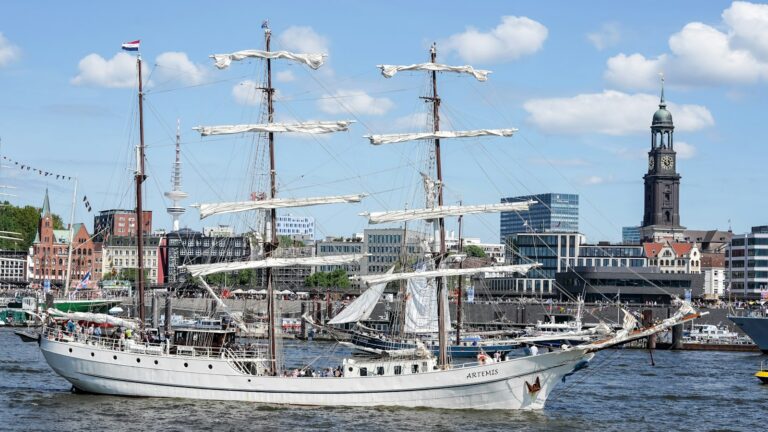
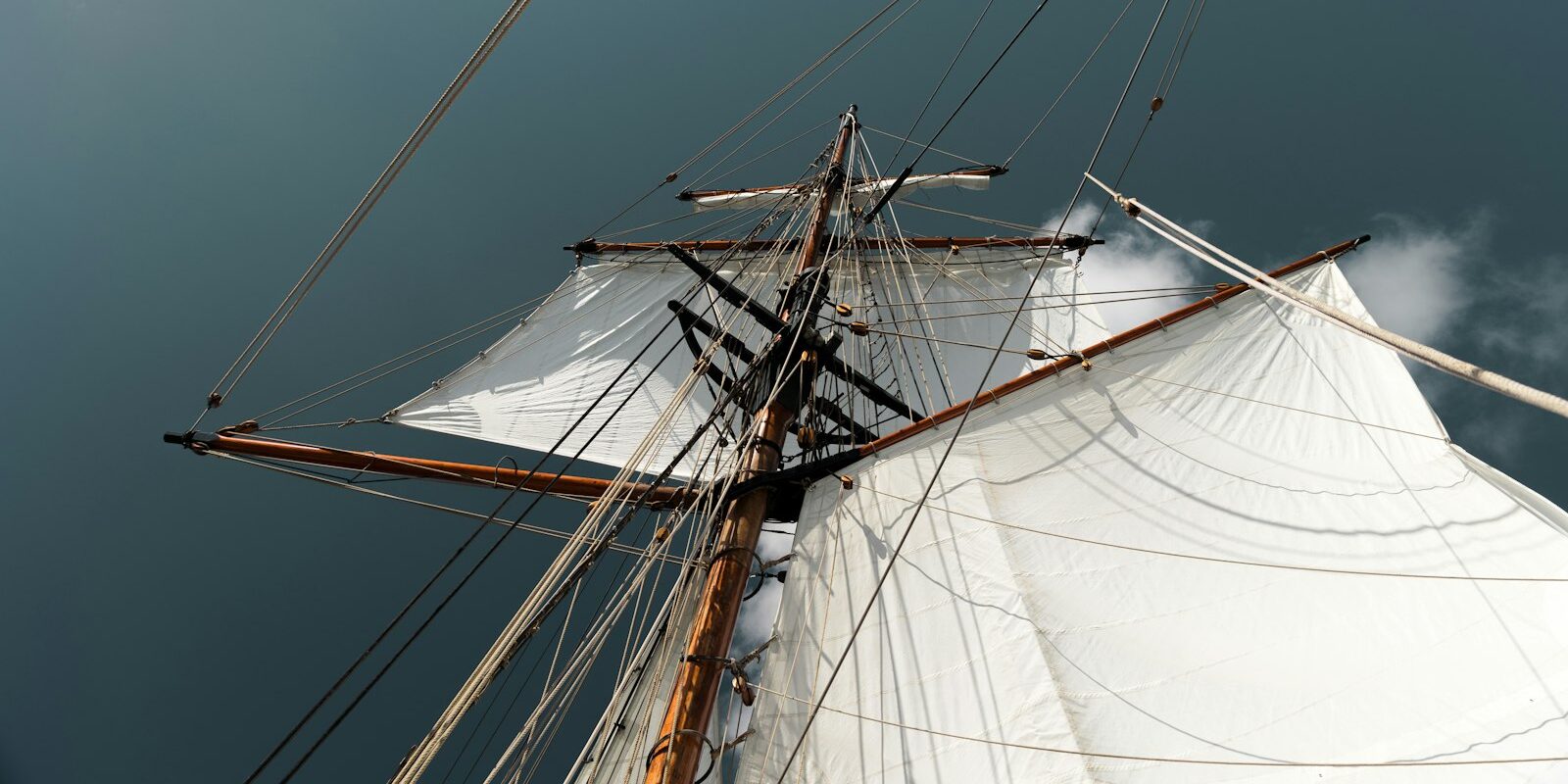
On many traditional ships, sailing is largely done by hand. Halyards (lines for hoisting sails) and sheets (lines for trimming sails) are hauled by muscle power. On square-riggers, whose sails hang from yards – horizontal spars mounted on the mast – there are also braces for rotating the yards. This requires many people pulling simultaneously. That's why guests are needed. Anyone wishing to sort out the terminology beforehand will find a good foundation in our overview of the different types of sail .
Galley and ship cleaning
The galley is the ship's kitchen. The cook is usually part of the permanent crew, but guests help with peeling potatoes, laying the table and washing up. Typically, galley duties are assigned on a rota. Ship cleaning – the communal cleaning of the vessel – is also part of daily life. Some ships openly call this "hands-on full board".
Bunks and cabins
You sleep in bunks – narrow beds, often in bunk beds. Depending on the vessel, you share a cabin with one, three or five other people. Luggage space is tight, and there isn't always peace and quiet when the next watch gets up.
Do I need sailing experience for a traditional ship?
No. Most vessels require no prior knowledge and explain everything step by step. Experience simply helps you get up to speed more quickly.
Things look somewhat different on long passages across open sea, for example into the Atlantic or to Norway. There the days are longer, the weather rougher and the watches more tiring. For the first sailing trip a weekend or a week near the coast is therefore the more relaxed choice.
Where traditional sailing ships go
Most sailing trips take place between spring and autumn on the Baltic Sea, the North Sea, the Wadden Sea and the IJsselmeer. In the Wadden Sea the tides come into play: flat-bottomed ships sometimes dry out at low tide, and you can then walk across the mudflats around the ship. The page below shows which harbours and sailing areas are currently on offer: Cabin Charter on Traditional Sailing Ships and Tall Ships.
Day trips at harbour festivals
In the Hanse Sail in August and the Kiel Week in June, many traditional sailing ships offer day and evening trips, some of them for groups only. Places are limited.
Good to know: on day sailings with many guests there are limits on wind, sea state and distance from the coast. At night considerably fewer people are allowed on board. The exact number is stated in each ship's safety certificate.
Who is a trip on a traditional vessel suitable for?
For anyone who enjoys being outdoors, mucking in and being part of a group. On some ships the age of guests outside school holidays ranges from about 15 to 85. During the summer holidays many association trips are aimed specifically at young people.
You should honestly assess yourself on these points:
- Companionways, meaning the stairs below deck, are steep and narrow, often more ladders than stairs.
- The deck is wet in a seaway and moves. You need a secure footing and both hands.
- Night watches and short sleep periods take their toll.
- Privacy is scarce; you share cabin, washroom and table.
On traditional vessels under the German flag, at least one person sails on every voyage who is responsible for medical care on board and trained for this purpose. If you have doubts whether your health is suited to such a trip, speak to your doctor beforehand.
What should you pack?
Pack in a soft bag rather than a suitcase. Hard suitcases are almost impossible to stow below deck.
- Weatherproof jacket and trousers (oilskins), even in summer
- Shoes with non-slip rubber soles, plus rubber boots for wet weather
- Warm layers, hat and gloves for night watches
- Work gloves for the lines if you have sensitive hands
- Head torch with red light so you do not wake those sleeping
- Your own medication, for example against seasickness after consulting your doctor
Whether sleeping bags and bed linen are provided varies from ship to ship. Sprays are not welcome on some ships; a roll-on deodorant is the safe choice.
Where do you get authoritative information?
Responsible for traditional vessels under the German flag is the Dienststelle Schiffssicherheit of the BG Verkehr. On their site you will find the official information on traditional vessels. For historic passenger sailing vessels in the Netherlands the transport inspectorate there is responsible, the Inspectie Leefomgeving en Transport.
Frequently asked questions
Do I have to climb the rigging on a traditional ship?
No, not necessarily. Most tasks are on deck: hauling lines, helming, keeping lookout. Whether guests are allowed to go aloft into the rigging — that is, masts and yards with their lines — varies from ship to ship.
Can I join a trip on my own?
Yes. Places are usually allocated per person, and on board you will be assigned to a watch. This way you get to know the others quickly.
Is a traditional ship less safe than a modern passenger vessel?
Traditional ships do not have to meet every building regulation that applies to modern passenger vessels. However, they are inspected regularly, and the number of persons on board is specified in the safety certificate.
How long does a sailing trip last?
From an evening sail to a weekend trip to a passage of two weeks and more. For beginners, day sails or short coastal trips are suitable.
Finding sailing trips on traditional ships
You'll find current trips on traditional sailing ships and tall ships, with prices, dates and departure harbours, on the page Cabin Charter on Traditional Sailing Ships and Tall Ships. If you want to browse by sailing area, the pages on the Baltic Sea and the North Sea will help you further.