
Sailing voyage Z01-27: North Sea delivery trip, sailing course
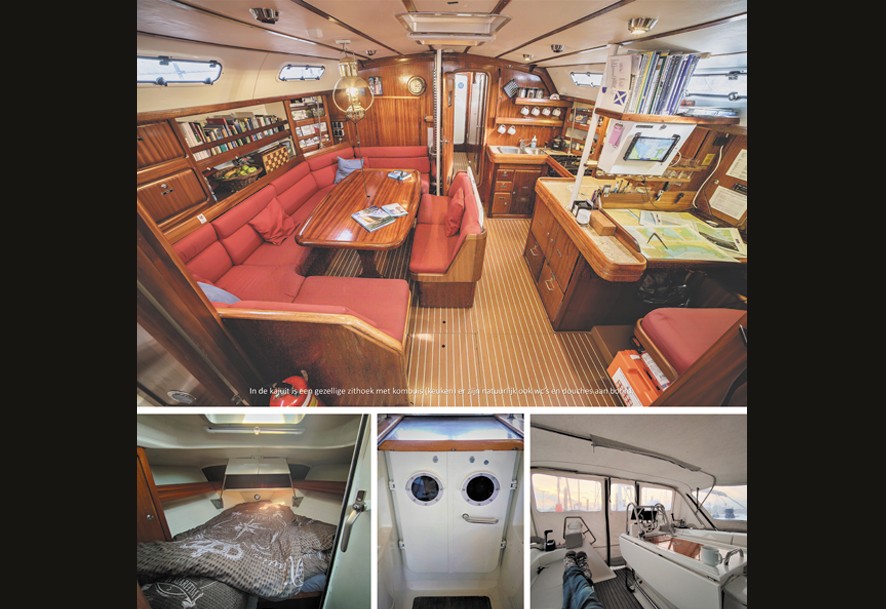
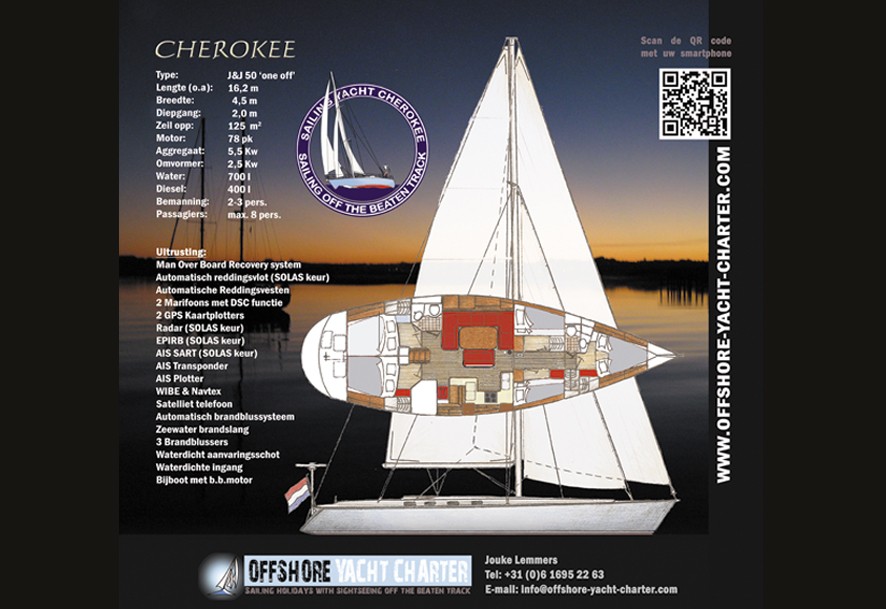
 Offshore Yacht Charter
This page was translated automatically from German. View the original
Cabin Charter with Skipper and Crew/Cook:
Cabin charter is the ideal way to enjoy wonderful sailing trips for anyone who loves being on the water, and it suits couples, solo travellers, groups of friends and families alike. If you book as an individual, you travel alone but spend your holiday with a group of like-minded people. The advantage of chartering a sailing yacht with a crew is clear:
– The crew takes care of everything to do with the sailing during the voyage.
– The provisioning for the sailing voyage is done by the mate before you come aboard.
– The crew is experienced, and the sailing boat is in perfect condition and spotlessly clean.
– The mate also cooks (vegetarian for those who prefer it), but of course we expect your help here.
The sailing voyage:
Z01-27: Scotland delivery trip – offshore sail training and tidal navigation at sea (580 nm)
This offshore sail training begins in the heart of Rotterdam with a special first leg. We sail under the Erasmus Bridge and along the Nieuwe Waterweg towards Maassluis, and possibly on to Scheveningen. This is an ideal time to go through the safety procedures on board and ease into the trip. At the same time, we get to experience Rotterdam from the water – among commercial shipping, container terminals and the city's distinctive bridges.
On the way, we get to know the VHF radio sectors of the Nieuwe Waterweg and learn how the vessel traffic service works. Depending on the current and tides, we reach Maassluis after a few hours, where we prepare for route planning and the night sailing ahead.
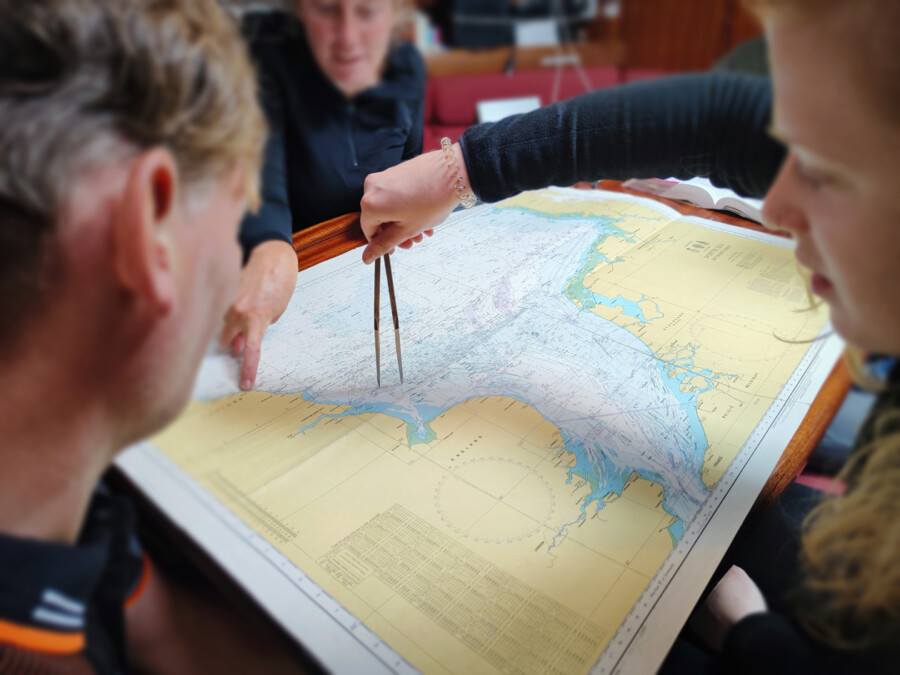
In the evening, we draw up a passage plan together based on the latest weather forecasts. Along the way, we learn to interpret weather charts, recognise frontal systems and turn weather information into practical decisions on board. Weather routing and meteorology are important parts of any offshore sail training and hands-on sailing course.
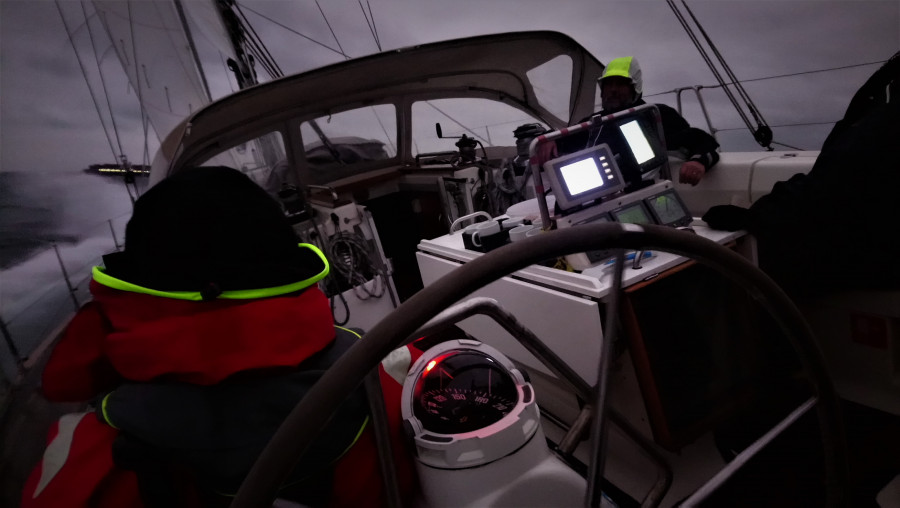
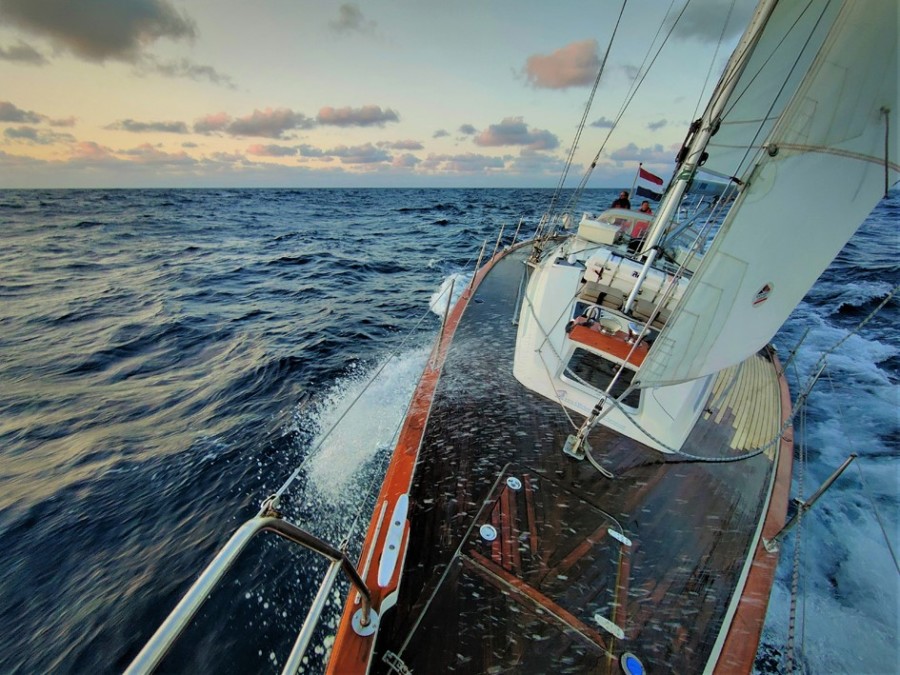
The next day, we cross the North Sea and head for Whitby on the English east coast. The passage covers around 230 nautical miles. On the way, we pass traffic separation schemes, oil and gas platforms, offshore wind farms and busy shipping lanes. This offshore passage offers excellent opportunities to practise radar, AIS, lookout duties, navigation lights and night sailing in real conditions.
Depending on conditions, we spend one or two nights at sea. We sail a watch system, so that all crew members take an active part in navigation, seamanship and running the vessel.
Whitby is an atmospheric historic fishing port on the English east coast. If wind and schedule allow, there is time for a stroll through the old town, a visit to the famous abbey, or simply to soak up the typically English atmosphere.
During this mile building trip, we sail a three-watch system: three hours on watch and six hours off. This keeps the crew well rested and alert even on longer sea passages. This system has proved comfortable and effective, especially at night.
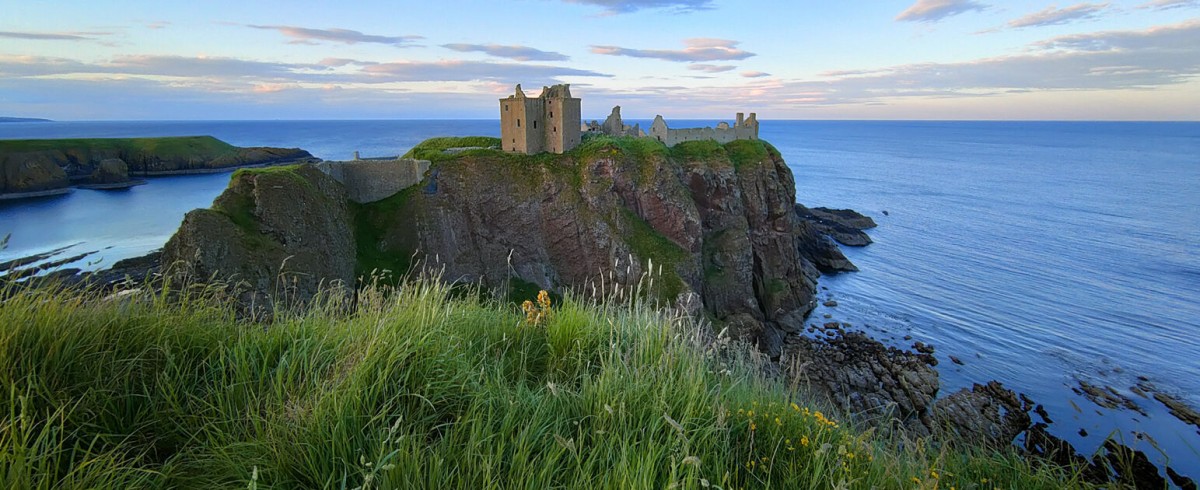
After Whitby, we continue north, following the English coast towards Scotland. This leg also includes another night at sea. We stay actively engaged with sailing, navigation and lookout, keeping an eye out for commercial shipping, fishing vessels and offshore wind farms. The exact route depends on the weather, wind and tides. If conditions are favourable, we make a stopover in the charming harbour of Stonehaven along the way.
This time, the offshore sail training ends in Stromness on the Orkney Islands. The final leg holds one of the best-known navigational challenges in northern Europe: the passage through the notorious Pentland Firth.
This strait is known for its strong tidal streams, which can locally reach speeds of over 10 knots. Add to that tide rips, overfalls and eddies, which make careful tidal planning essential. Together we calculate the optimum departure time, analyse tidal stream atlases and put the theory of tidal and current navigation straight into practice. For many participants, this is one of the most instructive parts of the entire trip.
After a hopefully successful passage, we sail into Scapa Flow – one of the largest natural harbours in the world and, for centuries, an important anchorage for merchant and war ships. The bay is rich in maritime history. It was here in 1919 that the German High Seas Fleet scuttled itself to avoid falling into Allied hands. During the Second World War, the battleship HMS Royal Oak was also sunk here by a German U-boat.
In response to this attack, Winston Churchill had the eastern approaches to Scapa Flow closed off with the famous Churchill Barriers, which still connect the islands to this day. The many visible relics from both world wars make Scapa Flow one of the most fascinating historic anchorages in Europe.
Finally, we arrive in Stromness, a harbour town full of character with a long maritime tradition. There we round off the trip in the traditional way, with a shared dinner and a beer in the pub.
This offshore sailing training combines offshore sailing, night sailing, tidal navigation, tide planning, weather routing, seamanship and practical navigation with an impressive sailing voyage along the English and Scottish coast. The combination of challenging tidal waters, busy shipping lanes and long offshore passages makes this mile building trip ideal for sailors who want to broaden their experience at sea and deepen their navigational skills.
The itinerary described depends on weather, wind and tides. If conditions require, the route may be adjusted accordingly.
The price includes:
– Skipper and crew/cook
– Food and drinks on board.
– Fuel, water, shore power, harbour fees and tourist tax.
– A set of towels and bed linen, as well as a lifejacket.
– Wine and beer are available on board after sailing, based on average consumption. Should supplies run low, you can top them up yourself at any time.
Not included:
– Your transfer, i.e. the journey to the boat and from the boat back home.
– Sailing clothing: you can hire this from us on request.
– Possible shore excursions, such as hiring a bus or visiting a museum, for example.
– Food and drinks ashore. On our last day of travel, we go out for dinner in the evening (at your own expense).
Map from OpenStreetMap. When the map is displayed, data is transmitted to the provider.
More InformationMap from OpenStreetMap. When the map is displayed, data is transmitted to the provider.
More InformationOne off
51 feet
