This page was translated automatically from German. View the original
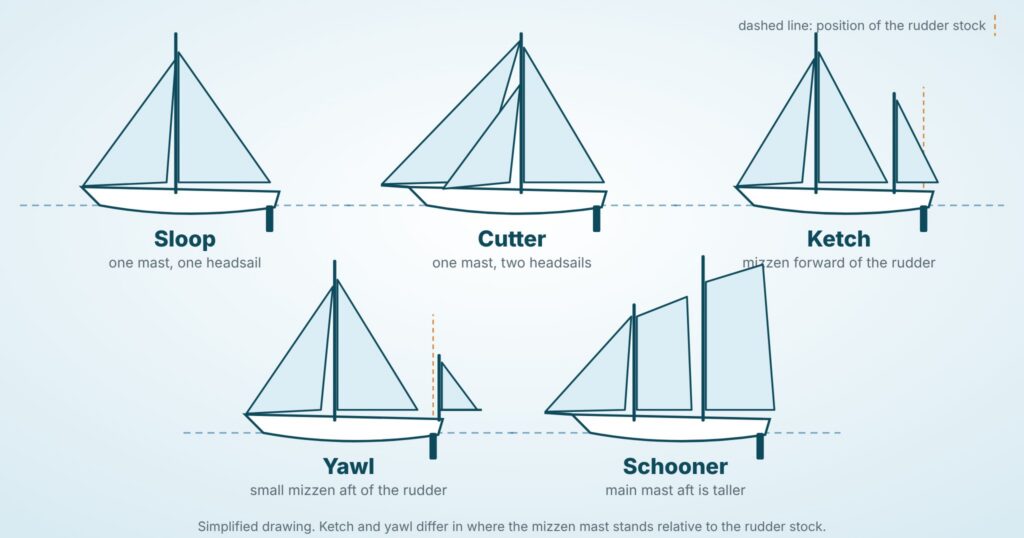
A sailboat's rig tells you how many masts it has, where they stand and how the sails are arranged on them. The typical modern cruising yacht is a sloop; you can recognise the other rigs by the number, height and position of the masts and by the number of headsails.
The essentials at a glance
- One mast: cat (mainsail only), sloop (mainsail and one headsail) and cutter (two or more headsails).
- Two masts with a smaller mast aft: ketch and yawl. On a ketch this mast stands forward of the rudder stock, i.e. the axis around which the rudder blade turns, on a yawl behind it.
- On a schooner the forward mast is shorter than or the same height as the aft mast.
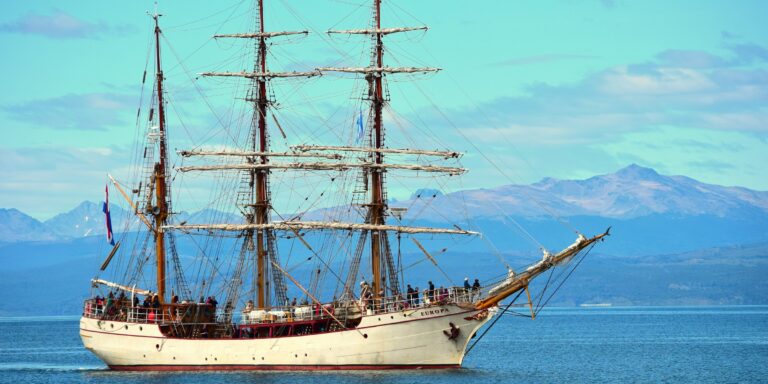
- Brigs, barques and full-rigged ships carry square sails, i.e. rectangular sails set across the ship.
- On a sloop, a distinction is made between masthead rig and 7/8 rig, depending on whether the forestay, the stay running from the bow to the mast, is attached at the masthead or lower down the mast.
What types of rig are there on sailing boats?
The main rig types are cat, sloop and cutter with one mast, ketch, yawl and schooner with two or more masts, and the square-riggers brig, barque and full-rigged ship. They are distinguished by the number and position of the masts and by whether the sails are set fore-and-aft or across the ship.
| Rig | Masts | Distinguishing feature | typical for |
|---|---|---|---|
| Cat | 1 | only one sail, no headsail | dinghies, small boats |
| Sloop | 1 | mainsail and one headsail | cruising, charter and training yachts |
| Kutter | 1 | two or more headsails one behind the other | cruising yachts |
| Ketch | 2 | smaller mizzen mast forward of the rudder post | larger cruising yachts, traditional ships |
| Yawl | 2 | very small mast (jigger) aft of the rudder post | classic yachts |
| Schoner | 2 or more | foremast lower than or the same height as the main mast | Traditional sailing ships |
| Brig | 2 | both masts with square sails | tall ships, sail training vessels |
| Barque | 3 or more | aftermost mast without square sails | tall ships, sail training vessels |
| full-rigged ship | 3 or more | all masts with square sails | Tall ship |
What is a cat rig?
The cat rig is the simplest form: one mast and just one sail, with no headsail. You will find it mainly on small boats and dinghies.
Because there is only one sail to handle, the cat rig is particularly easy to manage.
What is a sloop?
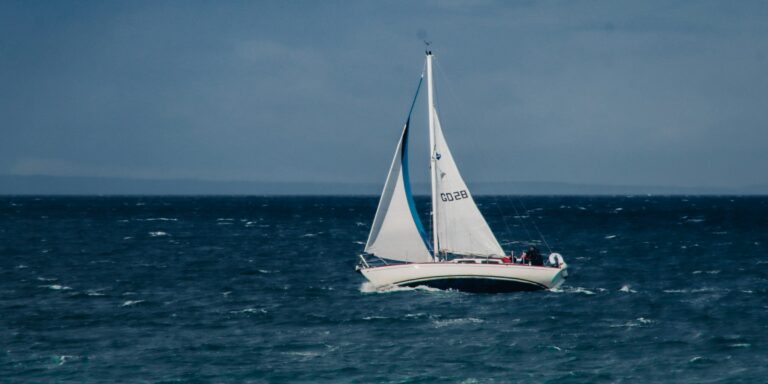
A sloop has one mast with a mainsail and a headsail. It is the standard rig of modern cruising yachts, and sail training is also based on it.
The mainsail sits abaft the mast on the boom, the headsail in front of it on the forestay. Whether a jib or a genoa is flown there makes no difference to the rig. We explain the difference between the two headsails in the article Genoa or jib.
Masthead rig and 7/8 rig
With a masthead rig, the forestay, and with it the headsail, reaches all the way to the masthead. With the 7/8 rig, also known as a fractional rig, the forestay is attached to the mast clearly lower than the backstay, the bracing from the stern to the masthead, at roughly seven eighths of the height. There are also fractional rigs with an even higher attachment point, around 19/20.
The practical difference: with a fractional rig the headsail is smaller and the mainsail provides a larger share of the drive. By adjusting the tension of the backstay, the mast can be bent and the mainsail trimmed flatter.
What is a cutter?
Like the sloop, a cutter has only one mast, but sets two or more headsails one behind the other. Classic cutters usually have a bowsprit or jib boom, a spar extending beyond the bow that carries the outer headsail further forward.
The inner headsail is set on a second stay, the cutter stay, which attaches to the mast a little below the forestay. It is smaller and more strongly built. When the wind picks up, the crew can take down the outer headsail and carry on sailing with the inner one. Which sails are suitable for this is explained in the article on the different sails on a sailing boat.
Risk of confusion: Kutter is also the German word for a motor-powered fishing vessel. Here, only the rig is meant.
Ketch and yawl: what is the difference?
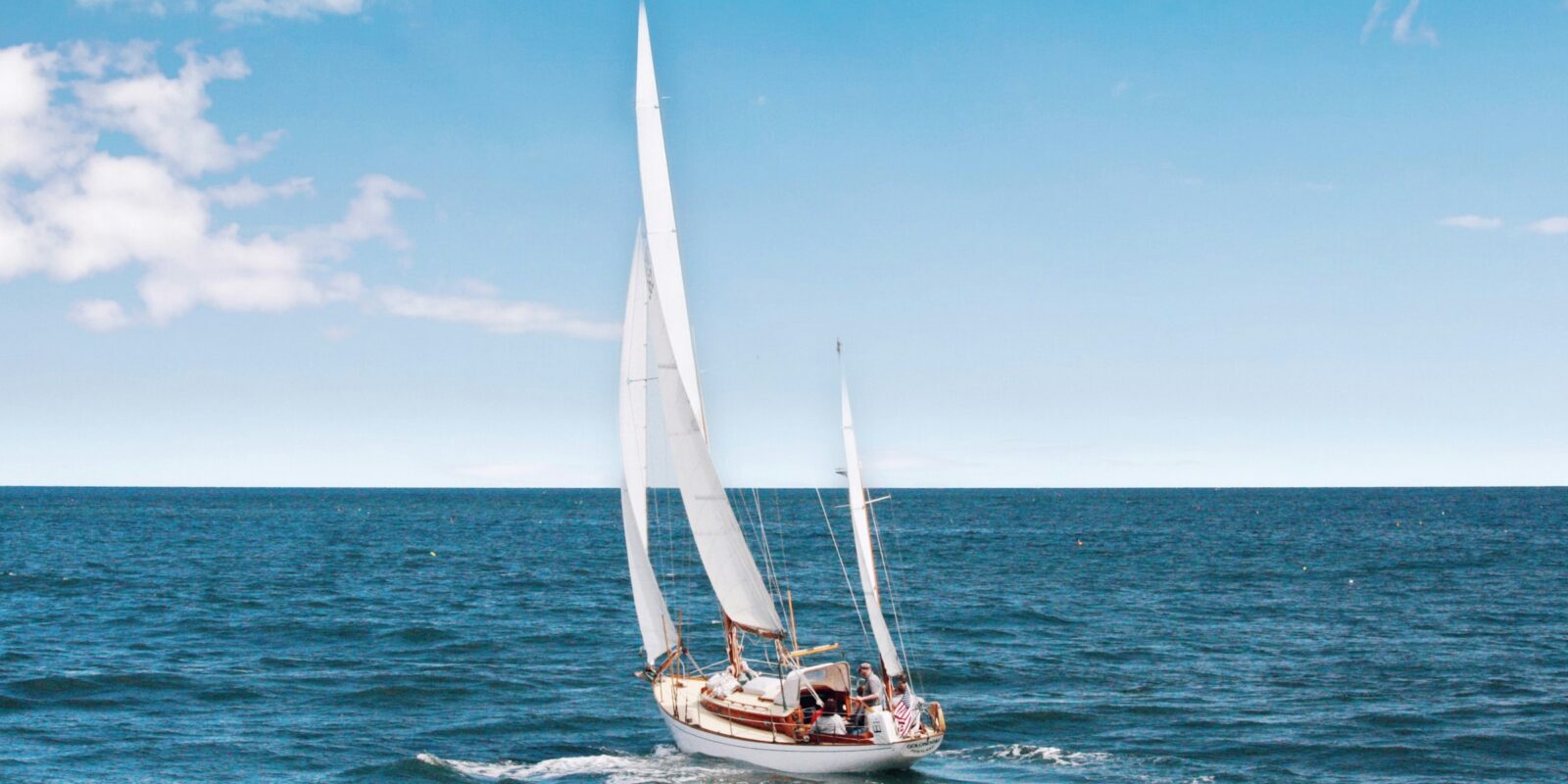
A ketch and a yawl both have two masts: the taller main mast at the front and a smaller mast aft. The difference lies in the position of this mast relative to the helm: on a ketch it stands forward of the rudder stock, on a yawl it stands behind it.
Ketch
The aft mast of a ketch is called the mizzen mast, and the sail on it the mizzen. It is considerably larger than the mizzen of a yawl (known in German as the Treiber). The sail area is therefore divided between more, but smaller, sails. This makes each individual sail easier to handle.
In 6 to 7 Beaufort, a ketch usually sails with the jib, a reefed mainsail and a reefed mizzen. If she is carrying weather helm, that is, turning into the wind on her own, it helps to reef or drop the mizzen and to reef the mainsail.
Yawl
On a yawl, the aft mast is considerably shorter and stands far back at the stern, behind the rudder stock. The small sail on it is called the mizzen.
The rule of thumb from the pontoon: if the small mast stands right at the stern, behind the helm, and carries only a small sail, it is a yawl. If it stands forward of the helm and carries a clearly larger sail, it is a ketch.
What is a schooner?
A schooner has two or more masts, and the forward one is shorter than or the same height as the aft one. This distinguishes it at first glance from a ketch and a yawl, where the smaller mast stands aft.
The sail on the foremast is called the schooner sail. Large schooners carry a mainmast behind the smaller foremast, with further masts of roughly the same height behind it. If the sails are carried on a gaff, a sloping spar along the upper edge of the sail, it is called a gaff schooner. Schooners are among the ship types that you mostly experience today as traditional sailing ships.
What are square-riggers?
Square-riggers carry rectangular sails on horizontal spars called yards. When at rest, these sails sit across the ship. Cats, sloops, cutters, ketches, yawls and schooners, by contrast, carry fore-and-aft sails, which sit along the length of the ship.
- Brig: two masts, both with square sails. One example is the “Roald Amundsen” from Eckernförde.
- Barque: three or more masts, all but the aftmost with square sails, while the aftmost carries fore-and-aft sails. The sail training ship “Gorch Fock” of the German Navy, with two square-rigged masts and one gaff-rigged mast, is rigged this way, as is the “Alexander von Humboldt II”.
- Full-rigged ship: three or more masts, all with square sails.
There are also hybrid forms in between: the brigantine has two masts, and only the foremast carries square sails. The barquentine has three or more masts, of which only the foremost is square-rigged.
What rig can you expect on a sailing trip?
On most yacht sailing trips you will be sailing on a sloop. The typical charter and training yacht has one mast, a triangular mainsail and a headsail, often a furling sail.
Cutters and ketches are more likely to be found on individual larger cruising yachts and traditional ships. If you sign on to a traditional sailing ship, you will often find yourself aboard a schooner, a ketch, a brig or a barque, learning to work with many sails and many hands. What everyday life is like there is described in our article Life aboard a traditional sailing ship.
Incidentally, underwater it is the keel that helps determine how a boat sails. You can read about the different shapes in our comparison of keel types on sailing boats.
Frequently asked questions
What is the difference between rig and rigging?
Rigging is the whole of the masts, booms, stays, shrouds and lines that carry the sails. Rig type refers to the kind of rigging, such as sloop or ketch.
What is a 7/8 rig?
The forestay is attached at about seven eighths of the mast height rather than at the masthead. This makes the headsail smaller, and the mast can be bent using the backstay.
How do I recognise a ketch?
It has two masts, the rear one being smaller and standing forward of the rudder post. If the small mast stands aft of the rudder post, it is a yawl.
How many masts does a schooner have?
At least two. Large schooners can have up to seven masts.
Is a catamaran a cat rig?
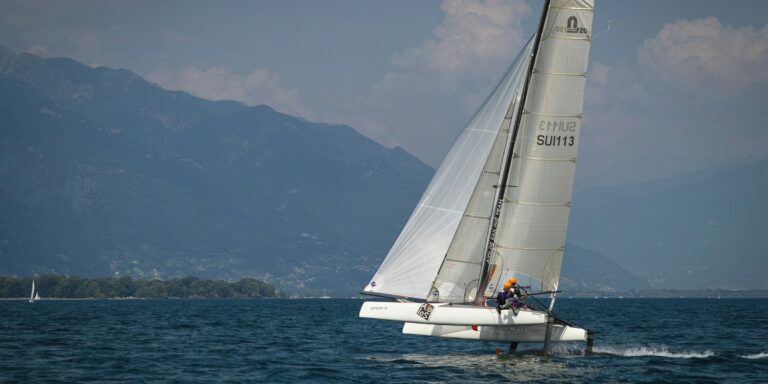
No. A catamaran is a boat with two hulls, whereas a cat rig is a rig with just one sail.
Getting to know rig types on board
The quickest way to learn the differences is to have sheets and halyards in your own hands, that is, the lines for trimming and hoisting the sails. On Törnfinder you will find Sail training, where you set, trim and reef the sails with an instructor on board.