

This page was translated automatically from German. View the original
Seafaring is full of secrets and mysteries, and two terms that consistently cause furrowed brows are starboard and port. But why don't seafarers simply use the terms right and left? Let's dive into the fascinating world of maritime terminology to solve this mystery.
The meaning of starboard and port
Before we plunge into the depths of history, let's clarify what these terms actually mean. Starboard refers to the right-hand side of a ship when looking in the direction of travel , whilst port designates the left-hand side.
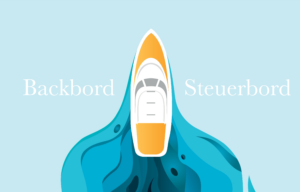
Starboard and port on a boat
The roots of these terms reach far back to the time when pirates still sailed the seven seas and sailing ships were the world's principal means of transport. But how did mariners come to use these peculiar terms?
The origin of starboard
Starboard has quite a logical explanation when you consider that early ships had a steering oar on the right-hand side. Sailors used this side to operate the rudder and steer the ship. So they simply called it starboard – it's as simple as that!
The origin of port
But what about 'port'? Well, here it gets a bit trickier. This term probably derives from the Old Norse word 'bak', meaning 'back' or 'rear'. When the steering oar was on the right-hand side of the ship, the left-hand side somehow seemed to be the 'back', which eventually led to 'port'. Who'd have thought sailors could be so poetic?
But why not simply right and left?
Unlike left and right, the terms starboard and port define the side of a boat relative to its direction of travel. And that's regardless of what position you yourself are in on the boat. Whether I'm facing aft or forwards, starboard isn't simply right, but always right in the direction of travel. That's why the terms starboard and port are still indispensable in seafaring today. They ensure clear and unambiguous communication, even in hectic situations on board.
A practical example
When the skipper instructs the crew to deploy fenders on the starboard side, every crew member knows which side is meant. If the skipper were to instruct the crew to deploy the fenders on the right, confusion would immediately arise. Depending on the skipper's line of sight and the crew's line of sight at the time of the instruction, right can refer to different sides of the boat and is therefore not unambiguous.
Which navigation lights are used on starboard and port?
Navigation lights make it possible to identify a ship's direction of travel even at night. The navigation light on the starboard side shines green, the navigation light on the port side shines red.
Learn more sailing knowledge in practice? How about a Skipper training?


That's not quite right. If I say deploy fenders on the right, it's clear that it's to the right of the ship in the direction of travel. Just like on a car, the left headlight is always the left one in the direction of travel. Confusion would arise if untrained people were involved, but they'd also have to think about nautical terminology and would be confused. You also always give the direction of rotation for machines from the driving side, from the engine towards the shaft. But I understand what you mean and of course I think it's right.