Country · Denmark

cabin charter in Denmark

Cabin charter in Denmark means: you book a bunk (your berth on board) on a yacht or traditional sailing vessel, and a skipper takes the vessel to the islands of the Danish South Sea Islands, through the Little Belt or all the way to Copenhagen. Many trips start in Flensburg or Kiel, so Denmark is only a day's sail away. You don't need a sailing licence for this.

Updated: 27 October 2026 · Redaktion toernfinder.de
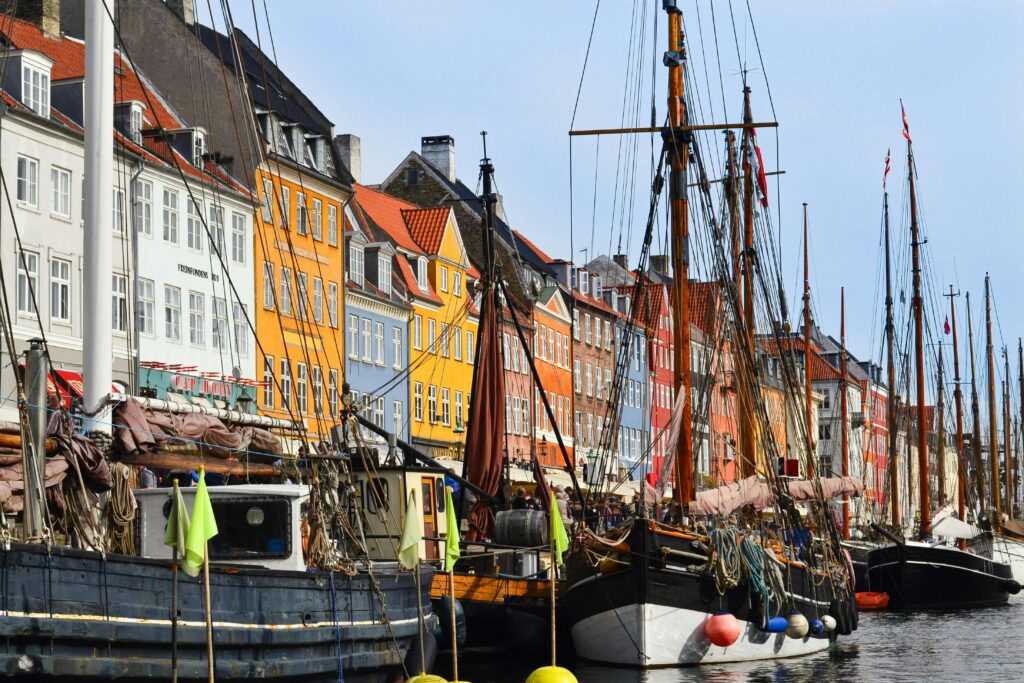
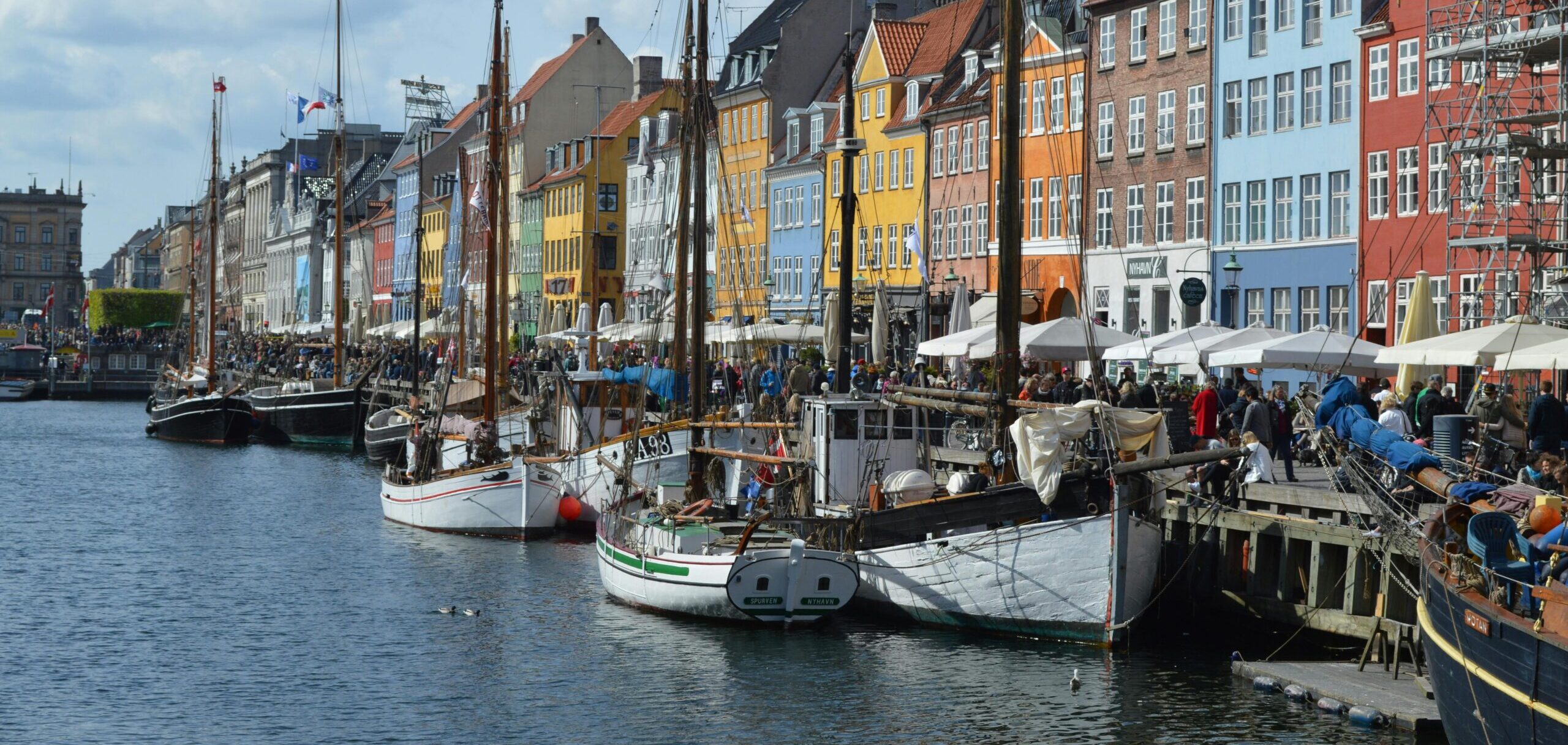
Wooden boats and colourful houses at Nyhavn in Copenhagen
316 current trips
from 32 providers compared

The essentials at a glance

Season
March to December, usually May to September
Duration
Usually one week, also short trips and sail­training trips
Most common departure ports
Flensburg, Kiel, Kappeln an der Schlei, Eckernförde and Breege
Requirements
No sailing licence required
Week-long trip per person
mostly 700–1,150 €

Current sailing trips in Denmark

Here you can see a changing selection of current Denmark trips, from a week-long trip through the Danish South Sea Islands to sail training for a sailing licence. Use the buttons to filter the list by trip type. Most trips depart from Flensburg, Kiel, Kappeln an der Schlei, Eckernförde and Breege. Your enquiry goes directly to the provider; booking is also made directly with them.

Cabin charter
NEW

Swedish Skerries 2027 | Sailing Voyage from Copenhagen to Gothenburg

Copenhagen (DK)08.07.20278 days
Rederij van Linschoten
from 2,100 €
View trip
Cabin charter
NEW

Whitsun sailing trip: the chance for a short sailing holiday!

Eckernförde14.05.20274 days
Abel Tasman
from 507 €
View trip
Cabin charter

Kappeln Flensburg – through the Danish South Sea Islands with the tradi

Kappeln19.06.20278 days

klassiker segeln
from 880 €
View trip
Sail training

SKS practical sailing from Flensburg

Flensburg03.07.20278 days
Mola Yachting
from 698 €
View trip
Cabin charter

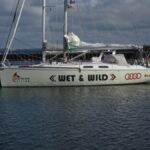
Sailing trips on the Baltic Sea – Danish South Sea SY WET AND WILD

Kappeln an der Schlei02.10.20278 days
Skippercrew Sailing
from 620 €
View trip
Cabin charter

Sailing trips on the Baltic Sea – Danish South Sea SY WET AND WILD

Kappeln an der Schlei12.06.20278 days
Skippercrew Sailing
from 620 €
View trip

How cabin charter works in Denmark

With cabin charter in Denmark you book a berth on board, not the whole boat. The skipper plans the route between the islands, navigates the yacht and bears responsibility; you are part of the crew.

Each berth is allocated individually, so you can book on your own. Most trips last a week and finish back at the departure harbour, often in Flensburg or Kiel. Sailing is mostly by day; a passage to the next island rarely takes more than a few hours. In the evening the yacht lies in a small island harbour with half-timbered houses, a smokehouse and a village shop by the quay.

Harbours and berthing in Denmark

Danish harbours are usually well equipped, with showers, electricity and often a barbecue area by the pontoon. In many harbours you make fast between poles, with the bow to the quay. Harbour dues are often paid at a machine, in kroner or by card. In high season popular island harbours fill up by the afternoon, with yachts rafted alongside one another.

Cabin charter in Denmark: commercial or private

Denmark trips are offered mainly by sailing schools, skippers with their own business and operators of traditional vessels. Alongside these, private owners seek crew for their own yacht and share the costs of the trip across the crew. A special form is hand for a bunk: you work on board and in return pay little or nothing for your berth; more on this on the page Working passage.

Historic sailing ships in front of colourful houses in Copenhagen
One in three Denmark trips

Sailing on traditional vessels in Denmark

About one in three of the Denmark trips published here take place on a traditional ship or tall ship, where guests lend a hand.

Many of these vessels are old cargo sailors, fishing cutters or shark cutters now sailing with guests. The Danish South Sea Islands with their short distances and sheltered waters are a classic area for this; Marstal on Ærø was once one of Denmark's largest seaports. Sails are set by hand, the permanent crew show you what to do, and you need no previous experience.

View traditional sailing ships trips
Törnfinder data

Denmark in numbers

Analysed: all Denmark trips published on Törnfinder. As at: 25.11.2026.

Most common departure ports

  1. 1Flensburg99 trips
  2. 2Kiel52 trips
  3. 3Kappeln an der Schlei29 trips
  4. 4Eckernförde20 trips
  5. 5Breege14 trips
66 %of trips last 7–8 days
70 %are round trips, start and finish in the same port
31 %take place on a traditional ship or tall ship
30different departure ports
12other countries on offer, led by Germany and Sweden
180 nmcovered by a typical week-long trip

As of 25.11.2026: Törnfinder lists around 320 Denmark trips from 32 providers. 66 % last 7–8 days, 70 % are round trips with the same start and end port and 31 % take place on a traditional ship or tall ship. Most trips start in Flensburg, Kiel and Kappeln an der Schlei, and most departures are in May and July. A week-long trip usually costs 700–1,150 € per person.

How these figures are calculated

All trips published on Törnfinder with the country Denmark and departure date from today are analysed; the figures are recalculated twice a day. Prices are those stated by providers per person; offers for a whole yacht with skipper, which are charged per boat, are not included in the prices. "Most" denotes the middle half of offers, with the cheapest and most expensive quarters excluded. Departure is the starting harbour named in the listing; a round trip is one with the same departure and destination. The texts on this page are written and checked by the toernfinder.de editorial team.

Sailing in Denmark: the sailing areas at a glance

Denmark has more than 400 islands. The most popular sailing areas are the Danish South Sea Islands south of Funen, the Little Belt with Als and Flensburg Fjord, the islands around Zealand with Copenhagen and the Sound, Bornholm and in the north the Kattegat with the Limfjord.

Many of the Denmark trips published here depart from Germany, particularly on Flensburg Fjord and Kiel Fjord, and lead from there to the Danish islands. There are hardly any tides in the Baltic, but strong currents sometimes set in the Belts and the Sound.

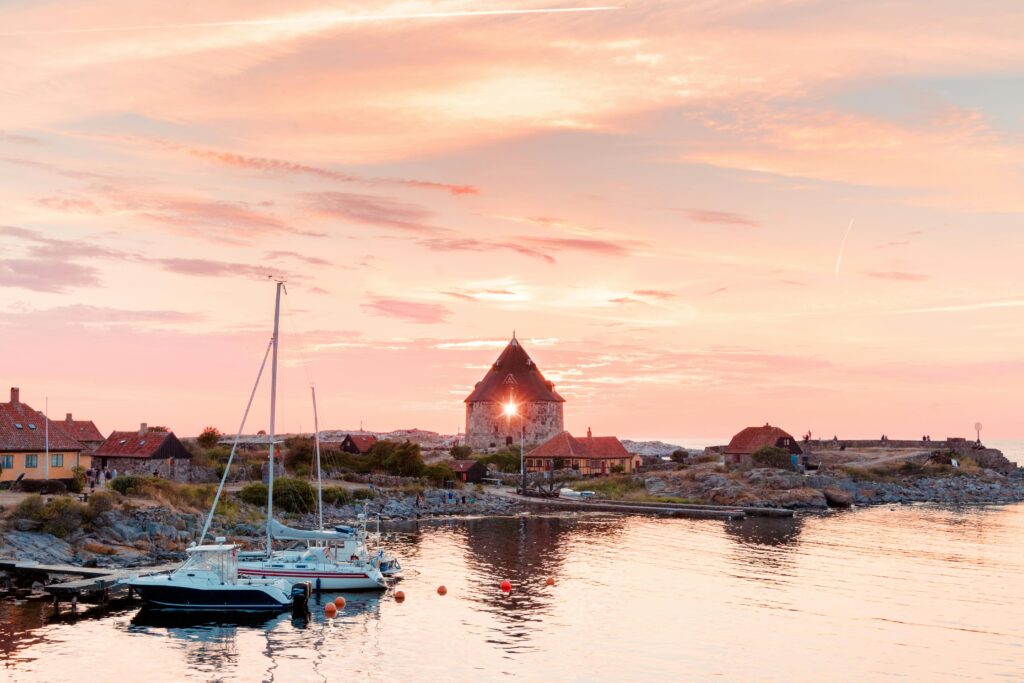
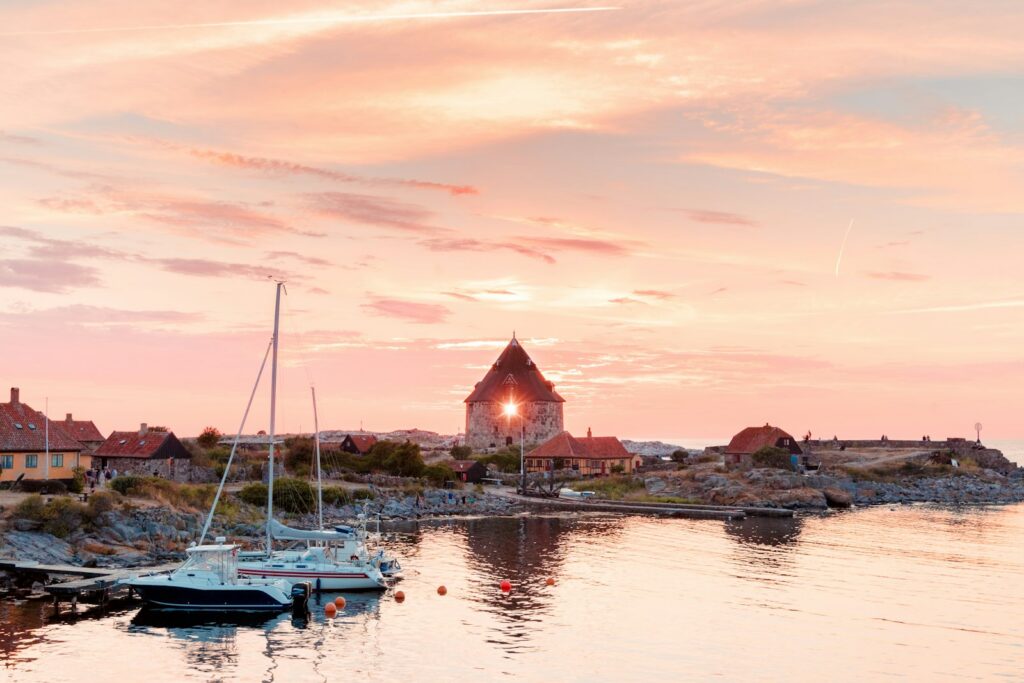
Marina at Rudkøbing in the Danish South Sea Islands at sunset

Danish South Sea Islands

Between Funen, Langeland and Ærø lie dozens of islands with small harbours such as Ærøskøbing, Marstal, Rudkøbing, Svendborg and Faaborg. The water is sheltered, the distances are short and the harbours lie in the heart of old seafaring towns. This is the most popular destination for trips from Flensburg and Kiel. More about the islands in the article Danish islands. Alle aktuellen Törns in die Südsee findest du auf der Seite Segeltörn in die Dänische Südsee.

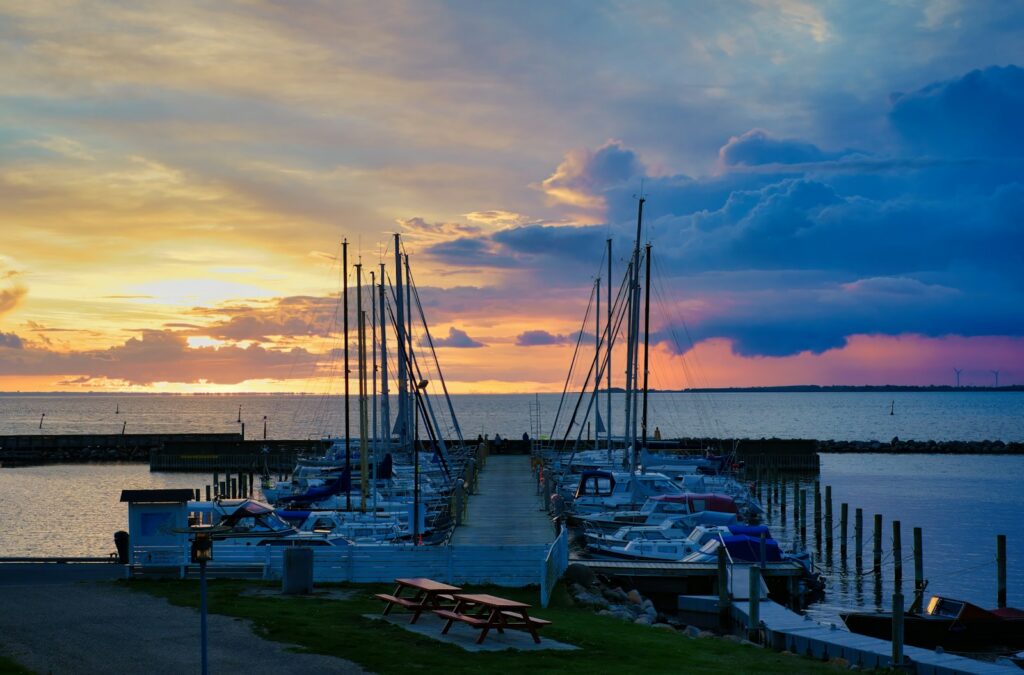
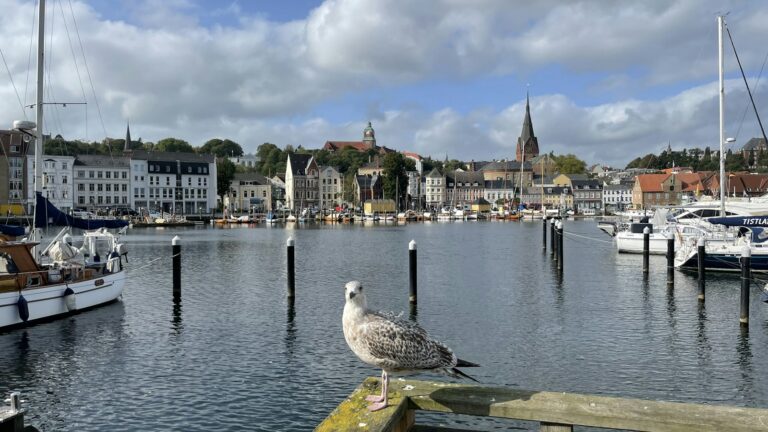
Sailing boats in front of a small harbour in Denmark in the evening light

Flensburg Fjord, Als and Little Belt

Just beyond Flensburg Denmark begins: Sønderborg and the island of Als, then the Little Belt between Jutland and Funen with harbours such as Assens, Middelfart and Fredericia. In the Belt a noticeable current runs depending on the wind; the skipper plans passages accordingly.

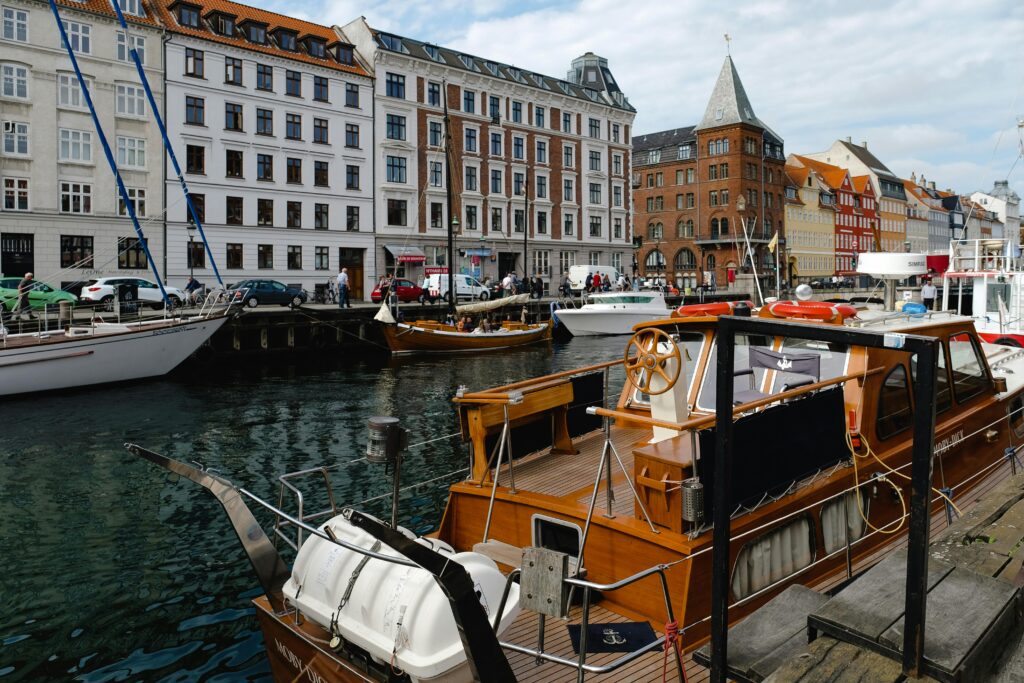
Boats at a quayside in Copenhagen

Zealand, Copenhagen and the Sound

Further east lie Zealand with Copenhagen and the islands of Møn, Falster and Lolland. The Sound runs between Denmark and Sweden, with Copenhagen and Helsingør as destinations. Some trips combine Denmark with the Swedish west coast.

Harbour of Gudhjem on Bornholm

Bornholm and Kattegat

Bornholm lies far out in the Baltic, with rocky coastline, round churches and harbours such as Rønne and Gudhjem. In the north the Kattegat leads to the Limfjord, which cuts across Jutland, and as far as Skagen, where North Sea and Baltic meet. Such destinations are more suited to longer trips.

Nature and culture ashore

The Danish islands are flat and green, with fields, cliff coastlines, beaches and cycle paths. In the harbours await smokehouses, small shops with fruit and vegetables at the roadside and old towns such as Ærøskøbing with cobblestones and half-timbered houses. In Copenhagen the Nyhavn is worth a visit; on Ærø the maritime museum in Marstal.

Planning a trip in Denmark yourself

Those chartering a yacht themselves will find charter bases on Flensburg Fjord and Kiel Fjord and in Denmark itself. For route planning, pilot guides, charts and the harbour profiles in the sailing magazineare helpful. The marine weather forecast for Danish waters is issued by the Danish meteorological service DMI , and for the western Baltic also by the German Weather Service.

Best time of year for sailing holidays in Denmark

The best time of year for sailing holidays in Denmark is from June to August. That's when it's warmest, the days are long, and the water is around 16 to 19 °C. In May and September it's cooler and often windier, but the island harbours are much quieter outside the school holidays.

The wind usually blows from the west to southwest, often moderate in summer, more frequently fresh in spring and autumn. In July, when Denmark and Germany have school holidays, the popular harbours of the South Sea Islands fill up by early afternoon.

MonthAir temperature by daySun per dayWaterWhat to expect
April13 °C6 h7 °CStart of season with the first trips, still cold on deck
May17 °C8 h11 °CLong days, fresh water, quiet harbours
Jun.20 °C8 h16 °CLongest days of the year, around 17 hours of daylight; on 23 June the Danes celebrate Sankt Hans
July22 °C8 h18 °CHigh season and summer holidays, the harbours are full
August22 °C7 h19 °CWarmest water of the year, island harbours in the South Sea Islands fully occupied
September18 °C5 h16 °CWater still warm, harbours emptier, the wind becomes livelier
October13 °C3 h13 °CShorter days, more frequent strong winds, only a few trips left

Reference values for the western Baltic, where most Denmark trips depart from. Air temperature (mean daily maximum) and sunshine hours: mean 1991–2020 at Kiel-Holtenau station, climate table. Water: monthly mean on the coast at Warnemünde; in summer the surface temperature of the Baltic Sea averages around 16 °C in the long-term mean, BSH. Individual years vary.

When the trips start

Most Denmark trips start in May and July. Trips are available from March to December.

All Denmark trips published on Törnfinder for the next twelve months. As of: 25.11.2026.

Sailing trip to Denmark: short trip, week-long or sail training?

Most trips to Denmark last a week, that is seven to eight days. There are also short trips of two to six days, many sail training trips for sailing licences and longer trips to Copenhagen, Bornholm or Sweden.

Prices per person from current listings, excluding offers for a private yacht charter with skipper. As at: 25.11.2026. On traditional sailing ships a week-long trip usually costs 830–1,100 €.

What does a sailing trip in Denmark cost?

A week-long trip in Denmark usually costs 700–1,150 € per person, with a day on board costing around 120 € on average. The exact amount depends mainly on duration, boat and trip type.

Trip durationPrice per person (usually)per dayDates
2–3 days350–450 €around 120 €30
4–6 days550–810 €around 130 €45
7–9 days, week-long trip700–1,150 €around 110 €214
10–15 days1,150–1,800 €around 120 €18
Week-long trip on a traditional vessel830–1,100 €around 110 €40

"Usually" means: the middle half of all offers falls within this range; the cheapest and most expensive quarters are not included. Click on the duration to see the corresponding trips.

The kitty and travel to the departure harbour usually come on top of the trip price. Departure harbours such as Flensburg and Kiel are easily reached by train and car. In Denmark payment is in kroner, card and mobile work almost everywhere. What's included in the price is stated in the trip description; what typically goes into the kitty is explained in the article Kitty on a sailing trip.

What's included in the price and what goes into the crew kitty

Included in the trip price
  • Your bunk on board
  • The vessel
  • The skipper
Usually via the crew kitty
  • Food
  • Hafengeld
  • Diesel

Usually around 150–300 € per person per week, depending on what the group agrees, for example whether restaurant visits are included. On some boats, meals are already included in the price.

It is best to clarify in advance with the provider exactly what is included.

Our price report shows how this country compares with others.

Do I need a sailing licence for a sailing trip in Denmark?

No. As crew you don't need a sailing licence, because it's not you but the skipper who commands the vessel.

Only those who skipper the boat themselves need a boating licence. Denmark is at the same time one of the most popular sailing areas for taking a sailing licence: on a Sail training you gain the practical experience for the Sportküstenschifferschein (SKS) or prepare for the exam. Among the Denmark trips published here, sail training trips are the second most common type of trip, currently with around 50 dates. Those who already have a licence and want to become more confident are in the right place on a Skipper training . You'll find sailing courses and theory seminars under Courses & Seminars.

View sail training trips in Denmark →

What to pack for a Denmark trip?

For Denmark you pack in a soft bag and take oilskins and warm layers, even in high summer.

  • Oilskins: waterproof jacket and trousers; in wind spray comes over quickly on the Baltic.
  • Warm layers: fleece or woollen jumper, hat and scarf for the evening on deck.
  • Shoes with light-coloured, non-slip soles, plus light shoes for trips ashore and swimming gear for the islands' beaches.
  • Sunglasses with a retaining strap and sun cream; on the water the sun is stronger than it feels.
  • Identity card or passport and a card for payment; Denmark uses kroner.
  • Sleeping bag or bed linen if not provided on board, and a towel for harbour showers. A soft bag fits in any bunk, a hard-shell suitcase does not.

Frequently asked questions about cabin charter in Denmark

Here you'll find brief answers to the questions that come up most often before a sailing trip in Denmark.

Where can I book a sailing trip in Denmark?

Most easily through portals where many providers advertise their trips, so you can compare dates, boats and prices. On Törnfinder you send your enquiry directly to the provider, who confirms your place and enters into the contract with you. Törnfinder itself is not an organiser.

What are the Danish South Sea Islands?

That's the name for the archipelago south of Funen, with Ærø, Langeland, Tåsinge and many small islands such as Lyø, Avernakø, Drejø and Strynø. The waters are sheltered, the distances between harbours are short. From Flensburg or Kiel you can usually reach the South Sea Islands in a day.

Why do so many Denmark trips start in Germany?

Because Flensburg, Kiel, Laboe and Eckernförde are only a day's sail from the Danish islands and are easy to reach by train and car. Many week-long trips depart from there through the Danish South Sea Islands and back again.

Can I join a trip on my own?

Yes. With cabin charter you book an individual berth; the provider allocates the remaining places to other crew members. Many crews are formed this way, and even solo travellers quickly make connections.

Can I do a sailing course in Denmark?

Yes. Denmark is one of the most popular sailing areas for sail training, where you gain the practical experience for the Sportküstenschifferschein (SKS). Most start in Flensburg or Kiel.

Is there ebb and flow in Denmark?

Hardly any in the Baltic. Between the Danish islands, however, there are sometimes strong currents, especially in the Little Belt and Great Belt and in the Sound. Water levels change mainly due to wind. On the North Sea coast of Jutland, tides do apply.

When is the best time to sail in Denmark?

From June to August. That's when it's warmest, the days are long, and the water is around 16 to 19 °C. In May and September it's cooler and often windier, but the harbours are less busy.

Do I need a sailing licence for a sailing trip in Denmark?

No, not as crew. The skipper commands the vessel. Only those who want to charter and command a yacht themselves need a boating licence.

Do I need euros or kroner in Denmark?

In Denmark you pay with Danish kroner. Cards and mobile phones are accepted almost everywhere, including at the harbour office and at machines. Harbour fees are often paid directly at machines by the jetty.

What does a sailing trip in Denmark cost?

A week-long trip in Denmark usually costs 700–1,150 € per person. On top of that come the onboard kitty and travel costs; with departure ports in Flensburg or Kiel, you can usually get there by train or car. The onboard kitty is usually around 150–300 € per person per week.

Find current sailing trips in Denmark

Use the filter to narrow down by vessel type, trip type and dates, and send your enquiry directly to the provider.