

This page was translated automatically from German. View the original
How is artificial intelligence changing the sport of sailing itself? From optimising tactics to improving safety – AI is bringing numerous innovations onto the water. The ongoing development of artificial intelligence is having profound effects on many areas of life, including sailing, and helps sailors make better decisions and improve their performance. Discover in this article how these technologies help sailors make better decisions and enhance their performance.
The essentials at a glance
- The use of AI in sailing enables precise performance analysis and tactical optimisation through the processing of extensive real-time data, which is particularly evident in the America's Cup, where teams such as Oracle Team USA and Emirates Team New Zealand use advanced AI systems to analyse real-time data, predict the best routes and make immediate tactical adjustments.
- AI-assisted training methods, particularly VR simulations, offer sailors a safe environment for practising manoeuvres and immediate performance feedback, significantly improving training capability.
- The use of AI in navigation and route planning through systems such as PredictWind contributes to optimising sailing routes and improves safety and efficiency at sea.
Performance analysis and tactics
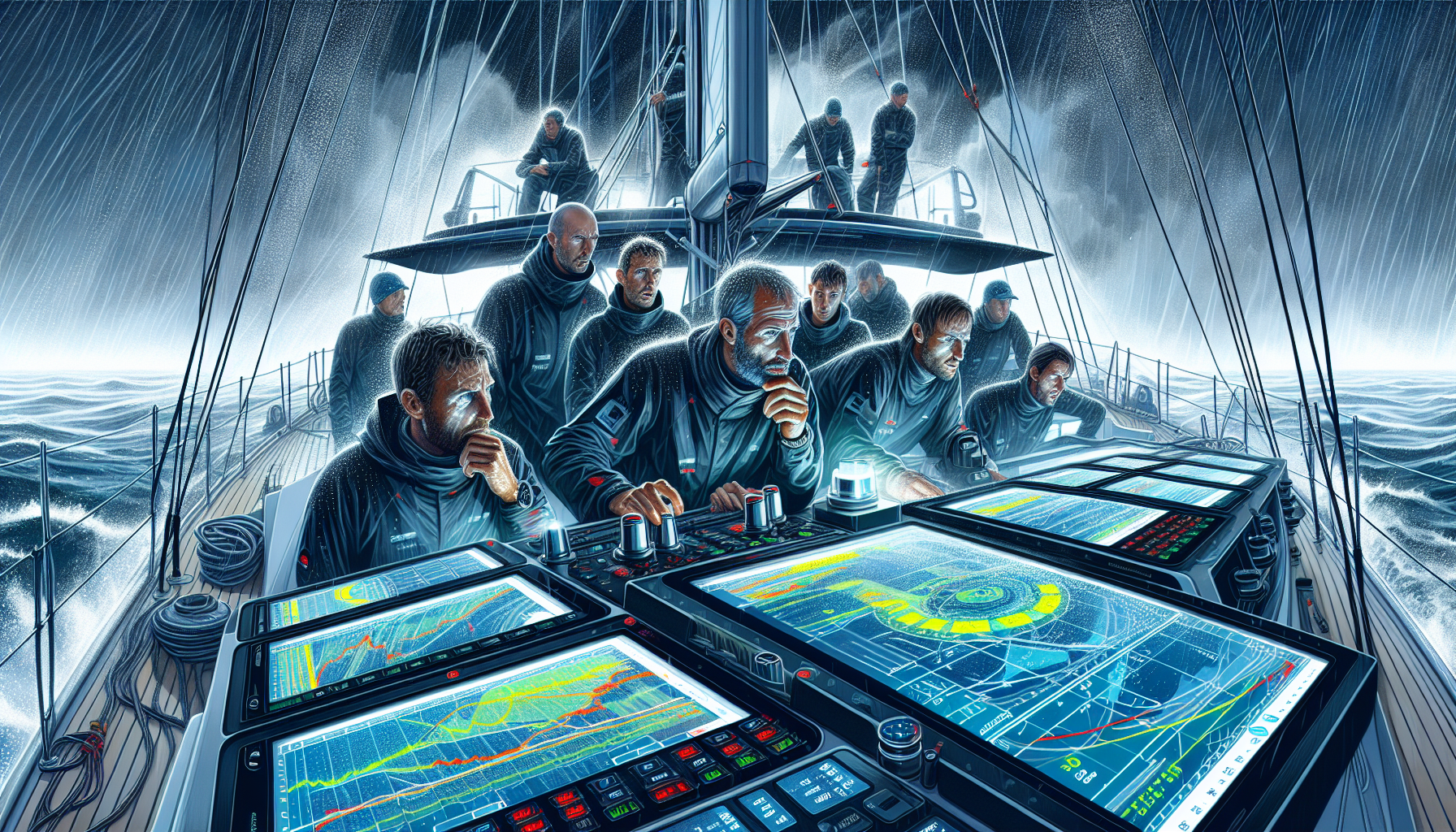
Performance analysis and tactics in sailing have been fundamentally transformed by the use of artificial intelligence. Sensors on boats continuously capture data such as:
- Wind speed
- Boat speed
- Sail trim
- Hydrodynamic forces
These This immense amount of data is processed in a flash by AI algorithms to provide recommendations for adjusting course angle and sail trim.
An outstanding example of the use of AI in sailing is the America's Cup. Here, participating teams use advanced AI systems for real-time data analysis to suggest tactical changes during the race, thereby gaining a decisive advantage. Teams such as Oracle Team USA and Emirates Team New Zealand employ AI to analyse historical weather data and current wind forecasts to predict the best routes. Team Land Rover BAR uses artificial intelligence to find and evaluate structures and patterns in their sailing performance data, making the boat even faster for the America's Cup. This technology is not an exception but demonstrates the potential of AI in sailing and provides interesting examples of the application of artificial intelligence in this field.
The progressive development of artificial intelligence could provide even more precise tactical recommendations in future. By analysing historical weather patterns and current data, machine learning could make a significant contribution to optimising sailing technique. This artificial intelligence AI brings profound changes in nearly all areas of the sailing world, showing how comprehensive the impact of AI can be.
The advantages of AI in sailing are obvious: by optimising boat technology and precisely analysing weather conditions, efficiency can be significantly increased. This shows how important the use of modern technologies is to improve the performance and tactical capabilities of teams.
Training support through AI

Not only in competition but also in training does artificial intelligence demonstrate its strengths. AI-assisted Virtual Reality (VR) training programmes offer sailors a safe environment to improve their skills and receive immediate feedback. WindBotics VR simulates realistic racing situations. Sailors can thereby train for various wind and weather conditions.
In these VR simulations, sailors can repeatedly practise specific manoeuvres such as tacking, gybing and mark roundings. This enables intensive and targeted improvement of sailing skills without being exposed to real dangers. The progressive development of artificial intelligence brings profound changes in the way sailors train and prepare for competitions.
Another advantage of these AI-assisted training programmes is the immediate feedback provided through analysis of the sailors' reactions. Mistakes are highlighted and optimisations suggested, leading to rapid and effective improvement in performance.
This form of learning and automation shows how AI continuously contributes to optimising sailors' abilities.
Navigation and route planning
Another area in which artificial intelligence makes a considerable difference is navigation and route planning. AI-assisted apps such as PredictWind optimise sailing routes taking into account historical weather patterns, real-time weather data and current conditions. This intelligent use of data enables sailors to find the best routes for their Sailing Trips and avoid extreme weather conditions.
PredictWind analyses historical weather patterns and current wind forecasts to calculate optimal sailing routes. Factors such as wind direction, wave height and current directions are taken into account to make navigation as efficient and safe as possible. These in-depth analyses and the progressive development of artificial intelligence bring profound changes in cruising and sailing adventures.
An additional advantage of these AI-assisted route planning apps is the optimisation of estimated journey time through intelligent analysis. This shows how AI is revolutionising sailing by helping sailors find the most efficient and safest routes across the water whilst simultaneously increasing comfort and safety on board.
Increasing safety on board
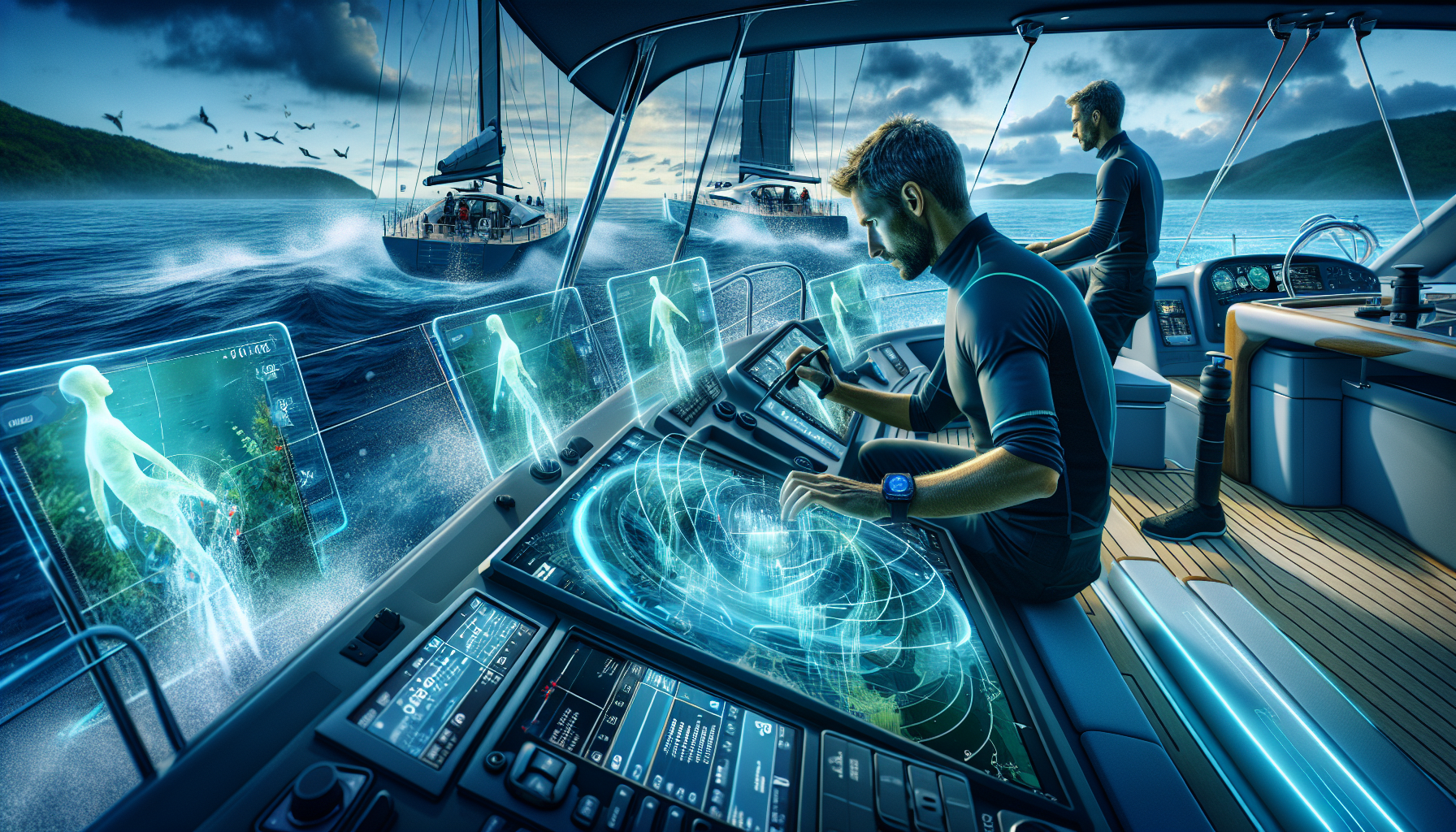
Increasing safety on board is a crucial aspect in which artificial intelligence makes a significant contribution. Systems such as Raymarine ClearCruise AR and WATCHIT use sensors and cameras to collect data about surrounding vessels, buoys and hazards, which are then processed by the AI. These technologies provide real-time information on the display to avoid potential collisions.
WATCHIT integrates seamlessly with existing boat sensors and uses advanced algorithms to improve safety through AI. This intelligent system is designed to reduce damage to the vessel, protect the environment and save lives by preventing collisions and other accidents. The progressive development of artificial intelligence brings profound changes in nearly all areas of sailing.
AI supports sailors by helping them identify and avoid potential dangers such as rocks, reefs, icebergs, ships and even pirates. It can help increase safety at sea and prevent accidents. This improved ability to detect and avoid hazards significantly increases safety and reduces the risk of accidents at sea. According to the European Maritime Safety Agency, 81.1% of maritime incidents are attributable to human error.
The use of AI systems such as WATCHIT shows how technological innovations can contribute to optimising safety on board. Through automation and continuous monitoring of vessel status, these systems offer a considerable advantage for sailors, particularly on long passages and in difficult waters.
Comfort and autonomy through AI

Besides safety and efficiency, comfort also plays an important role in sailing. Modern AI-powered autopilots such as B&G Zeus 3S and Simrad AP44 enable precise steering decisions and complex sailing manoeuvres for yachts. These systems can not only maintain simple courses, but also respond to changes in wind and currents to optimise the course autonomously.
On long passages, these AI systems offer the advantage of significantly increasing comfort on board by relieving sailors and their crew of the continuous monitoring and steering of the boat. The advancing development of artificial intelligence brings profound changes to the way sailors control and navigate their boats, opening up new possibilities for greater autonomy and comfort at sea.
Challenges in integrating AI
Despite the numerous advantages, there are also challenges in integrating AI in sailing. A key challenge lies in the quality of the data supplied. The precision of AI systems depends heavily on continuous data collection and the secure handling of this information.
Another risk is the possibility of cyberattacks and data manipulation. The security of the systems must be ensured to ward off potential attacks and protect the integrity of the data. In addition, the high costs of AI technology can limit its accessibility for smaller teams and less affluent sailors.
Operating AI systems requires a certain learning curve and appropriate training for sailors. These challenges in implementing AI in sailing also include ethical questions and human-AI interaction. Nevertheless, the advancing development of artificial intelligence shows that optimising performance and safety in sailing is possible if these hurdles are overcome.
Future prospects for AI in sailing
The future of sailing could be made safer, more efficient and more powerful through the use of AI systems. AI could help to optimise data-driven decisions, both for competitive sailors and for recreational sailors. A look into the future shows how humans and machines could work together in sailing to optimise efficiency and experience.
Humans and machines could work hand in hand to take the sailing experience to a new level. Through the advancing development of artificial intelligence, Sailing will become not only safer and more efficient, but also more comfortable and more autonomous. These profound changes in almost all areas of sailing, including the use of sails, illustrate the potential of AI.
In summary, artificial intelligence is revolutionising sailing and opening up new possibilities. The collaboration between humans and machines could shape the future of sailing and take the sport to a new level.
Summary
Artificial intelligence brings profound changes to almost all areas of sailing. From performance analysis and tactics to training support and navigation to increasing safety and comfort on board – the benefits of AI are diverse and impressive. The advancing development of artificial intelligence shows how important the use of modern technologies is to optimise performance, safety and efficiency in sailing.
The future of sailing lies in the collaboration between humans and machines. By using AI systems, sailors can improve their skills, sail more safely and efficiently and take the overall sailing experience to a new level. Be inspired by the possibilities and discover how artificial intelligence can revolutionise sailing.
Frequently asked questions
How does artificial intelligence improve tactical performance analysis in sailing?
Artificial intelligence improves tactical performance analysis in sailing by processing data from boat sensors and providing recommendations for adjusting course angles and sail positions. This significantly improves performance analysis.
What advantages do AI-supported VR training programmes offer for sailors?
AI-supported VR training programmes offer sailors a safe environment to train in various conditions and practise manoeuvres. They also enable rapid feedback to improve skills.
How do AI-powered apps contribute to navigation and route planning?
AI-powered apps contribute to navigation and route planning by integrating historical weather patterns and real-time weather data to suggest alternative routes and optimise travel time. They take into account wind direction, wave height and current directions.
What challenges exist in integrating AI in sailing?
Integrating AI in sailing presents challenges such as data quality, cyberattacks, high costs and the training effort required to operate the systems. These must be taken into account to ensure precision and safety.
What could the future of sailing look like through the use of AI?
The future of sailing could be made safer, more efficient and more powerful through the use of AI systems. The collaboration between humans and machines would have the potential to revolutionise sailing and take it to a new level.


