

This page was translated automatically from German. View the original
The Corinth Canal connects the Saronic Gulf with the Gulf of Corinth and significantly shortens the shipping route around the Peloponnese peninsula. It separates the Greek mainland from the Peloponnese peninsula and thereby realises historic plans that already existed in antiquity. It is about 6.3 kilometres long and was built at the end of the 19th century. Today both tourist boats and smaller cargo vessels use the canal. In this article you will learn more about the history, construction and present-day use of this impressive structure.
The essentials at a glance
- The Corinth Canal, a visionary idea since the 6th century BC, was completed in 1893 and simplifies trade routes between the Saronic Gulf and the Gulf of Corinth.
- The construction of the canal presented engineers with immense technical and financial challenges, which were only overcome through the use of modern technologies and the tireless efforts of Greek patriots. Historically, canal building in ancient and mediaeval Europe was a dream that often failed due to technical challenges, until it was realised in the 19th century through the use of dynamite.
- Today the canal is an important waterway for tourism and commercial traffic, with tourists enjoying impressive landscapes and ship owners benefiting from more efficient trade routes.
The vision of the Corinth Canal
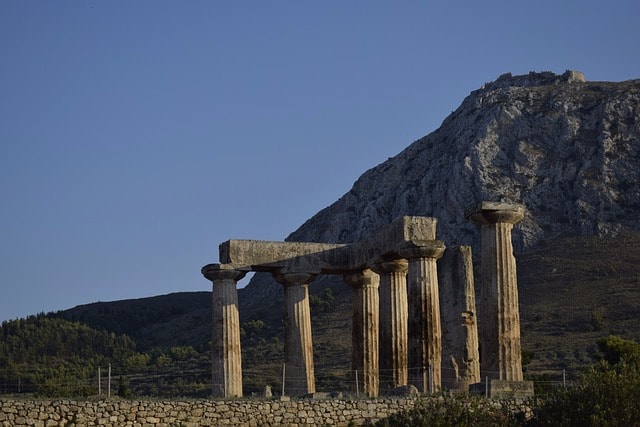
As early as the 6th century BC, Periander had the idea of building a canal that would connect the Saronic Gulf with the Gulf of Corinth . This vision arose from the need to avoid the long and dangerous sea route around the Peloponnese peninsula. At that time trade was of crucial importance, and a waterway through the Isthmus of Corinth promised enormous advantages for trade and military mobility. A waterway through this region would have shortened trade routes considerably.
The The idea of a canal had occupied the Greeks for about 2,600 years and remained an unfulfilled dream for many generations. Emperor Nero undertook a significant attempt in the first century AD to realise this dream by beginning construction work. But despite his commitment he could not successfully complete the project. Later Roman emperors such as Caligula and Hadrian also tried their luck, but the technical and financial challenges were too great. The canal has strongly influenced the face of central Greece and particularly the city of Athens through its historical significance and economic rise.
It is impressive to see how the ancient idea of a canal endured over centuries and ultimately became reality after all. This persistence and unwavering belief in the feasibility of the project are testimony to the human ingenuity and determination.
The Construction of the Canal: An Engineering Marvel
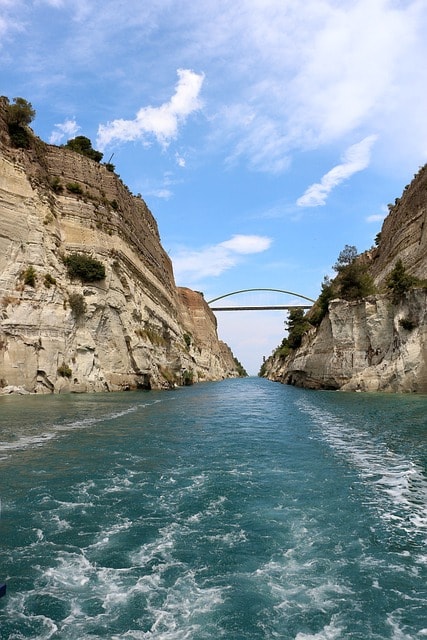
The actual construction of the canal finally began in 1881 and was completed in 1893. This was a major engineering project that presented enormous challenges to the engineers. The Corinth Canal extends over a length of approximately 6,343 metres and has a width of around 24.6 metres. The narrow and steep walls of the canal required the use of innovative techniques and tools. These walls rise up to 84 metres high and provide a spectacular backdrop.
To break through the hard rock, modern explosives such as blasting gelatine and dynamite were employed. These methods were revolutionary at the time and made it possible to create the canal bed efficiently and safely. The construction of the canal was not only a technical achievement but also a logistical masterpiece, as vast quantities of earth and rock had to be moved.
Challenges and Setbacks
The challenges in building the Corinth Canal were numerous and diverse. Even the first attempts to build a canal encountered immense difficulties. Emperor Nero and other Roman emperors such as Caligula and Hadrian failed to realise their visions. The technological and logistical resources of antiquity simply were not sufficient to break through the hard rock and the steep rock faces. Numerous failed attempts at canal construction in ancient and mediaeval Europe bear witness to the enormous challenges of such projects.
In the 19th century, a French joint-stock company took over the financing of the canal construction, but it too encountered considerable problems. Financial difficulties led to the company's insolvency in 1882, which almost caused the project to fail. But the Greeks did not give up. Béla Gerster, a Hungarian engineer, played a crucial role in the planning and implementation of the project, although he had to contend with numerous setbacks such as landslides and rock shifts.
Ultimately, it was the Greek patriotswho rescued the project and completed the construction of the canal. Their determination and commitment are testament to the unwavering will to turn a millennia-old dream into reality. This story of challenges and setbacks shows that great visions often require great sacrifices and tireless efforts.
Destruction and Reconstruction
During the Second World War, the Corinth Canal suffered considerable destruction. In 1944, the German Wehrmacht blew up the bridge over the canal and sank railway wagons and locomotives in the water. These actions made the canal impassable and led to an 18-month closure. The destruction was so extensive that comprehensive reconstruction work was required to bring the canal back into operation.
After the war, this work was swiftly undertaken, and in 1948 the Corinth Canal was able to reopen. Through the restoration the Corinth Canal regained its importance as a vital waterway and was once again able to contribute to economic and tourist development.
Use of the Canal Today
Today the Corinth Canal is a focal point for tourist shipping. Every day many tourist boats use this impressive waterway to experience the unique landscape and the steep rock faces from a new perspective. The passage through the canal offers a breathtaking view and is an unforgettable experience for visitors from all over the world.
Alongside tourist shipping, the canal also plays an important role in commercial shipping. With a water depth of approximately 8 metres, smaller cargo vessels and yachts can use the route to avoid the long detour around the Peloponnese peninsula. This saves not only time but also considerable costs for shipowners. The canal's depth allows even larger vessels to navigate the route.
Transit rules and fees
Passage through the Corinth Canal is subject to certain rules and fees. Vessels must pay a fee ranging from 80 to 300 euros, depending on the vessel's size. These fees contribute to the maintenance and upkeep of the canal and ensure its continued operation.
Furthermore, the canal has a speed limit of 6 knotsto ensure the safety and stability of the waterway. This regulation helps protect the canal's banks and infrastructure and ensures smooth passage for vessels.
Travellers should inform themselves about these regulations in advance to ensure a trouble-free passage.
Attractions around the Corinth Canal
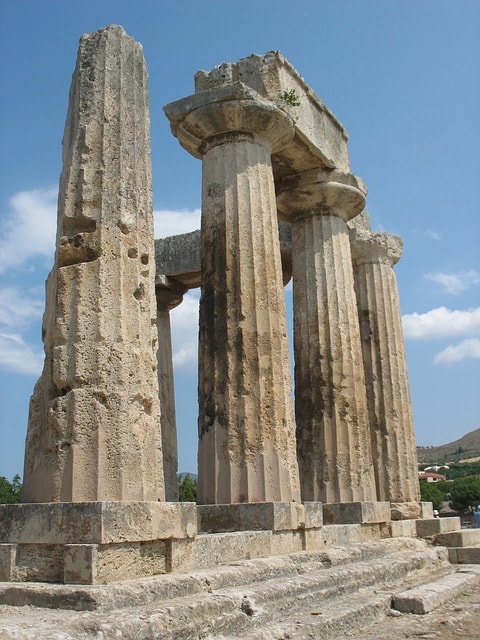
Around the Corinth Canal there are numerous attractions and activities to discover. One of the most exciting activities is bungee jumping from the bridges over the canal, offering adrenaline seekers a unique perspective.
Near the canal there are also historical sites such as the remains of the ancient Diolkos ship tramway, which was once used to transport vessels overland. The town of Loutraki, known for its thermal springs, offers rest and relaxation after a day of exploration.
The harbour of Kiato is an ideal starting point for excursions around the canal. With its good infrastructure and picturesque views, it is a popular destination for tourists. Additionally, the region is known for its wine production, and many vineyards invite visitors for tastings and tours.
The area surrounding the Corinth Canal is a blend of natural beauty and cultural richness. The picturesque views, which are excellent for photography and relaxation, make the region a perfect destination for nature lovers and history enthusiasts.
Best time to visit the Corinth Canal
The best time for a passage through the Corinth Canal is during the months:
- April
- May
- September
- October
During these months the temperatures are mild and pleasant, making the journey particularly enjoyable. Culture enthusiasts can travel as early as April when temperatures are around 15 °C and enjoy the peaceful atmosphere.
In October, temperatures are still at a pleasant 18 °C, which also represents an ideal travel time. These months offer the perfect balance between good weather and fewer tourists, allowing visitors to explore the beauty and historical sites in peace.
Summary
The Corinth Canal is an impressive example of human engineering and a significant historical landmark. From the ancient vision through the technical challenges and the wartime destruction to its present-day use as an important waterway and tourist attraction – the canal's history is rich and fascinating.
This journey through the history of the Corinth Canal demonstrates how persistence and human ingenuity can achieve great things. For travellers, the canal offers not only an impressive backdrop but also deep insights into the history and culture of Greece. Let yourself be enchanted by this unique waterway and discover the numerous attractions and activities that surround it.
Frequently asked questions
When was the Corinth Canal built?
The Corinth Canal was built between 1881 and 1893.
How deep is the Corinth Canal?
The Corinth Canal has a water depth of approximately 8 metres.
What are the transit fees for the canal?
The transit fees for the canal range from 80 to 300 euros, depending on the vessel's size.
What activities can one do around the Corinth Canal?
Around the Corinth Canal one can experience bungee jumping, visit the thermal springs in Loutraki and explore the remains of the ancient Diolkos ship tramway. These activities offer varied experiences for every visitor.
What is the best time to visit the Corinth Canal?
The best time to visit the Corinth Canal is April, May, September and October, as the mild temperatures and fewer crowds make for a pleasant stay.
Which seas does the Corinth Canal connect?
The Corinth Canal connects the Aegean Sea with the Ionian Sea. This connection provides a direct and considerably shorter shipping route between the Saronic Gulf, which is part of the Aegean Sea, and the Gulf of Corinth, which belongs to the Ionian Sea.


Very impressive. The ship in the upper photo is at the limit of what can still pass through there. It appears to be under tow; at any rate I believe I can make out two lines/hawsers. One would do best not to encounter it. It would be interesting to know how the one-way traffic is regulated. Does the direction change every two hours, or only twice a day? Best wishes, Winfried
Dear Winfried,
Many thanks for your comment and your interest in the Corinth Canal! 😊 You are quite right, the ship shown in the upper photo is indeed impressive and appears to exploit the canal's narrow dimensions to the maximum. Larger ships are in fact often guided through the canal by tugs to ensure they navigate precisely and do not touch the narrow walls – a true feat of seamanship!
Regarding your question about one-way traffic: The Corinth Canal is indeed only navigable in one direction at a time due to its narrow width (only about 24 metres). Traffic regulation varies according to need, but as a rule the direction of travel is changed approximately every 30 minutes to 2 hours. For particularly large or slow vessels, passage is sometimes regulated individually to ensure there are no encounters.
If you have the opportunity to experience the canal yourself, I can only recommend it – whether as a passenger on a vessel or from the bridge that spans the canal. It's a real highlight!
Best regards,
Klaus