This page was translated automatically from German. View the original
Palmeira is a fishing village on the west coast of the island of Sal in the northeast of the Cape Verde Islands, and its harbour is the island's most important port. Here you can read how to get from the airport to Palmeira, how yachts lie in the port of Palmeira, where to shop, what sailing weather to expect, which sailing destinations are within reach and what skippers need to know about clearing in and anchoring.
The essentials at a glance
- Sal Airport lies on the edge of the island's main town Espargos, only about four kilometres as the crow flies east of Palmeira.
- There is no marina: yachts anchor in the bay off the village, and you reach your boat by dinghy.
- Supermarkets, a fish market and a bakery are in the village; Espargos has a wider selection.
- From roughly November to June the trade wind blows steadily from the northeast, often strongly. July to October is the rainy season.
- Anyone flying to Sal must register on the EASE online portal no later than five days before departure and pay a fee there (status: October 2026).
Where is the port of Palmeira?
The port of Palmeira lies in a small bay directly south of the village, on the west coast of Sal. The village lies on the northern shore of the bay; inside, a breakwater protects the quay for cargo ships. Yachts anchor in front of it in the bay, outside the buoys of the fishing boats and clear of the fairway for commercial shipping.
Map from OpenStreetMap. When the map is displayed, data is transmitted to the provider.
More InformationPalmeira is not a holiday resort but a working harbour: the port of Palmeira is the third-largest cargo port in the Cape Verde Islands and is also used by fishing boats and yachts. The island's beach resort, Santa Maria, lies about 20 kilometres further south at the southern tip.
Arriving for your trip start in Palmeira
Sal has an international airport, and the final stretch is short: airport, Espargos and Palmeira lie only a few kilometres apart.
From Sal Airport to Palmeira
Amílcar Cabral Airport is the largest airport in the Cape Verde Islands and lies right by Espargos. It is about four kilometres as the crow flies to the port of Palmeira; by taxi you are there in a few minutes. There are car hire desks at the airport, but you do not need your own car for the journey to the bay.
For entry by air you register in advance on the EASE online portal of the Polícia Nacional, no later than five days before departure. You provide passport details, travel dates, flight number and the address of your accommodation and pay a fee by credit card. If you have not registered in advance, you pay the fee at the desk on arrival. Whether you additionally need a visa depends on your nationality and the length of stay. The current requirements are on the official EASE portal.
From other islands in the Cape Verde Islands
If you're coming from another island, you reach Sal by domestic flight or ferry. Domestic flights are infrequent, and ferries between the islands don't always run reliably. Therefore, allow a buffer day for your arrival if your trip begins on a fixed date.
Coming aboard in the bay
Because the yachts lie at anchor in the bay, the dinghy brings you aboard from the shore. A soft holdall is easier to stow in it and pass on deck than a hard-shell suitcase.
Parking
There is a car park on the road from Palmeira to Espargos, about 700 metres as the crow flies from the anchorage in the bay. That is where you leave a hire car if you are driving from the airport yourself or shopping by car in Espargos before the trip.
Showers and sanitary facilities
Showers are available at or near the harbour of Palmeira.
Shopping for the trip
For your first shop on foot there are several small supermarkets, a fish market and a bakery in Palmeira. You can get water from the shops in town. For a large shop before a longer trip, take a taxi or hire car to nearby Espargos, where there's a bigger selection.
In Espargos there are the supermarkets Sucata, Central and Salinas, each about 3.7 to 3.8 kilometres as the crow flies from the anchorage in the bay.
Doctor, pharmacy and emergency services
Medical care on Sal is limited; well-equipped specialist clinics are only found in Praia on Santiago and in Mindelo on São Vicente. Pharmacies stock common medicines; bring your regular medicines in sufficient quantity. Travel health insurance with repatriation cover is advisable for Cape Verde.
The nearest pharmacies and health centre are in Espargos: the Farmácia Ivete Santos on Rua Eduardo Mondlane about 3.9 kilometres as the crow flies from the anchorage, the Farmácia Aliança about 4.1 kilometres and the Centro de Saúde on Rua Albertino Fontes about 3.9 kilometres.
- 130: Emergency medical service
- 131: Fire brigade
- 132: Police
- At sea: VHF channel 16
The harbour of Palmeira at a glance
The harbour of Palmeira is a cargo and fishing harbour with an anchorage for yachts in the bay. The key details at a glance:
| Feature | Details |
|---|---|
| Position (approximate) | 16° 45,3′ N, 022° 58,8′ W |
| Type | Cargo and fishing harbour, third-largest cargo port in Cape Verde |
| Quays | Cargo quay 150 m, mole 90 m, quay for fishing boats 34 m with 1 m water depth |
| Berths for yachts | at anchor in the bay, no marina |
| Holding | sand over mud, poor holding in places |
| Shelter | good shelter from the prevailing swell |
| Port of entry | one of three ports of entry for yachts, harbour authorities on site |
| Facilities | supermarkets, fish market and bakery in town, water from shops |
| Distance to airport | around 4 km as the crow flies |
You'll find a berth at a pontoon in Cape Verde in Mindelo on São Vicente: the marina there has 144 berths on floating pontoons with fingers.
Equipment
The port of Palmeira is designed for cargo and fishing. Because yachts lie at anchor in the bay, there are no electricity or water connections at the berth. You buy water from the shops in the village; showers and toilets are available at or near the harbour. The port authorities have their offices directly at the port. The cargo port was expanded in 2010 and 2015 and is certified under the international ISPS Code for port security.
What's the weather like for sailing on Sal?
From roughly November to June the northeast trade wind dominates the sailing weather: it blows steadily from north to east, usually from the northeast, and is often strong. During this dry season the Harmattan also carries Sahara dust over the islands. This dry haze, known in Cape Verde as "bruma seca", can severely reduce visibility — neighbouring islands then emerge late. At times long swell from the northwest also runs in.
From July to October is the rainy season; the wind then comes more often from the southeast, and disturbances move through from the east. During these months tropical lows can form near the islands; the national weather service INMG then issues warnings. For a first trip as crew the trade wind season is the more reliable time.
Which cruising destinations lie near Palmeira?
Sal is the northeasternmost island of Cape Verde; all other islands lie south or west and therefore downwind with the trade wind. For the return to Sal, by contrast, you beat to windward, which you should factor into your cruise planning.
The distances are rounded routes over water on the usual course from the bay of Palmeira; for precise planning, refer to the nautical chart.
- Santa Maria at the southern tip of Sal: approximately 13 nm, along the west coast
- Sal Rei on Boa Vista: approximately 37 nm, round the southern tip of Sal and then southward
- Tarrafal on São Nicolau: approximately 81 nm, westward round the south coast of São Nicolau
- Mindelo on São Vicente: approximately 117 nm, northward past São Nicolau and Santa Luzia
To Sal Rei, the main town on Boa Vista, it is a long day's passage with broad reaching winds. To São Nicolau and São Vicente you sail overnight. Mindelo, alongside Sal and Praia, is the third port of entry for yachts. In its marina you will be berthed alongside a pontoon again after nights at anchor.
What can you do on a harbour day in Palmeira?
Palmeira itself is small and quickly explored; the destinations on Sal can be reached by taxi or hire car in a short time.
- Palmeira: In the fishing village there is a fish market and several simple restaurants, one of which has a barbecue and music on Sundays.
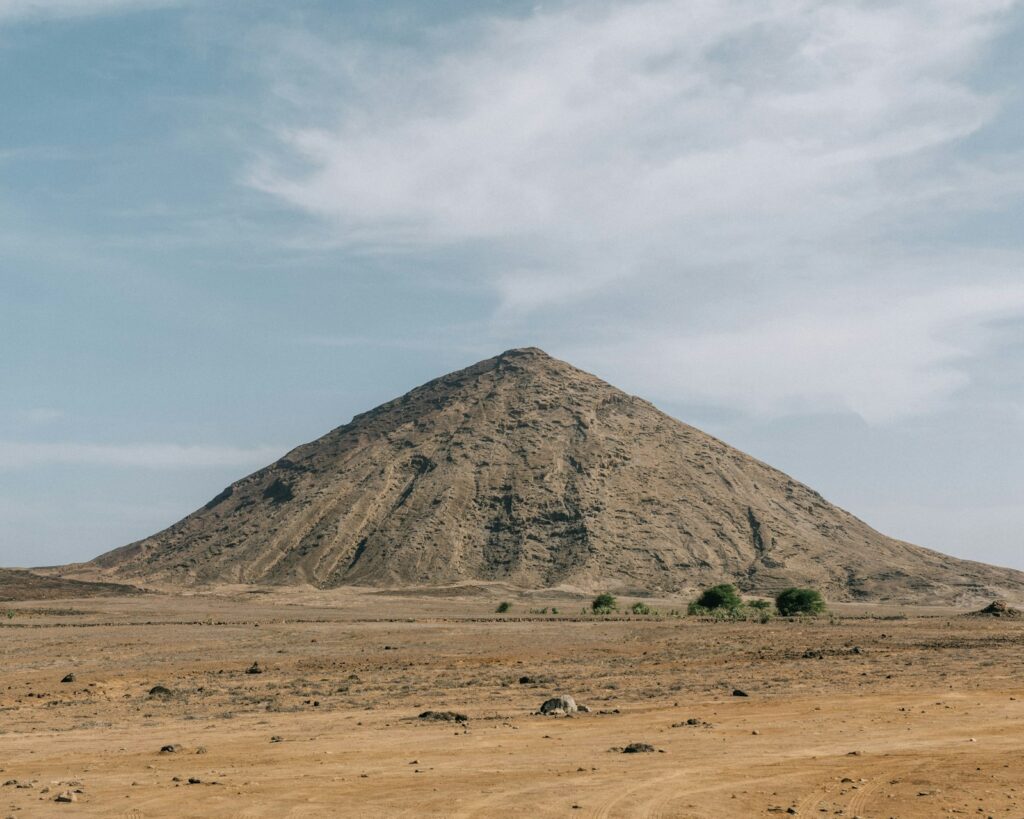
- Buracona: Around five kilometres north of Palmeira begins the Buracona-Ragona protected landscape. The lava coast with pillow lava and lava tubes is protected because of its volcanic formations.
- Pedra de Lume salt pans: In the crater of an extinct volcano on the east coast, around nine kilometres as the crow flies from Palmeira, salt has been extracted since the 19th century. A railway and a cable car were built to transport salt and rock, along with houses for the workers. Since 2016 the salt pans have been on Cape Verde's tentative list for UNESCO World Heritage status.
- Espargos: The island's main town lies east of Palmeira right next to the airport and has the largest selection of shops.
- Santa Maria: The seaside resort at the southern tip, around 20 kilometres as the crow flies away, has a long sandy beach with hotels and restaurants.
For skippers: Clearing in, anchoring and sea weather in Palmeira
In the port of Palmeira you clear in with the authorities on site and anchor in the bay. If your yacht is arriving from abroad, Palmeira, alongside Praia and Mindelo, is one of the three ports through which you are permitted to enter. Anyone entering elsewhere risks a fine.
Clearing in at Palmeira
Cape Verdean law on recreational navigation regulates entry with a foreign yacht. On first arrival, the border police, customs, health authority and maritime authority inspect yacht and crew. You receive a transit log which you fill in and sign; your entry is recorded in it.
Have boat papers, skipper's certificate of competence, third-party insurance, crew list and radio licence ready. Anything you cannot produce immediately may be submitted within 48 hours. Important for crew: anyone leaving the yacht in Cape Verde and not sailing on must report this to border control and have the entry stamped in their passport.
A foreign yacht may remain in Cape Verdean waters for up to six months within one year. Before departing from a Cape Verdean port, you apply to the maritime authority to clear out; the stamped crew list then serves as your clearance document.
Anchoring in the bay
The bay is well protected from the prevailing swell and is therefore also popular with fishermen; it is correspondingly crowded. Good holding is found in sand over mud directly outside the row of buoys, even in trade wind gusts exceeding 30 knots from the northeast. The holding is not good everywhere, however; reckon on several attempts before the anchor holds. Keep clear of the deep-water channel, because cargo ships regularly berth at the inner breakwater.
Approach
You enter the bay via the buoyed channel and watch for commercial traffic, not all of which transmits an AIS signal. Night arrival is not recommended: buoys and floating lines are barely visible in the dark. In the dry season, Saharan dust can reduce visibility so much that Sal is only recognisable late during the approach.
Which sea weather forecast applies to Palmeira?
For the waters around Cape Verde, the national weather service INMG (Instituto Nacional de Meteorologia e Geofísica) issues forecasts for the sea area and gale warnings. For the high seas, the international sea weather forecast of the French weather service Météo-France for the eastern Atlantic applies.
Within it, Cape Verde is its own forecast area with the name "Cape Verde", with wind in Beaufort, sea state and swell. Underway you receive it via satellite (SafetyNET); in harbour also via the internet from the World Meteorological Organization.
Trips from Palmeira on Törnfinder
In October 2026 there are 7 trip dates on Törnfinder in the next twelve months with departure or destination at the port of Palmeira. Most depart in March, February and December; 15 days is typical.
All current offers are in the trip overview, an overview of the sailing area is given on the page cabin charter in the Cape Verde Islands. Trips across the Atlantic can be found under Cabin Charter for a Transatlantic Crossing.
Frequently asked questions
How do I get from Sal airport to Palmeira?
The easiest way is by taxi, as the airport is only about four kilometres as the crow flies from Palmeira harbour. The journey takes just a few minutes.
Is there a marina in Palmeira?
No. Yachts lie at anchor in the bay; you get aboard by dinghy. Berths at floating pontoons are available in the Cape Verde Islands at the marina in Mindelo on São Vicente.
Where can I shop for provisions in Palmeira for the trip?
There are several small supermarkets in the town, a fish market and a bakery; you can get water from the shops. For a big shop, head to nearby Espargos.
Do I need to register before my flight to Sal?
Yes, for entry by air, prior registration is required in the EASE portal of the Polícia Nacional, at least five days before departure and for a fee. Whether you also need a visa depends on your nationality.
When is the best time for sailing from Sal?
From November to June the trade winds blow steadily from the northeast and there is hardly any rain. From July to October is the rainy season, when tropical lows can form.
How far is it from Palmeira to Boa Vista?
It's about 37 nautical miles across the water to Sal Rei on Boa Vista, round the southern tip of Sal. With the northeast trade winds, that's a long day's sail with the wind on the quarter.
Can I clear in with my yacht in Palmeira?
Yes, Palmeira is one of the three harbours – alongside Praia and Mindelo – through which yachts from abroad may enter the Cape Verde Islands. The authorities have offices at the harbour; on your first arrival you'll receive a transit log for the yacht.