This page was translated automatically from German. View the original
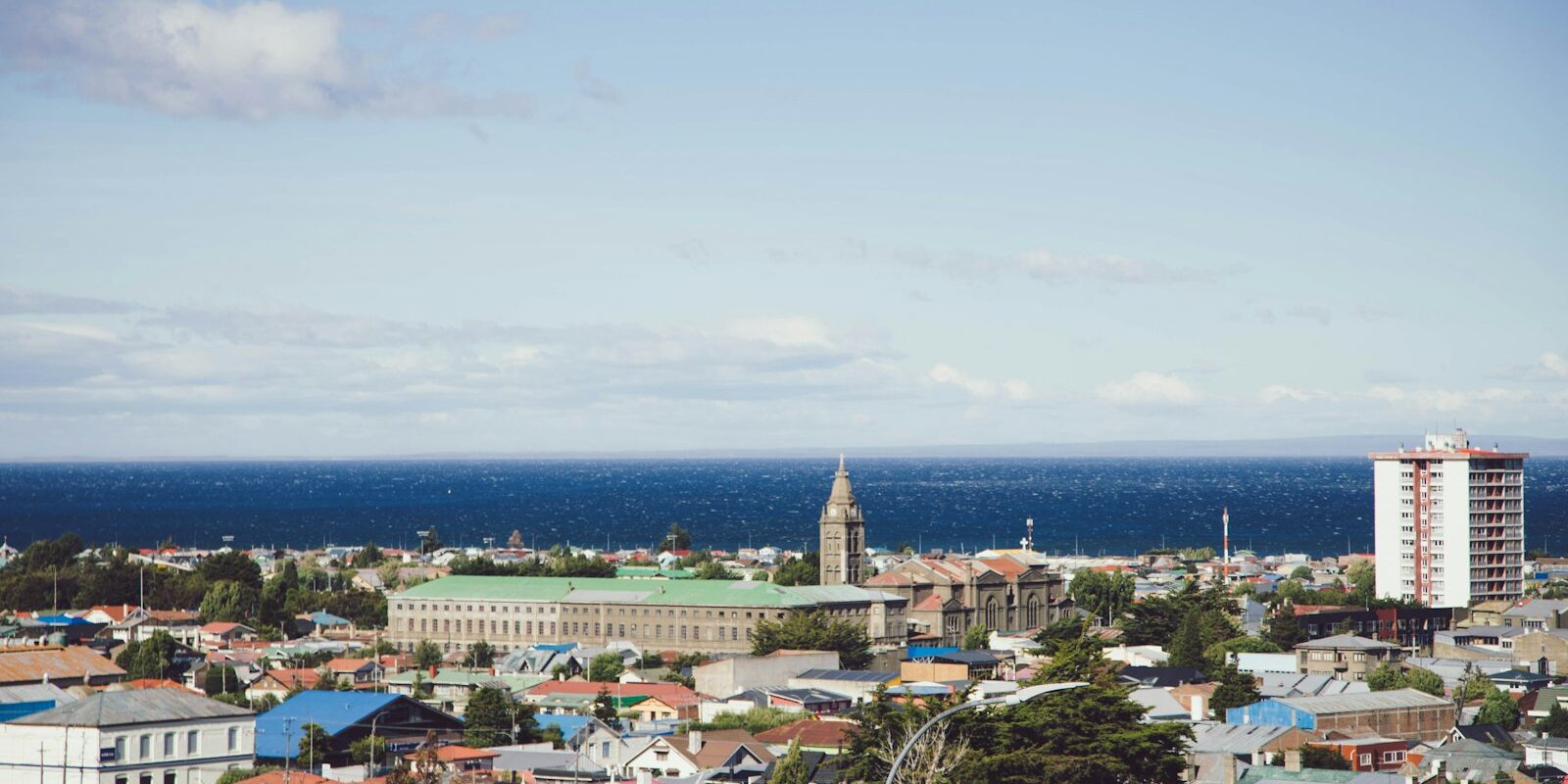
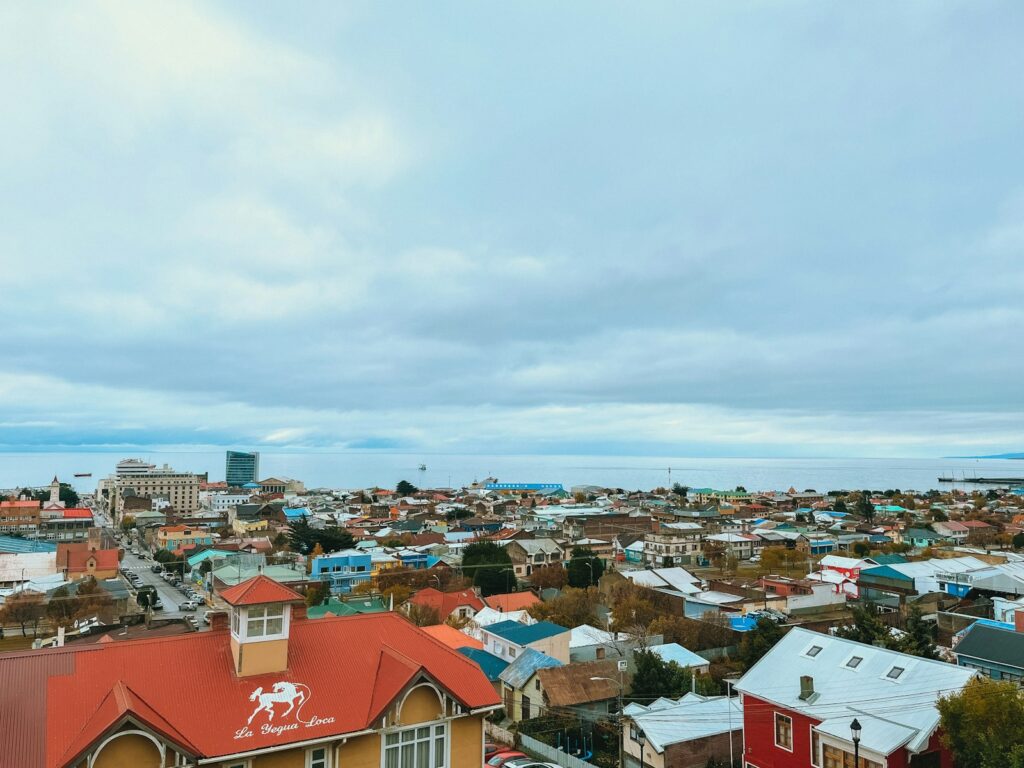
Punta Arenas lies in Chile on the Strait of Magellan. In Punta Arenas harbour, cruise ships, expedition vessels and research ships berth at Muelle Prat, the city pier on the southern edge of the centre. Here you can read how to get there, where Muelle Prat is, where you shop, what wind to expect, what trip destinations as far as Cape Horn lie ahead and what skippers need to know when entering.
The essentials at a glance
- Punta Arenas airport is around 20 kilometres north of the city; there are direct flights from Santiago. You travel to the centre by bus, taxi or transfer.
- From Muelle Prat to the town centre it is only around 650 metres on foot. The ferries to Tierra del Fuego, on the other hand, depart from Terminal Tres Puentes around five kilometres to the north.
- You may not import fresh food into Chile, not even small amounts. You therefore buy provisions in the city.
- In spring and summer a steady westerly blows on the Strait of Magellan, which can become very strong. The season for cruises and Antarctic voyages runs from September to April.
Where is Punta Arenas harbour?
In Punta Arenas the ships berth at Muelle Prat, officially Muelle Arturo Prat. The pier juts out from the southern edge of the city centre around 370 metres into the bay of Punta Arenas; to the town centre you walk about 650 metres northward.
Map from OpenStreetMap. When the map is displayed, data is transmitted to the provider.
More InformationMuelle Prat belongs to the state port company Empresa Portuaria Austral. It is geared to cruise ships, research vessels and the embarkation and disembarkation of passengers; small fishing boats also lie on its inner side. Since the extension, the berth on the south side is 300 instead of 258 metres long; at the beginning of 2026 a 285-metre cruise ship berthed there for the first time. Many cruise ships still anchor in the bay and bring their guests ashore by boat.
In the north of the city lie the ferry terminal Tres Puentes, around five kilometres away, from which the ferries to Porvenir on Tierra del Fuego depart, and the freight terminal José de los Santos Mardones, at which cruise ships also berth.
Arriving for trip start in Punta Arenas
You reach Punta Arenas by air or by long-distance bus. Those already travelling in Patagonia come by bus from Puerto Natales or from Argentina.
From Punta Arenas airport to Muelle Prat
Presidente Carlos Ibáñez del Campo airport (code PUQ) lies around 20 kilometres north of Punta Arenas. There are direct flights from Santiago de Chile and, in season, connections to Argentina as well.
You reach the centre by bus, taxi or transfer. From the town centre you walk to Muelle Prat; with luggage, a taxi to the pier is more convenient.
By bus or ferry
From Puerto Natales, the long-distance bus travels about 250 kilometres along the Ruta 9 to Punta Arenas, and the journey takes a good three hours. On the way it also stops at the airport, and the terminus is the bus terminal on Avenida Colón in the centre. There are cross-border bus connections from Río Gallegos in Argentina. As things stand (November 2026), from September to April a direct bus runs from Ushuaia on Tuesdays, Thursdays and Saturdays, departing at 8 am and arriving in Punta Arenas around 6 pm. From Río Grande on Tierra del Fuego there is a connection all year round on Mondays, Wednesdays and Fridays.
From the Tres Puentes ferry terminal in the north of the city, the ferry crosses the Strait of Magellan to Porvenir on Tierra del Fuego, two to four times a day depending on the day of the week; the crossing takes around two hours. The Transbordadora Austral Broom ferry to Puerto Williams on the Beagle Channel also departs from Tres Puentes and, as things stand (November 2026), takes around 32 hours. Crossings depend on the weather.
Entry to Chile
German nationals do not require a visa for stays of up to 90 days. For other nationalities, the travel advice of their own foreign ministry applies. Your passport must still be valid for at least six months on entry; an identity card is not sufficient. On entry you receive the Tarjeta Única Migratoria, a free entry card with your departure date. You hand it back on departure, so keep it safe.
Important for provisions: you may not bring fresh fruit, vegetables, dairy products, meat or sausages into Chile, not even in small quantities. You declare all food, including packaged items such as nuts, in the statutory declaration that you can fill in online free of charge. The details are in the travel and security advice of the Foreign Office (Auswärtiges Amt), the import regulations at the Chilean agricultural service SAG.
Parking
There is a public car park at Parque Costanera on the waterfront road, around one and a half kilometres northeast of Muelle Prat. You only drive onto the pier to load and unload luggage and provisions; whilst passengers are embarking, cars should not stand there unnecessarily.
Shopping for the trip
Because fresh food may not be imported, you buy provisions locally. The nearest supermarket, a Unimarc, is around 450 metres from Muelle Prat in the centre. Another Unimarc in the centre is around 1.1 kilometres away; you reach a third about two and a half kilometres west of the pier by car or taxi.
Doctor, pharmacy and emergency services
You will find pharmacies in the centre around 800 metres from the pier, for example Cruz Verde and Farmacias Ahumada. The region's large hospital is Hospital Clínico de Magallanes, Avenida Los Flamencos 01364, a hospital of the highest level of care.
- 131: Emergency medical service (SAMU)
- 133: Police (Carabineros), the most important emergency number in the whole country
- 134: Criminal Police (PDI), also for questions regarding entry
- 137: Maritime emergencies, connects you to the Naval Maritime Authority; at sea also VHF channel 16
What does the Muelle Prat offer?
The Muelle Prat is a pier for large ships, not a marina with floating pontoons. Yachts of up to 50 register tonnes can also moor here for a berthing fee: the port company charges 49,505 pesos per day plus VAT (as of November 2026, valid until 30 April 2027). The tariff for other vessels applies to larger yachts. The owner or a shipping agent registers each vessel in the port company's online system at least 48 hours before arrival, after which a berth is allocated. The key details at a glance (as of November 2026):
| Feature | Details |
|---|---|
| Position (approximate) | 53° 10,0′ S, 070° 54,5′ W |
| Operator | Empresa Portuaria Austral (state port company) |
| Distance | 373 m |
| Berths | North and south sides with three berths each, numbered from the pier head |
| Draught (maximum permitted) | 9 m |
| Berthing fee for yachts up to 50 register tonnes | 49,505 pesos per day plus VAT (as of November 2026) |
| Berth south side | 300 m |
| Use | Cruise and research ships, passengers, general cargo; fishing boats at the inner berths 3 Nord and 3 Süd; yachts of up to 50 register tonnes for a berthing fee |
| Responsible authority | Port Authority (Capitanía de Puerto) Punta Arenas, Avenida Bernardo O’Higgins 1169 |
| VHF | Channel 16 |
| Airport | approximately 20 km to the north |
Equipment
At the pier head there is a light beacon. Shops, supermarkets and chemists can be found in the city centre directly behind the harbour.
On the pier there is a passenger hall of around 1,000 square metres, which also serves as an Antarctic centre. The port company supplies drinking water on request via its pipe network on the pier: the connection costs 55,804 pesos and each cubic metre 4,568 pesos, in each case plus VAT (as of November 2026). The maximum permitted draught at the Muelle Prat is 9 metres.
What wind should you expect in Punta Arenas?
In spring and summer, wind in Punta Arenas blows steadily from the west and can exceed 100 knots. In winter, easterly winds predominate, bringing swell and heavy surf to the coast.
The port authority classifies the weather in stages. With winds of 15 to 25 knots, depending on direction, "changeable weather" applies. The bay is then closed to smaller vessels up to 50 register tonnes, which includes most sailing yachts. With 20 to 34 knots "bad weather" applies, and above 34 knots or with gusts from 50 knots "storm". From "bad weather" onwards, traffic of smaller vessels throughout the harbour area is suspended.
The season for cruises and Antarctic voyages runs from September to April.
Which sailing destinations can you reach from Punta Arenas?
From Punta Arenas the routes lead through the Strait of Magellan and the channels of Tierra del Fuego southwards to the Beagle Channel and Cape Horn. The distances are rounded sea routes on the usual course; for precise planning the chart applies. For the destinations on the Beagle Channel and Cape Horn these are minimum values through the winding channels; you will be under way for several days.
| Destination | Distance | Route |
|---|---|---|
| Isla Magdalena (penguin colony) | about 20 nm | north-eastwards through the Strait of Magellan |
| Seno Almirantazgo (northern edge of the Cordillera Darwin) | approx. 90 nm | southwards between Isla Dawson and Tierra del Fuego |
| North-western arm of the Beagle Channel | more than 170 nm | via Canal Magdalena, Canal Cockburn and the channels west of the Cordillera Darwin |
| Ushuaia (Argentina) | more than 220 nm | continuing through the Beagle Channel eastwards |
| Puerto Williams | more than 240 nautical miles | through the Beagle Channel, on the Chilean side |
| Cape Horn | more than 280 nautical miles | from the Beagle Channel southwards through Canal Murray and Bahía Nassau |
Isla Magdalena
Isla Magdalena, together with the smaller Isla Marta, forms part of the Los Pingüinos Natural Monument, managed by the Chilean forestry authority CONAF. Thousands of Magellanic penguins breed on the island in burrows they dig themselves. They arrive in September, the chicks hatch in November and are independent by January and February, and in April the birds head out to sea. Isla Marta is home mainly to cormorants, gulls and sea lions.
Fjords of the Cordillera Darwin
The glaciated Cordillera Darwin forms the southwest of Tierra del Fuego. On its northern edge the Seno Almirantazgo fjord cuts deep into the mountains, whilst on its southern edge runs the northwestern arm of the Beagle Channel. Those sailing from Punta Arenas to the Beagle Channel round the mountains to the west through a network of narrow channels.
Ushuaia and Puerto Williams
Two harbours face each other across the Beagle Channel: Ushuaia on the Argentine north side and Puerto Williams on the Chilean island of Navarino. Leaving for Ushuaia means leaving Chile. Puerto Williams, like Punta Arenas, receives cruise ships, including those bound for the Antarctic.
Cape Horn and the Antarctic
Cape Horn lies on a Chilean island south of Puerto Williams. Further south follows the Drake Passage, beyond which lies the Antarctic Peninsula. As a guest on an organised voyage you do not need your own permit for the Antarctic; the organiser takes care of that.
What can you do during a day ashore in Punta Arenas?
The city centre with museums and the Sara Braun Cemetery is within walking distance from Muelle Prat; for the penguins and the fort you will need a boat or car.
- Sara Braun Cemetery: The municipal cemetery on Avenida Bulnes in the north of the city has been a National Monument since 2012. It is known for its avenues of clipped cypresses, the mausoleums and the gate donated by the entrepreneur Sara Braun.
- Magallanes Regional Museum: The museum shows the history of the region from its first inhabitants to the present day, housed in a former palace of the Braun family, who donated it to the city. As things stand (November 2026), it is temporarily closed because the collections are being moved and the building is being restored.
- Museo Nao Victoria: Here stands a full-scale replica of the Nao Victoria, the ship with which Magellan's fleet passed through the strait.
- Penguins on Isla Magdalena: From October to March, excursion boats depart from Muelle Prat or Tres Puentes for the island, about two hours each way. You remain on the island for one hour and must keep at least two metres' distance from the animals; places are limited.
- Fuerte Bulnes: The fort 52 kilometres south of the city was founded in 1843. Sights include the church and the prison.
For skippers: Clearing in, harbour regulations and marine weather in Punta Arenas
Punta Arenas is the seat of the harbour authority (Capitanía de Puerto) and the maritime authority for the Strait of Magellan.
Clearing in with your yacht
Under the Chilean regulations for water sports, the rules for clearing vessels in and out apply to pleasure craft arriving from abroad or leaving for foreign waters. Foreign skippers apply in writing for permission to navigate Chilean inland waters from the maritime authority at the first Chilean port, comply with the conditions it sets for the voyage, and carry charts for the cruising area on board. The boat needs papers proving its right to fly its flag. Before departure, you report the trip to the local yacht club or, where there is none, to the harbour authority. You can reach the Punta Arenas harbour authority at Avenida Bernardo O’Higgins 1169 on +56 61 2201105.
Harbour rules
For Muelle Prat and the bay, the harbour authority stipulates (as of October 2026):
- In "changeable weather" the bay is closed to smaller craft up to 50 register tons; in "bad weather" all traffic in the harbour area ceases, and crews may not embark or disembark.
- When a bad weather warning is in force, crew must remain on board sailing and pleasure craft. You should reinforce your mooring lines in good time.
- The harbour authority announces each new weather level as a safety notice on VHF channel 16.
Approach
Muelle Prat extends south-southeast from the city into the bay. At the pier head stands the Cabezo Muelle Prat light. At night, two lights 50 metres apart mark each side of the pier — red lights on the north side, green lights on the south side. The harbour company switches them on by arrangement over VHF. In visibility below half a nautical mile, such as in fog, rain or snow showers, craft without radar and sound signals may not navigate.
Which marine weather forecast applies in Punta Arenas?
The official forecast is issued by the Punta Arenas Marine Weather Centre (Centro Meteorológico Marítimo) of the Chilean Navy. It covers twelve hours ahead, and the harbour authority uses it to set the weather level for the port.
As of October 2026, the coast radio station Magallanes Radio broadcasts the weather forecast twice daily by radio, with separate forecasts for the Bay of Punta Arenas, the Strait of Magellan and the channels as far as Puerto Williams and Cape Horn. The VHF broadcasts are announced beforehand on channel 16.
The weather service of the Chilean navy (Servicio Meteorológico de la Armada) publishes its forecasts for bays, channels and inland waters online at meteoarmada.directemar.cl.
Trips from Punta Arenas on Törnfinder
All current offers, including to Patagonia, Cape Horn and the Antarctic, can be found in the trip overview.
Frequently asked questions
How do I get from Punta Arenas airport to Muelle Prat?
By bus, taxi or transfer to the centre, around 20 kilometres away. Muelle Prat lies on the southern edge of the town centre; with luggage it's best to take a taxi right to the pier.
May I bring food into Chile?
Not fresh food: fruit, vegetables, dairy products, meat and sausages are prohibited. You must declare all other food in the statutory declaration on entry.
Where do I shop for provisions in Punta Arenas for the trip?
In the centre: the nearest supermarket, a Unimarc, is around 450 metres from Muelle Prat, another around 1.1 kilometres away.
When is the best time for a trip from Punta Arenas?
From September to April, in the spring, summer and early autumn of the southern hemisphere, which is the season for cruises and Antarctic voyages. During this time, however, the westerly wind blows steadily and can become very strong.
How far is it from Punta Arenas to Puerto Williams?
More than 240 nautical miles by water, through the channels west of the Cordillera Darwin and the Beagle Channel; you'll be under way for several days. To Cape Horn it's more than 280 nautical miles.
Do I need a permit for an Antarctic trip from Punta Arenas?
Not as a guest on an organised voyage — the organiser takes care of that.
Can I moor my yacht at the Muelle Prat?
Yes, yachts of up to 50 register tonnes pay a berthing fee of 49,505 pesos per day at the Muelle Prat, plus VAT (as of November 2026). The vessel must be registered with the port company at least 48 hours before arrival, and the company allocates the berth.